


Pharmacological chemoprevention of hepatocellular carcinoma: hype, hope, or reality?
 0
0 
Abstract
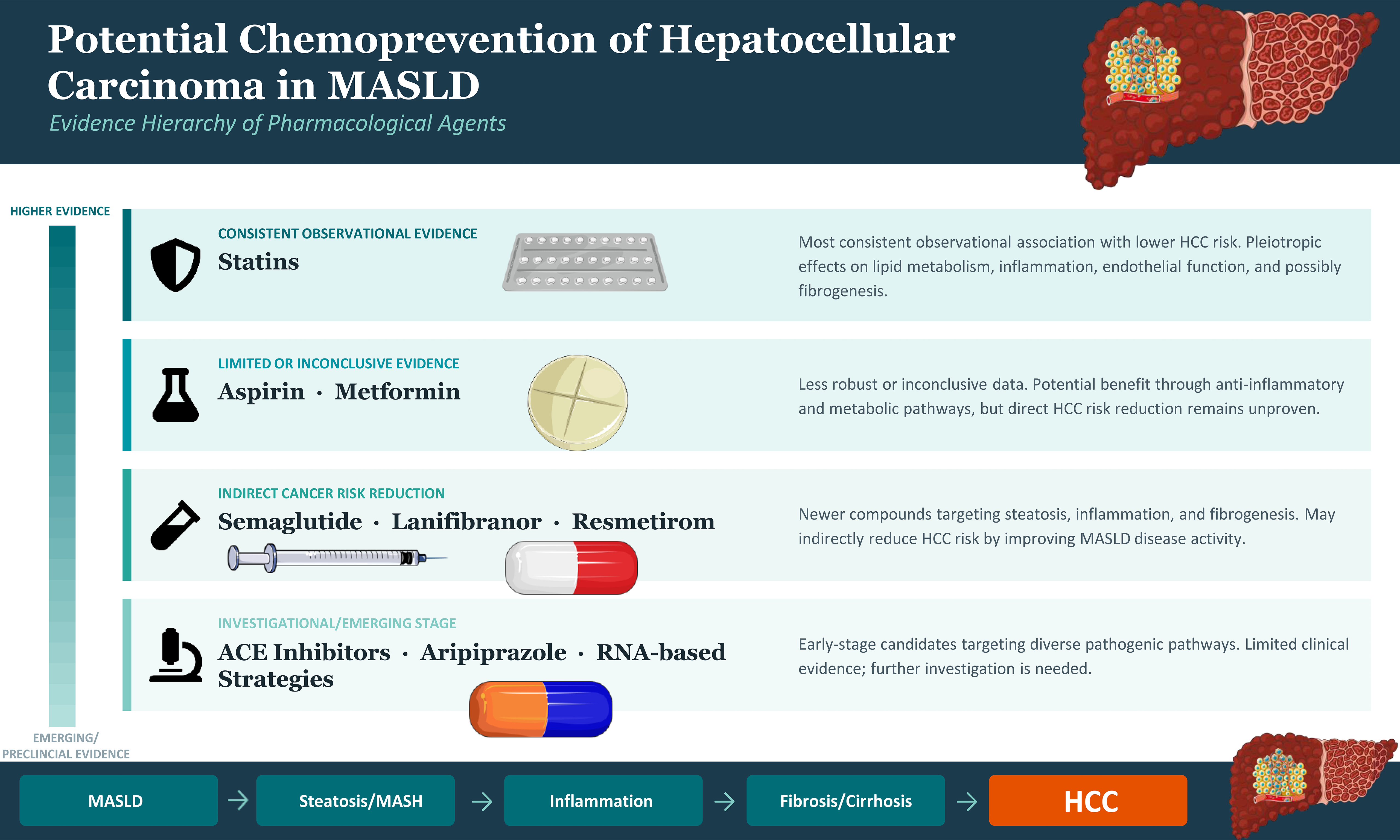
Hepatocellular carcinoma (HCC) remains a major global health challenge and is increasingly linked not only to chronic viral hepatitis and alcohol exposure, but also to metabolic dysfunction-associated steatotic liver disease (MASLD), obesity, and dysglycemia. Advanced fibrosis and cirrhosis are the main precancerous conditions for hepatocarcinogenesis, making chemoprevention a rational strategy for individuals at risk of developing primary HCC or experiencing recurrence after treatment. However, fibrosis regression, steatohepatitis resolution, and steatosis reduction are biologically plausible but unvalidated surrogate endpoints for HCC chemoprevention. While antiviral therapy and hepatitis B vaccination have proven effective in preventing liver cancer, there is currently no established pharmacological approach for MASLD-related HCC. Among available agents, statins have shown the most consistent observational evidence of benefit, while data for aspirin and metformin are less robust or inconclusive. Newer compounds targeting key pathogenic pathways involved in steatosis, inflammation, and fibrogenesis are of significant interest. Semaglutide, lanifibranor, and resmetirom may indirectly reduce HCC risk by improving MASLD-related disease activity, although direct evidence for cancer prevention is still lacking. Other potential candidates, such as angiotensin-converting enzyme inhibitors, aripiprazole, and RNA-based strategies, are still in the investigational stages. Advances in this field will require improved risk assessment, validated biomarkers, and prospective trials to determine whether reducing fibrosis can lead to meaningful reductions in HCC incidence.
Keywords
BACKGROUND - DEFINITION, BURDEN AND AIMS
Hepatocellular carcinoma (HCC), the main histological subtype of primary liver cancer, is the sixth most frequently diagnosed malignancy worldwide and the third leading cause of cancer-related mortality[1,2]. In addition to chronic viral hepatitis and excessive alcohol consumption, overweight/obesity and dysglycemia are increasingly recognized as major contributors to HCC, posing a significant burden on global public health, especially in countries with a high or middle sociodemographic index[3]. Advanced liver fibrosis and cirrhosis, regardless of their cause, are established risk factors for HCC, highlighting the importance of surveillance and preventive measures[4]. Hepatocarcinogenesis is a complex and interconnected set of events at the molecular, cellular, and tissue levels, offering potential targets for chemoprevention[5,6].
In this context, chemopreventive strategies, which involve the use of natural or synthetic agents to reduce cancer risk or prevent recurrence, are particularly relevant given the increasing incidence of HCC, especially in Western countries, and its high mortality rates[7,8]. Even after successful treatment of early-stage HCC, the carcinogenic environment may persist in the remaining diseased liver, potentially leading to new tumor formation. Preventing first and subsequent primary HCC in at-risk patients could confer substantial prognostic benefit[9], although no established strategy currently exists beyond HBV vaccination and antiviral therapy for chronic viral hepatitis.
This article focuses on the historical development, underlying mechanisms, and primary drug classes relevant to HCC pharmacological chemoprevention. Special attention is given to HCC occurring in the setting of metabolic dysfunction-associated steatotic liver disease (MASLD) due to its increasing prevalence. Key areas for future research in this field are also highlighted.
HISTORY OF HCC CHEMOPREVENTION
The history of HCC chemoprevention has evolved from a theoretical concept proposed in the 1970s into a multilayered clinical strategy aimed at blocking, reversing, or delaying liver carcinogenesis[10]. A major milestone in HCC prevention was the introduction of hepatitis B virus (HBV) vaccination in 1982[11]. Mass immunization programs, recommended by the WHO since 1991, have markedly reduced HCC incidence in younger populations[12]. More recently, effective therapies for chronic HBV and hepatitis C virus (HCV) infection have shown that sustained viral suppression substantially reduces long-term HCC risk[13]. As a result, the relative burden of MASLD-related HCC has increased, in parallel with the global rise in obesity and dysglycemia[14]. This has shifted research from “generic” approaches, including retinoids, aspirin, non-steroidal anti-inflammatory drugs (NSAIDs), and metformin[9] to newer antidiabetic, cholesterol-lowering, anti-hypertensive, and other drug classes, which are the main focus of the present article.
PRINCIPAL MECHANISMS OF ACTION OF KEY DRUGS POTENTIALLY CONTRIBUTING TO HCC CHEMOPREVENTION THROUGH EFFECTS ON DISEASE PATHOBIOLOGY
HCC is driven by a chronic cycle of liver injury, inflammation, fibrosis, and unchecked cellular proliferation[10,15]. Key pharmacological agents are listed in Table 1[10,16-33]. Several key drugs may potentially affect HCC pathogenesis, thereby serving as candidate chemopreventive agents[10]. These are schematically illustrated in Figure 1.
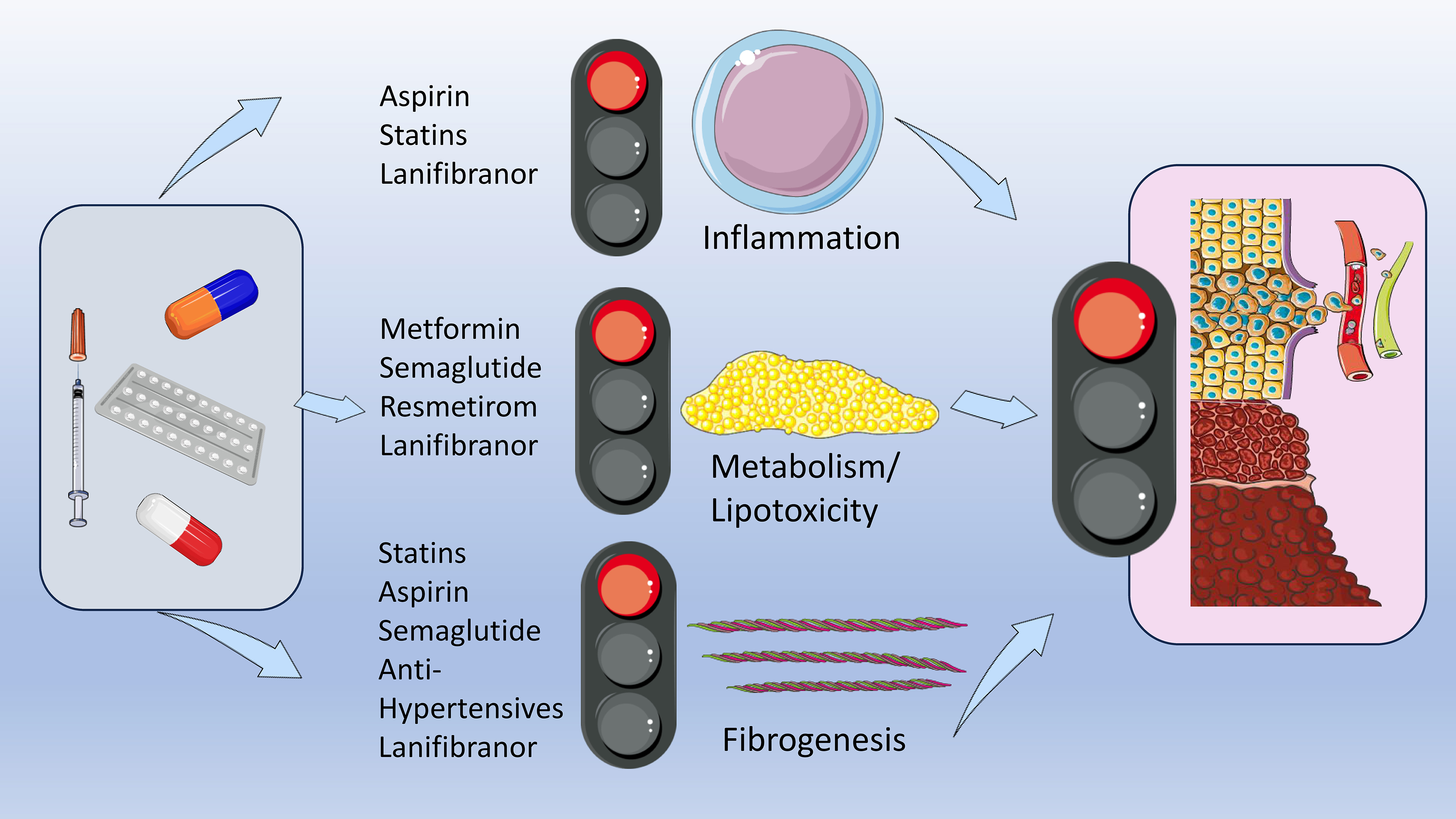
Figure 1. Principal pathways implicated in chemoprevention by selected pharmacological agents. Schematic representation, based on references cited in the text and Table 1, of liver histological changes induced by the main drug classes listed in Table 1 that may influence the pathobiology of metabolic dysfunction-associated steatotic liver disease and contribute to chemopreventive effects. Key molecular pathways involved include THR-β and the MDK/LRP1 axis for resmetirom, pan-PPAR α/δ/γ activation for lanifibranor, GLP-1R signaling for semaglutide, HMG-CoA reductase/mevalonate signaling for statins, COX/platelet signaling for aspirin, AMPK for metformin, and ACE/angiotensin II/EGFR transactivation for captopril and related agents. The traffic-light symbols indicate attenuation or blockade of pathological pathways rather than the strength of clinical evidence. Figure 1 provided by Servier Medical Art (https://smart.servier.com), licensed under CC BY 4.0 (https://creativecommons.org/licenses/by/4.0/). ACE: Angiotensin-converting enzyme; AMPK: adenosine monophosphate-activated protein kinase; COX: cyclooxygenase; EGFR: epidermal growth factor receptor; GLP-1R: glucagon-like peptide-1 receptor; HMG-CoA: 3-hydroxy-3-methylglutaryl-coenzyme A; LRP1: low-density lipoprotein receptor-related protein 1; MDK: midkine; PPAR: peroxisome proliferator-activated receptor; THR-β: thyroid hormone receptor-beta.
HCC chemopreventive drugs at a glance
| Main mechanism | HCC reduction | Effect on liver histology | Clinical stage | Overall level for HCC chemoprevention | References | |
| Metformin | AMPK activation; reduces IR and cell proliferation | Strongest data in viral hepatitis and diabetes | Minimal effect on existing fibrosis | Approved for T2D; used off-label for HCC prevention | Low to moderate: mechanistically plausible, but current adjusted clinical evidence is inconsistent | [16,17] |
| Aspirin | COX-1 inhibition and antiplatelet activity; COX-2 inhibition and anti-inflammatory activity; upregulates PPARδ, AMPK, and PGC-1α; suppresses NF-κB signaling and downregulates P4HA2 | 30% to 50% RRR in incident HCC among regular aspirin users compared with non-users. The protective effect is most pronounced and consistently observed in patients with chronic viral hepatitis (HBV/HCV) | Suppression of steatosis; blunting of fibrosis and collagen deposition; mitigation of necroinflammation | Aspirin’s position in the clinical workflow for HCC prevention is not yet established | Moderate: consistent observational signal, but no direct randomized HCC endpoint evidence | [18-21] |
| Statins | HMG-CoA reductase inhibition; oncogenic pathway suppression; cell-cycle arrest and induction of apoptosis in malignant hepatocytes; impaired tumor vascularization and metastasis | 43% to 48% overall reduction in HCC risk among statin users, with variable data according to the etiology and severity of CLD | Fibrosis and cirrhosis regression: reduced portal hypertension; diminished chronic hepatic necroinflammation; slower transition from steatohepatitis to cirrhosis | Investigational but approved for lipid/cardiovascular indications | Moderate to high observational evidence, but still not definitive without randomized HCC-endpoint trials | [22,23] |
| Anti-hypertensives | ACEIs, ARBs, and NSBBs have been studied in relation to HCC chemoprevention in patients with CLD | The effects of medication classes on inflammation, fibrosis, and angiogenesis may contribute to HCC chemoprevention | ACEIs and ARBs help reduce liver fibrosis, necroinflammation, and disease progression in patients with MASLD | Evidence for HCC chemoprevention with ACEIs, ARBs, and NSBBs remains limited. The AASLD recommends NSBBs in selected patients with CSPH as a promising candidate to prevent hepatic decompensation | Low to moderate (ARBs): suggestive observational and mechanistic evidence, not definitive. Low (ACEIs and NSBBs): biologically plausible but clinically unproven | [10,24,25] |
| Semaglutide | GLP-1 regulates glucose homeostasis, food intake, and reward-related processes. GLP-1RAs promote weight loss and reduce systemic inflammation | Observational evidence links semaglutide use with lower HCC risk, likely reflecting the 63% MASH resolution rate associated with the use of this drug | Improves MASH but has limited direct effect on advanced fibrosis | Approved for MASH (conditional) and obesity; primary HCC trials ongoing | Low to moderate: promising indirect evidence, but no direct HCC-prevention outcome data | [26-30] |
| Lanifibranor | Pan-PPAR agonist (α/δ/γ); direct liver-targeted metabolic and anti-fibrotic repair | Markedly reduces fibrosis, but mouse models showed no direct tumor reduction compared to semaglutide | In the Phase 2b NATIVE trial, lanifibranor demonstrated efficacy in achieving MASH resolution and improving fibrosis | In Phase III trials (NATiV3) for MASH and fibrosis | Moderate for disease-modifying MASH biology, but low for proven HCC chemoprevention | [31] |
| Resmetirom | Oral, liver-directed, THR-β selective agonist | Reduces steatosis by upregulating hepatic FA β-oxidation; inhibits the MDK pathway; modulates the tumor microenvironment and mitigates chronic inflammation | MASH resolution; fibrosis regression; and steatosis reduction | In animal models, resmetirom significantly inhibits tumor growth, reduces tumor burden, and acts synergistically with dedicated MDK inhibitors. Long-term follow-up is needed to determine the exact reduction rate of HCC in human cohorts | Moderate for surrogate MASH improvement, low for HCC chemoprevention | [32,33] |
CHEMOPREVENTION OF MASLD-HCC
Levels of evidence for HCC chemoprevention by drug class
The evidence hierarchy separates direct randomized clinical evidence for reduction of HCC incidence from indirect clinical evidence, surrogate histological evidence in MASLD/Metabolic Dysfunction-Associated Steatohepatitis (MASH) or fibrosis trials, and preclinical or mechanistic plausibility. At present, most chemoprevention signals for HCC are observational rather than randomized and should therefore be interpreted as hypothesis-generating unless supported by prospective HCC-endpoint trials. Figure 2 summarizes the levels of evidence in HCC chemoprevention by pharmacological class.
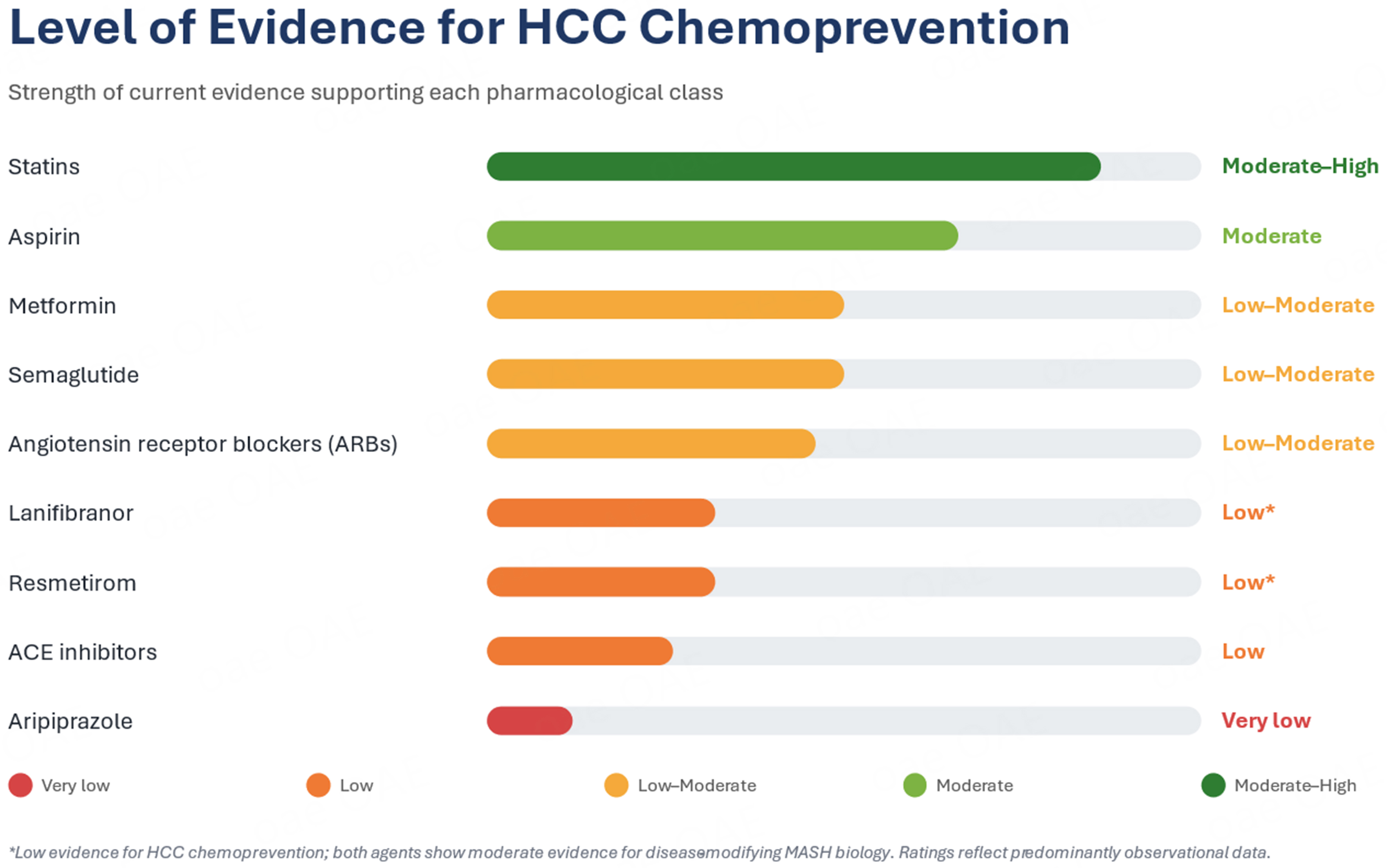
Figure 2. Level of Evidence for drug-based HCC chemoprevention. Semi-quantitative graphical summary of the relative strength of evidence supporting statins, aspirin, metformin, semaglutide, ARBs, lanifibranor, resmetirom, ACE inhibitors, and aripiprazole as candidate approaches for HCC chemoprevention. ACE: Angiotensin-converting enzyme; ARBs: angiotensin II receptor blockers; HCC: hepatocellular carcinoma.
Metformin, aspirin, and statins
A meta-analysis updated as of 2022 found that both statin and aspirin use were associated with a reduced risk of HCC [statins: Hazard ratio (HR) 0.52, 95%CI: 0.37-0.72; 10 studies; 1,774,476 participants; aspirin: HR 0.48, 95%CI: 0.27-0.87; 11 studies; 2,190,285 participants][23]. This evidence is almost entirely observational, although higher-quality analyses increasingly restrict inclusion to propensity-score-matched or inverse probability-weighted cohorts to reduce confounding by indication, immortal-time bias, and differences in baseline liver disease severity. However, in subgroup analyses accounting for concurrent medications, only statin use remained significantly associated with lower HCC risk. By contrast, metformin use was not significantly associated with reduced HCC risk (HR 0.57, 95%CI: 0.31-1.06; 3 studies; 125,458 participants). Thus, these agents should not be interpreted as equivalent chemopreventive options: statins have the most consistent epidemiologic signal, aspirin has a plausible but more confounded association, and metformin has the weakest and most diabetes-dependent evidence base.
A more recent study evaluated whether metformin and statins may reduce HCC risk in patients with chronic hepatitis C from the T-COACH cohort who did not respond to antiviral therapy[34]. The findings suggest that both drugs may have a chemopreventive effect in this setting. Importantly, the higher HCC risk associated with non-use of metformin was mainly observed in non-cirrhotic patients, whereas statins were associated with lower HCC risk in both cirrhotic and non-cirrhotic patients. These etiology- and stage-specific findings are important because the apparent benefit of metformin may be driven partly by metabolic risk modification in diabetic or insulin-resistant patients rather than by a direct antineoplastic effect across all causes of chronic liver disease. In HCV, particularly before sustained virologic response was widely achievable, residual inflammation and metabolic cofactors may have amplified any protective signal; in HBV, MASLD, and alcohol-related liver disease, evidence remains less uniform and is more dependent on cohort design, medication duration, and adjustment for diabetes, obesity, antiviral therapy, and cirrhosis.
Statins should be viewed not only as cholesterol-lowering agents, but also as drugs with the strongest retrospective evidence for HCC prevention. Meta-analyses of observational studies suggest that statin use is associated with an approximately 46% reduction in HCC risk[35-38]. The association has been reported across several high-risk populations, including chronic HBV, chronic HCV, cirrhosis, and MASLD, and appears more reproducible for lipophilic statins and for longer cumulative exposure. Nevertheless, causality has not been established, and the available data cannot fully exclude healthy-user bias, better cardiometabolic care among statin users, or differential surveillance for HCC.
The biologically plausible chemopreventive effect of statins against HCC is most evident in patients at high risk for liver cancer, particularly Asians, those with underlying cirrhosis, MASLD, or chronic viral hepatitis[21,39-41]. The risk reduction, which requires prospective evaluation, appears to be dependent on the chemical properties and dose of statins, with lipophilicity, long-term use, and higher cumulative daily doses conferring greater benefits[42-45].
The chemopreventive effect of aspirin in HCC is likely to vary by disease etiology, reflecting differences in the inflammatory, thrombotic, and carcinogenic pathways that drive viral, metabolic, alcohol-related, and other forms of chronic liver disease[10]. Low-dose aspirin is an appealing candidate for modifying MASLD pathobiology, but current data do not justify routine use, especially in cirrhosis. In a single-center phase 2 trial, daily 81 mg aspirin for 6 months reduced hepatic fat content vs. placebo in adults with non-cirrhotic MASLD, but the study was small, short, and not powered for fibrosis, decompensation, HCC, or bleeding outcomes[46]. Observational meta-analyses link aspirin exposure to lower HCC incidence, yet estimates remain vulnerable to confounding, immortal-time bias, heterogeneous exposure definitions, and residual differences in liver disease severity[47]. Benefit was not significant in cirrhosis, whereas bleeding risk increased; in compensated HBV-related cirrhosis, aspirin was associated with lower HCC risk but higher gastrointestinal bleeding risk[48]. Any chemopreventive signal must therefore be weighed against portal-hypertensive bleeding, thrombocytopenia, anticoagulant use, and decompensation risk pending adequately powered prospective trials. Statins are generally usable in compensated chronic liver disease when clinically indicated, but require caution in decompensated cirrhosis, frailty, interacting drug regimens, and patients at risk of myopathy or hepatotoxicity. Metformin remains attractive in type 2 diabetes, yet its preventive role is uncertain after adjustment for statin use, glycemic control, and liver disease stage, and it should be avoided or used cautiously in severe renal impairment, hypoxic illness, sepsis, or unstable decompensated cirrhosis. Overall, these agents support risk-stratified investigation, not routine prescription solely for HCC chemoprevention.
Semaglutide
Semaglutide is currently a major focus of HCC chemoprevention research, particularly for patients at risk of MASLD-HCC. Current evidence is confined largely to weight loss, metabolic improvement, MASH resolution, and observational class-level associations, with no prospective trials powered for HCC endpoints. While not yet Food and Drug Administration (FDA)-approved specifically for cancer prevention, semaglutide may reduce HCC risk in patients with MASLD and type 2 diabetes based on recent observational evidence[49].
Several putative mechanisms may be involved, although current data should be distinguished as indirect risk-reduction evidence rather than evidence of direct anti-tumor effects. Phase III trials, such as the ESSENCE trial, have shown that semaglutide (2.4 mg) can lead to the resolution of steatohepatitis (MASH) in up to 63% of patients[50], potentially slowing the progression to cancer through this pathway. Moreover, a large-scale meta-analysis of over 2.3 million patients indicated that Glucagon-like peptide-1 (GLP-1) receptor agonists, a class that includes semaglutide, are associated with a 42% reduction in HCC risk in patients with type 2 diabetes[29]. The proposed “chemopreventive” effect is thought to be indirect, stemming from significant weight loss, improved insulin sensitivity, and reduced systemic inflammation rather than direct antitumor activity[51].
Preclinical findings
In preclinical Gubra Amylin NASH (GAN) diet-induced NASH-HCC mouse models, semaglutide significantly reduced both the number and size of liver tumors, leading to a notable decrease in overall tumor burden[30]. These encouraging preclinical findings now warrant rigorous validation in appropriately designed clinical trials.
Major caveats
Real-world discrepancies and fibrosis limitations should be considered when interpreting published studies. In a retrospective cohort of 71,612 individuals, semaglutide was not associated with a significant 10-year reduction in HCC risk[52]. This suggests that semaglutide’s benefits may depend on treatment timing or cirrhosis status. Semaglutide is effective in reducing liver fat and inflammation[53]. However, its effect on advanced fibrosis remains uncertain and may not fully offset risk once cirrhosis is established[53].
Lanifibranor
Based on available research as of mid-2026, lanifibranor is an investigational antifibrotic MASH therapy with theoretical chemopreventive relevance but is not used or approved for HCC chemoprevention. However, it is a leading investigational drug for MASH. The Phase 2b NATIVE trial showed that lanifibranor improved liver histology in MASH patients, a population at potential risk for developing HCC[31,54]. Because MASH-related fibrosis and cirrhosis are major drivers of HCC, lanifibranor’s ability to reverse fibrosis suggests it may reduce HCC risk, but it is not currently classified as a chemopreventive agent.
Resmetirom
Resmetirom is a MASH-directed agent with preclinical antitumor signals requiring long-term human validation. A recent study offers the first detailed preclinical assessment of resmetirom as a potential modifier of MASLD-associated hepatocarcinogenesis[55]. Using hydrodynamic tail-vein injection models driven by NRasV12/Myr-AKT, ΔN90-β-catenin/c-Myc, or c-Myc/TP53 knockout, combined with a Western diet and low-dose CCl4, Zhang et al. showed that resmetirom significantly reduced hepatic steatosis and HCC burden across oncogenic settings. To link these effects to disease progression, they developed a multistage Western diet/CCl4 model recapitulating MASLD, MASH, advanced fibrosis, and overt MASLD/MASH-HCC, and performed single-cell RNA sequencing on 134,760 liver and tumor cells[55]. This integrative approach showed expansion of myeloid populations, particularly M2-like and MASH-associated macrophages (TREM2+GPNMB+), together with hepatic stellate cell activation and the emergence of dysplastic hepatocytes with copy-number alterations, closely recapitulating the cellular landscape of human MASLD/MASH-HCC. The limitations of this study include differences between animal models and humans, and the timing of drug administration, implying that these findings do not firmly establish resmetirom as an HCC therapy. However, these authors provide a detailed Midkine/Low-density lipoprotein receptor-related protein 1 (MDK/LRP1)-centered framework to guide rational combination strategies and future clinical trial design[56]. Additionally, resmetirom should be tested as a potential chemopreventive agent given its ability to improve MASH histology while displaying antitumor effects by reversing steatosis, improving liver metabolism, and reducing immunosuppressive MDK/LRP1 interactions.
Targeting the angiotensin-converting enzyme and epidermal growth factor receptor signaling
Barone et al. conducted a systematic review to clarify the role of angiotensin receptor blockers and angiotensin-converting enzyme (ACE) inhibitors in HCC[57]. Their meta-analytic evaluation indicated that, in humans, renin-angiotensin system inhibitors, whether administered alone or in combination, were associated with a significantly reduced cumulative incidence of HCC recurrence, although no improvement in overall survival was observed.
Crouchet et al. established a simplified human cell-based model incorporating a prognostic liver signature (PLS) predictive of liver disease progression and HCC risk. In their initial study, this platform was applied to screen more than 20,000 compounds, followed by experimental validation in a cell-based system, leading to the identification of captopril, an ACE inhibitor primarily used to treat hypertension, as a promising candidate for HCC chemoprevention[58]. In their subsequent study, these researchers further investigated ACE as a therapeutic target for HCC chemoprevention and demonstrated that captopril could attenuate liver fibrosis and delay progression toward HCC in both a diethylnitrosamine (DEN)-induced rat cirrhosis model and a diet-induced rat model of MASH-associated hepatocarcinogenesis[59]. RNA sequencing analysis of cirrhotic rat liver tissue demonstrated that captopril suppressed molecular pathways implicated in fibrogenesis, inflammation, and carcinogenesis, including epidermal growth factor receptor (EGFR) signaling. Complementary mechanistic studies in liver disease models further indicated angiotensin-mediated transactivation of the EGFR pathway.
Further supporting the translational relevance of this strategy, captopril significantly reversed the high-risk HCC status defined by the PLS in liver tissue obtained from patients with advanced fibrosis. Collectively, these findings suggest that captopril may represent a safe and cost-effective candidate for HCC chemoprevention and may delay progression of fibrotic liver disease toward HCC in preclinical settings.
Based on available evidence, it remains premature to recommend ACE inhibitors (ACEIs) as primary chemopreventive agents in MASLD/nonalcoholic steatohepatitis (NASH)[60,61]. However, a strong rationale supports further basic and translational research to clarify the pathogenic mechanisms underlying the effects of ACEIs and, more importantly, randomized controlled trials evaluating their impact on HCC chemoprevention.
SGLT2 inhibitors as emerging metabolic partners
SGLT2 inhibitors (SGLT-2i) are gaining attention as metabolic partners in MASLD, with potential implications for lowering HCC risk through indirect pathways rather than proven antitumor effects. By improving glycemic control, promoting modest weight loss, reducing visceral adiposity, and ameliorating hepatic steatosis, these agents may attenuate insulin resistance, lipotoxicity, oxidative stress, and inflammatory signaling that contribute to fibrogenesis and hepatocarcinogenesis[62]. Emerging clinical data also suggest favorable effects on aminotransferases, liver fat, fibrosis markers, and broader cardiometabolic outcomes. In their nationwide cohort study, Bea et al. found that SGLT-2i were associated with a reduced risk of hepatic decompensation events in patients with MASLD compared with TZDs and showed similar effectiveness to GLP-1RA[63]. The hepatic effectiveness of SGLT-2i was greater in female patients and patients younger than 65 years. However, whether these metabolic improvements translate into clinically meaningful HCC chemoprevention remains uncertain; direct protective effects against HCC have not yet been demonstrated in prospective trials.
Aripiprazole
Recent investigations have identified aripiprazole, an oral atypical antipsychotic, as a potential candidate for HCC chemoprevention[64]. Clinical analysis of liver tissue has shown that aripiprazole targets are expressed in various liver cell compartments, including fibroblasts, macrophages, and epithelial cancer cells, and are linked to fibrotic liver disease and HCC. In a rat model of MASH-driven HCC induced by a choline-deficient L-amino acid-defined high-fat diet, aripiprazole slowed the progression of liver disease and the development of HCC by altering fibrogenic and inflammatory pathways. Mechanistically, it exerted antifibrotic and anti-inflammatory effects by changing fibroblast and macrophage phenotypes. Cancer cell studies demonstrated reduced tumor initiation and proliferation through the inhibition of c-Met encoding the hepatocyte growth factor receptor (HGFR)’ and extracellular sginal-regulated kinase (ERK) signaling and disruption of mitochondrial function. In patient-derived tumor spheroids, aripiprazole also affected immune responses in the tumor microenvironment[64]. These findings collectively support aripiprazole as a potentially promising candidate for HCC chemoprevention, although clinical experience is limited, and further observational studies and trials in high-risk populations are necessary.
Can sex differences in HCC pathobiology be exploited for HCC chemoprevention?
A robust body of published evidence, summarized elsewhere[65], pinpoints sex disparities in HCC, with men having a higher risk approximately 2.5 times that of women. Sex, reproductive status, and gender also modify several other aspects of HCC pathobiology, ranging from disease stage at presentation to treatment outcomes[65]. Reproductive and hormonal factors appear to modify HCC risk in women: higher parity, later natural menopause, and hormone replacement therapy (HRT) were associated with lower risk, whereas premenopausal oophorectomy before age 50 was associated with increased risk[66]. Hormone replacement therapy is associated with reduced HCC risk and improved survival among postmenopausal women with hepatitis B[67]. However, menopausal HRT is not indicated for the chemoprevention of HCC[68,69].
Combined chemopreventive approaches
Statin combination
Large-scale studies of patients with failed antiviral therapy or diabetes show that combining metformin and statins can reduce HCC risk by up to 50% compared with non-users[34].
GLP-1 combinations
New research is exploring the potential synergy of GLP-1 receptor agonists, such as semaglutide, with older drugs. Combination therapies, such as GLP-1 receptor agonists plus metformin, have shown a significantly lower risk of hepatic decompensation and HCC compared with using either drug class alone[70].
Acyclic retinoid and branched-chain amino acids
Acyclic retinoid (ACR) and branched-chain amino acids (BCAAs) have shown cooperative inhibitory effects on HCC cell growth and obesity-related liver tumorigenesis in experimental studies, but their role in clinical HCC chemoprevention remains uncertain[71,72]. These approaches are less well integrated into contemporary MASLD-HCC prevention strategies, and their validity remains uncertain compared with more modern drugs.
Antifibrotic and antiviral/metabolic agents
Combining agents such as captopril with antioxidants such as vitamins E and C, or other agents, can reduce liver fibrosis, a potentially important step in limiting progression from steatohepatitis to HCC[59]. These strategies, supported only by small or preclinical studies, require validation in prospective randomized controlled trials.
siRNA-based therapies
N-acetylgalactosamine (GalNAc)-conjugated siRNAs targeting multiple genes, such as CDK1 and ANLN, have shown potential in preventing HCC development across various models, including MASH and chemically induced injury[73].
CANDIDATE PATIENT POPULATIONS FOR FUTURE CHEMOPREVENTION TRIALS
In HCC, prevention is most clearly established when directed at the underlying cause of liver injury. Core evidence-based strategies include universal and risk-based HBV vaccination, nucleos(t)ide analog treatment for chronic HBV infection, curative direct-acting antiviral therapy for HCV infection, reduction of alcohol exposure, weight loss and control of metabolic risk in MASLD, avoidance of tobacco, and semiannual surveillance in patients with cirrhosis or selected high-risk patients with non-cirrhotic HBV infection[69,74].
Current guidelines identify HBV vaccination and antiviral therapy as disease-modifying interventions that reduce HCC incidence, but do not support prescribing statins, aspirin, or metformin solely for HCC prevention. No pharmacological agent is approved specifically for chemoprevention of MASLD-related HCC[35,75]. Future prevention trials should therefore be enriched for populations with sufficiently high event rates and measurable benefit-risk trade-offs, including male and postmenopausal female patients with compensated cirrhosis, advanced MASH fibrosis, persistent viral risk despite viral suppression or cure, hereditary hemochromatosis, previous curative-intent resection or ablation, and a family history of HCC[76].
CONCLUSION AND RESEARCH AGENDA
Additional effective pharmacological strategies to prevent HCC are still lacking[64]. This urgent unmet need has driven research on HCC chemoprevention for decades. Chronic fibrotic liver disease of viral or metabolic origin is associated with a substantial HCC risk. Even after curative treatment of early-stage HCC, the carcinogenic microenvironment persists in the residual diseased liver and may foster de novo recurrence. Accordingly, preventing HCC in patients at risk of both first and second primary tumors may confer the greatest prognostic advantage. However, no established therapy is currently available for this purpose beyond HBV vaccination and antiviral therapy for chronic viral hepatitis.
Importantly, although biologically plausible, fibrosis regression, resolution of MASH, and attenuation of steatosis remain unvalidated surrogate endpoints for HCC chemoprevention until proven by randomized controlled trials.
A major challenge lies in identifying clinically relevant targets, which may be facilitated by reverse-engineering approaches integrating omics data from clinical cohorts with completed cancer follow-up. Candidate compounds could subsequently be evaluated cost-effectively in conjunction with HCC risk biomarkers to identify the patients most likely to derive benefit. These include (a) cirrhosis of any etiology[10]; (b) uncontrolled chronic viral hepatitis[77]; (c) selected patients with MASH, for example, those with F3/F4 fibrosis and/or type 2 diabetes[10]; (d) individuals with hereditary hemochromatosis[78]; (e) post-resection or post-ablation patients[10]; and (f) individuals with a family history of HCC[10]. Nontoxic, generic agents may offer broad applicability across HCC etiologies and clinical settings and could contribute to improving the persistently poor prognosis of HCC[9]. Nevertheless, the administration of these pharmacological classes in patients with compromised hepatic function should be undertaken with the utmost caution.
In conclusion, despite decades of research, there is still no single gold-standard approved chemopreventive drug, largely due to the long latency of the disease and the difficulty of conducting long-term, ethically sound trials. Future studies should focus on identifying PLS[59] to identify high-risk patients who would benefit most from chemoprevention. Moreover, new agents targeting liver fibrosis, the primary precursor to HCC, are being tested in randomized controlled trials[79] to provide proof-of-concept evidence on whether targeting liver fibrosis effectively prevents HCC onset.
DECLARATIONS
Acknowledgments
Graphical Abstract contains elements from Servier Medical Art (https://smart.servier.com), licensed under CC BY 4.0 (https://creativecommons.org/licenses/by/4.0/).
Authors’ contributions
Made substantial contributions to conception and design of the study and performed data analysis and interpretation: Weiskirchen R, Lonardo A
Availability of data and materials
Not applicable.
AI and AI-assisted tools statement
During the preparation of this manuscript, the AI tool OpenAI (GPT-5.5, released 2026-04-23) was used solely for language editing and Microsoft 365 Copilot (last updated on 2026-08-04) for the creation of Figure 2. The tool did not influence the study design, data collection, analysis, interpretation, or the scientific content of the work. All authors take full responsibility for the accuracy, integrity, and final content of the manuscript.
Financial support and sponsorship
None.
Conflicts of interest
Weiskirchen R is the Guest Editor of the special issue entitled “Fibrosis Driven Hepatocarcinogenesis in MASLD/MASH: Mechanisms, Biomarkers and Therapeutic Horizons” in Hepatoma Research. Lonardo A is an Associate Chief Editor of Hepatoma Research. Weiskirchen R and Lonardo A were not involved in any steps of editorial processing, notably including reviewer’ selection, manuscript handling, and decision making.
Ethical approval and consent to participate
Not applicable.
Consent for publication
Not applicable.
Copyright
© The Author(s) 2026.
REFERENCES
1. Bray F, Laversanne M, Sung H, et al. Global cancer statistics 2022: GLOBOCAN estimates of incidence and mortality worldwide for 36 cancers in 185 countries. CA Cancer J Clin. 2024;74:229-63.
2. Lugari S, Baldelli E, Lonardo A. Metabolic primary liver cancer in adults: risk factors and pathogenic mechanisms. Metab Target Organ Damage. 2023;3:5.
3. Wu C, Targher G, Byrne CD, et al. Global, regional, and national burden of primary liver cancer attributable to metabolic risks: an analysis of the global burden of disease study 1990-2021. Am J Gastroenterol. 2025;120:2280-90.
4. Bengtsson B, Widman L, Wahlin S, Stål P, Björkström NK, Hagström H. The risk of hepatocellular carcinoma in cirrhosis differs by etiology, age and sex: a Swedish nationwide population-based cohort study. United European Gastroenterol J. 2022;10:465-76.
5. Alarcón-Sánchez BR, Pérez-Carreón JI, Villa-Treviño S, Arellanes-Robledo J. Molecular alterations that precede the establishment of the hallmarks of cancer: an approach on the prevention of hepatocarcinogenesis. Biochem Pharmacol. 2021;194:114818.
6. Zhou J, Wang W, Li Q. Potential therapeutic targets in the tumor microenvironment of hepatocellular carcinoma: reversing the protumor effect of tumor-associated macrophages. J Exp Clin Cancer Res. 2021;40:73.
7. National Cancer Institute. Definition of chemoprevention - NCI dictionary of cancer terms - NCI. Available from: https://www.cancer.gov/publications/dictionaries/cancer-terms/def/chemoprevention. [Last accessed on 5 Aug 2026].
8. Singh S, Singh PP, Roberts LR, Sanchez W. Chemopreventive strategies in hepatocellular carcinoma. Nat Rev Gastroenterol Hepatol. 2014;11:45-54.
9. Athuluri-Divakar SK, Hoshida Y. Generic chemoprevention of hepatocellular carcinoma. Ann N Y Acad Sci. 2019;1440:23-35.
10. Schwenk S, Kaplan DE. Chemoprevention of hepatocellular carcinoma. Hepatol Commun. 2025;9:e0836.
11. Hepatitis B Foundation. Prevention hepatitis B foundation. Available from: https://www.hepb.org/research-and-programs/liver/prevention-of-liver-cancer/. [Last accessed on 7 Aug 2026].
12. Chang MH. Impact of hepatitis B vaccination on hepatitis B disease and nucleic acid testing in high-prevalence populations. J Clin Virol. 2006;36:S45-50.
13. Alqahtani SA, Colombo M. Treatment for viral hepatitis as secondary prevention for hepatocellular carcinoma. Cells. 2021;10:3091.
14. Ali B, Samuel R, Kramer JR, et al. Evolving burden of metabolic dysfunction-associated steatotic liver disease and its complications in a US nationwide healthcare system. Hepatol Commun. 2026;10:e0878.
15. Ding Z, Wang L, Sun J, Zheng L, Tang Y, Tang H. Hepatocellular carcinoma: pathogenesis, molecular mechanisms, and treatment advances. Front Oncol. 2025;15:1526206.
16. Chen H, Huang M, Zhang D, et al. Metformin’s effect on metabolic dysfunction-associated steatotic liver disease through the miR-200a-5p and AMPK/SERCA2b pathway. Front Pharmacol. 2024;15:1477212.
17. Tsai PC, Kuo HT, Hung CH, et al. ; T-COACH Study Group. Metformin reduces hepatocellular carcinoma incidence after successful antiviral therapy in patients with diabetes and chronic hepatitis C in Taiwan. J Hepatol. 2023;78:281-92.
18. Lee TY, Hsu YC, Tseng HC, et al. Association of daily aspirin therapy with risk of hepatocellular carcinoma in patients with chronic hepatitis B. JAMA Intern Med. 2019;179:633-40.
19. Simon TG, Duberg AS, Aleman S, Chung RT, Chan AT, Ludvigsson JF. Association of aspirin with hepatocellular carcinoma and liver-related mortality. N Engl J Med. 2020;382:1018-28.
20. Abdelmalak J, Tan N, Con D, et al. The effect of aspirin use on incident hepatocellular carcinoma-an updated systematic review and meta-analysis. Cancers. 2023;15:3518.
21. Goh MJ, Sinn DH. Statin and aspirin for chemoprevention of hepatocellular carcinoma: time to use or wait further? Clin Mol Hepatol. 2022;28:380-95.
22. Wang J, Qiu K, Zhou S, et al. Risk factors for hepatocellular carcinoma: an umbrella review of systematic review and meta-analysis. Ann Med. 2025;57:2455539.
23. Zeng RW, Yong JN, Tan DJH, et al. Meta-analysis: chemoprevention of hepatocellular carcinoma with statins, aspirin and metformin. Aliment Pharmacol Ther. 2023;57:600-9.
24. Zisis M, Chondrogianni ME, Androutsakos T, et al. Linking cardiovascular disease and metabolic dysfunction-associated steatotic liver disease (MASLD): the role of cardiometabolic drugs in MASLD treatment. Biomolecules. 2025;15:324.
25. Kaplan DE, Ripoll C, Thiele M, et al. AASLD Practice Guidance on risk stratification and management of portal hypertension and varices in cirrhosis. Hepatology. 2024;79:1180-211.
26. Gao SX, Décarie-Spain L, Gu C, Mazzini G, Kanoski SE, Borner T. GLP-1 at the metabolic-cognitive interface: reward, affect, and memory. Compr Physiol. 2026;16:e70129.
27. Weiskirchen R, Lonardo A. How ‘miracle’ weight-loss semaglutide promises to change medicine but can we afford the expense? Br J Pharmacol. 2025;182:1651-70.
28. Pirola CJ, Sookoian S. Semaglutide in MASH with F2-F3 fibrosis: a holistic perspective on the ESSENCE phase 3 trial. Metab Target Organ Damage. 2026;6:17.
29. Dalbeni A, Vicardi M, Natola LA, et al. Glucagon-like peptide-1 receptor agonists and hepatocellular carcinoma prevention: a meta-analysis and clinical decision framework. Cancer Med. 2025;14:e71434.
30. Hansen HH, Pors S, Andersen MW, et al. Semaglutide reduces tumor burden in the GAN diet-induced obese and biopsy-confirmed mouse model of NASH-HCC with advanced fibrosis. Sci Rep. 2023;13:23056.
31. Francque SM, Bedossa P, Ratziu V, et al. ; NATIVE Study Group. A randomized, controlled trial of the Pan-PPAR agonist lanifibranor in NASH. N Engl J Med. 2021;385:1547-58.
32. Harrison SA, Bedossa P, Guy CD, et al. ; MAESTRO-NASH Investigators. A phase 3, randomized, controlled trial of resmetirom in NASH with liver fibrosis. N Engl J Med. 2024;390:497-509.
33. Petta S, Targher G, Romeo S, et al. The first MASH drug therapy on the horizon: Current perspectives of resmetirom. Liver Int. 2024;44:1526-36.
34. Tsai PC, Huang CF, Yeh ML, et al. ; T-COACH Study Group. Metformin and statins reduce hepatocellular carcinoma risk in chronic hepatitis C patients with failed antiviral therapy. Clin Mol Hepatol. 2024;30:468-86.
35. Dickinson A, Dinani A, Wegermann K. Chemoprevention of hepatocellular carcinoma associated with metabolic dysfunction-associated steatotic liver disease: an updated review. Hepatoma Res. 2024;10:37.
36. Islam MM, Poly TN, Walther BA, Yang HC, Jack Li YC. Statin use and the risk of hepatocellular carcinoma: a meta-analysis of observational studies. Cancers. 2020;12:671.
37. Chang Y, Liu Q, Zhou Z, et al. Can statin treatment reduce the risk of hepatocellular carcinoma? A systematic review and meta-analysis. Technol Cancer Res Treat. 2020;19:1533033820934881.
38. Wang Y, Wang W, Wang M, Shi J, Jia X, Dang S. A meta-analysis of statin use and risk of hepatocellular carcinoma. Can J Gastroenterol Hepatol. 2022;2022:5389044.
39. Singh S, Singh PP, Singh AG, Murad MH, Sanchez W. Statins are associated with a reduced risk of hepatocellular cancer: a systematic review and meta-analysis. Gastroenterology. 2013;144:323-32.
40. Li Z, Li Y, Li X, et al. Statins in hepatitis B or C patients is associated with reduced hepatocellular carcinoma risk: a systematic review and meta-analysis. Turk J Gastroenterol. 2022;33:136-44.
41. Choi J, Nguyen VH, Przybyszewski E, et al. Statin use and risk of hepatocellular carcinoma and liver fibrosis in chronic liver disease. JAMA Intern Med. 2025;185:522-30.
42. Facciorusso A, Abd El Aziz MA, Singh S, et al. Statin use decreases the incidence of hepatocellular carcinoma: an updated meta-analysis. Cancers. 2020;12:874.
43. Zou B, Odden MC, Nguyen MH. Statin use and reduced hepatocellular carcinoma risk in patients with nonalcoholic fatty liver disease. Clin Gastroenterol Hepatol. 2023;21:435-44.e6.
44. Tarar ZI, Farooq U, Inayat F, et al. Statins decrease the risk of hepatocellular carcinoma in metabolic dysfunction-associated steatotic liver disease: a systematic review and meta-analysis. World J Exp Med. 2024;14:98543.
45. Kim SG, Kang JH, Park SJ, et al. Statin use and risk of hepatocellular carcinoma in metabolic dysfunction-associated steatotic liver disease: a national retrospective cohort study. Cancer Prev Res. 2026;19:303-12.
46. Simon TG, Wilechansky RM, Stoyanova S, et al. Aspirin for metabolic dysfunction-associated steatotic liver disease without cirrhosis: a randomized clinical trial. JAMA. 2024;331:920-9.
47. Memel ZN, Arvind A, Moninuola O, et al. Aspirin use is associated with a reduced incidence of hepatocellular carcinoma: a systematic review and meta-analysis. Hepatol Commun. 2021;5:133-43.
48. Kim MN, Park GU, You SC, et al. Aspirin use and risk of HCC and gastrointestinal bleeding in patients with HBV-related cirrhosis: a landmark analysis. J Gastroenterol Hepatol. 2025;40:2750-7.
49. Chen WM, Ng HJ, Jao AT, Wu SY, Soong RS. GLP-1 receptor agonists and risk of hepatocellular carcinoma and all-cause mortality in patients with MASLD and type 2 diabetes: a propensity score-matched population-based cohort study. Diabetes Res Clin Pract. 2025;227:112407.
50. Sanyal AJ, Newsome PN, Kliers I, et al. ; ESSENCE Study Group. Phase 3 trial of semaglutide in metabolic dysfunction-associated steatohepatitis. N Engl J Med. 2025;392:2089-99.
51. Tungekar B, Echevarria Cruz EC, Dodrill J, et al. Impact of glucagon-like peptide-1 agonists on hepatocellular carcinoma risk and management in type 2 diabetes mellitus: a scoping review. Cureus. 2025;17:e100252.
52. Issachar A, Razi T, Borochov I, Duskin Bitan H, Arbel R. Association of semaglutide treatment with liver cirrhosis and hepatocellular carcinoma in type 2 diabetes: a population-based cohort study. Diabetes Obes Metab. 2026;28:5704-14.
53. Kan R, Wang S, Meng X, Guo Y, Li D, Yu X. The impact of semaglutide on liver outcomes in patients with or at risk of MASH: a dose and duration response meta-analysis of randomized trials. Diabetol Metab Syndr. 2025;17:439.
54. Zhu Y, Cai B. Mechanisms and therapeutic insights into MASH-associated fibrosis. Trends Endocrinol Metab. 2026;37:402-17.
55. Zhang VX, Suoangbaji T, Tsui YM, et al. Repurposing Resmetirom suppresses MASH-associated hepatocellular carcinoma, with mechanistic implications of MDK/LRP1-mediated metabolic reprogramming and immunosuppression. Hepatology. 2026;Epub ahead of print.
56. Lonardo A, Zheng MH, Weiskirchen R. Repurposing Resmetirom to suppress MASLD/MASH-HCC in the dysmetabolic era. Oncol Ther. 2026;14:437-48.
57. Barone M, Viggiani MT, Losurdo G, Principi M, Leo AD. Systematic review: renin-angiotensin system inhibitors in chemoprevention of hepatocellular carcinoma. World J Gastroenterol. 2019;25:2524-38.
58. Crouchet E, Bandiera S, Fujiwara N, et al. A human liver cell-based system modeling a clinical prognostic liver signature for therapeutic discovery. Nat Commun. 2021;12:5525.
59. Crouchet E, Li S, Sojoodi M, et al. Hepatocellular carcinoma chemoprevention by targeting the angiotensin-converting enzyme and EGFR transactivation. JCI Insight. 2022;7:e159254.
60. Noureddin M, Abdelmalek MF. ACE inhibitors: the secret to prevent cirrhosis complications and HCC in NAFLD? Hepatology. 2022;76:295-7.
61. Zhang X, Wong GL, Yip TC, et al. Angiotensin-converting enzyme inhibitors prevent liver-related events in nonalcoholic fatty liver disease. Hepatology. 2022;76:469-82.
62. Noh SW, Ryu HS, Kim YH, Oh BC. SGLT2 inhibitors as systemic metabolic modulators: linking glucose excretion to liver function restoration. Endocrinol Metab. 2025;40:851-65.
63. Bea S, Ko HY, Bae JH, et al. Risk of hepatic events associated with use of sodium-glucose cotransporter-2 inhibitors versus glucagon-like peptide-1 receptor agonists, and thiazolidinediones among patients with metabolic dysfunction-associated steatotic liver disease. Gut. 2025;74:284-94.
64. Slović N, Mishra S, Paul S, et al. Chemoprevention of hepatocellular carcinoma by next-generation antipsychotic aripiprazole. Hepatology. 2026;Epub ahead of print.
65. Toniutto P, Shalaby S, Mameli L, et al. ; Special Interest Group Gender in Hepatology of the Italian Association for the Study of the Liver (AISF). Role of sex in liver tumor occurrence and clinical outcomes: a comprehensive review. Hepatology. 2024;79:1141-57.
66. Yu MW, Chang HC, Chang SC, et al. Role of reproductive factors in hepatocellular carcinoma: impact on hepatitis B- and C-related risk. Hepatology. 2003;38:1393-400.
67. Wang CH, Lin RC, Hsu HY, Tseng YT. Hormone replacement therapy is associated with reduced hepatocellular carcinoma risk and improved survival in postmenopausal women with hepatitis B: a nationwide long-term population-based cohort study. PLoS One. 2022;17:e0271790.
68. Grossman DC, Curry SJ, Owens DK, et al. ; US Preventive Services Task Force. Hormone therapy for the primary prevention of chronic conditions in postmenopausal women: US preventive services task force recommendation statement. JAMA. 2017;318:2224-33.
69. Singal AG, Llovet JM, Yarchoan M, et al. AASLD Practice Guidance on prevention, diagnosis, and treatment of hepatocellular carcinoma. Hepatology. 2023;78:1922-65.
70. Wang L, Berger NA, Kaelber DC, Xu R. Association of GLP-1 receptor agonists and hepatocellular carcinoma incidence and hepatic decompensation in patients with type 2 diabetes. Gastroenterology. 2024;167:689-703.
71. Shimizu M, Shirakami Y, Hanai T, et al. Pharmaceutical and nutraceutical approaches for preventing liver carcinogenesis: chemoprevention of hepatocellular carcinoma using acyclic retinoid and branched-chain amino acids. Mol Nutr Food Res. 2014;58:124-35.
72. Sakai H, Shirakami Y, Shimizu M. Chemoprevention of obesity-related liver carcinogenesis by using pharmaceutical and nutraceutical agents. World J Gastroenterol. 2016;22:394-406.
73. Maggiore G, Hsieh MH, Bellary A, et al. Chemoprevention of hepatocellular carcinoma using N-acetylgalactosamine-conjugated siRNAs. Dis Model Mech. 2025;18:dmm052370.
74. European Association for the Study of the Liver. EASL Clinical Practice Guidelines on the management of hepatocellular carcinoma. J Hepatol. 2025;82:315-74.
75. Ma Y, Wang J, Xiao W, Fan X. A review of MASLD-related hepatocellular carcinoma: progress in pathogenesis, early detection, and therapeutic interventions. Front Med. 2024;11:1410668.
76. Fujiwara N, Friedman SL, Goossens N, Hoshida Y. Risk factors and prevention of hepatocellular carcinoma in the era of precision medicine. J Hepatol. 2018;68:526-49.
77. Marrero JA, Kulik LM, Sirlin CB, et al. Diagnosis, staging, and management of hepatocellular carcinoma: 2018 Practice Guidance by the American Association for the Study of Liver Diseases. Hepatology. 2018;68:723-50.
78. Della Corte C, Aghemo A, Colombo M. Individualized hepatocellular carcinoma risk: the challenges for designing successful chemoprevention strategies. World J Gastroenterol. 2013;19:1359-71.
Cite This Article
 Open Access
How to Cite
Download Citation
Export Citation File:
Type of Import
Tips on Downloading Citation
Citation Manager File Format
Type of Import
Direct Import: When the Direct Import option is selected (the default state), a dialogue box will give you the option to Save or Open the downloaded citation data. Choosing Open will either launch your citation manager or give you a choice of applications with which to use the metadata. The Save option saves the file locally for later use.
Indirect Import: When the Indirect Import option is selected, the metadata is displayed and may be copied and pasted as needed.
About This Article
Special Topic
Copyright

Data & Comments
Data
0










Comments
Comments must be written in English. Spam, offensive content, impersonation, and private information will not be permitted. If any comment is reported and identified as inappropriate content by OAE staff, the comment will be removed without notice. If you have any queries or need any help, please contact us at [email protected].