



Toward a harmonized approach for evaluating GHG emissions in high-end hotels with implications for China
 0
0 
Abstract
Frameworks for assessing greenhouse gas emissions have been established to quantify, benchmark, and certify the environmental performance of hotels throughout their life cycles. However, these frameworks exhibit significant variations in methodological scope, system boundaries, and practical applicability. As a result, they are often used interchangeably despite serving distinct analytical purposes, leading to inconsistencies in reported emissions and challenges in decision-making, particularly in complex operational contexts such as luxury hotels and in regions where globally harmonized assessment practices are inconsistently represented. This study undertakes a structured, comparative review of hotel-specific GHG frameworks derived from peer-reviewed literature, industry methodologies, and grey literature through systematic searches and targeted screening. The approaches are categorized into three functional types: methodological calculation, benchmarking, and certification, and are compared based on boundary definition, functional units, data requirements, transparency, and suitability for high-end hotel operation. To explore the practical implications of these methodological differences, insights from a representative luxury international chain hotel in Beijing were incorporated as an illustrative case. The analysis revealed trade-offs between analytical completeness, comparability, and feasibility. No single framework fully addresses the operational and contextual needs of high-end hotels in the context of China’s evolving regulations and energy systems. Building on the shared elements identified across frameworks, this study proposes a harmonized conceptual approach to hotel GHG assessments and discusses its implications for application in the Chinese context. These findings contribute to the methodological clarity of hospitality sustainability research and provide guidance for various stakeholders seeking a more transparent and context-appropriate evaluation of hotel-related emissions.
Keywords
INTRODUCTION
The hospitality industry significantly contributes to global greenhouse gas (GHG) emissions due to its continuous operations, energy-intensive services, and expanding infrastructure. Hotels represent a notable portion of global GHG emissions and energy consumption, whereas the broader building sector accounts for approximately 36% of the final energy use and 37% of the energy-related carbon dioxide (CO2) emissions worldwide[1]. High-end hotels, typically classified as luxury or five-star within local rating systems and characterized by extensive amenities, large spatial footprints, and high service intensity, often exhibit elevated energy demand and associated GHG emissions[2-4]. Concurrently, such establishments frequently possess greater financial and managerial capacity to implement energy-efficient technologies, advanced building systems, and structured environmental management programs, potentially reducing emissions intensity on a per-guest or per-room basis[5,6]. Consequently, empirical evidence indicates context-dependent and sometimes contrasting relationships between hotel category and carbon performance, highlighting the importance of methodologically robust and context-sensitive assessment frameworks for evaluating GHG emissions in high-end hotels.
The energy demand in hotels is largely driven by heating, ventilation, and air conditioning (HVAC) systems, lighting, and guest service operations, all of which operate continuously to ensure comfort and quality of service[7,8]. These operational characteristics result in high per-room energy consumption and significant carbon emissions, especially in regions where electricity systems are predominantly powered by fossil fuels. In expanding tourism markets, such as China, the environmental pressures on the sector are further exacerbated by the rapid growth in high-end hotel capacity and the increasing resource demand linked to both domestic and international travel[9,10].
Amid increasing regulatory demands, corporate climate pledges, and shifting consumer expectations, a diverse ecosystem of GHG assessment and sustainability frameworks has emerged in the hotel industry[11]. This ecosystem encompasses operational carbon-accounting methodologies such as the Hotel Carbon Measurement Initiative (HCMI), life-cycle assessment (LCA) approaches, benchmarking indices such as the Cornell Hotel Sustainability Benchmarking Index, and third-party certification systems developed by international industry organizations[12,13]. Although these frameworks coexist within the broader sustainability dialogue, they fundamentally differ in terms of system boundaries, functional units, data requirements, and analytical purposes, making them methodologically non-interchangeable[2,14]. These differences are evident in the varying scope of emissions captured by the tools, ranging from operational-only accounting in line with the GHG Protocol to expanded life-cycle system boundaries that encompass supply chains, construction, and service-related processes.
Previous LCA-based studies on hotel environmental performance have shown that expanding system boundaries to include construction impacts, upstream supply chains, periodic renovations, and service-related processes enables detailed identification of hotspots. However, this level of comprehensiveness can impede comparability and scalability across different properties[15,16]. Similar trade-offs between analytical thoroughness and cross-property comparability have been consistently observed in hotel LCA case studies across various geographic contexts[14,17]. In contrast, industry benchmarking and accounting tools focus on standardized operational metrics that facilitate comparisons but omit significant life cycle stages and context-specific factors[12]. Certification frameworks further emphasize governance, auditing, and continuous improvement over the direct analytical quantification of GHG emissions, underscoring their role as compliance- and management-oriented tools, rather than measurement methodologies[13]. These differences suggest that hotel sustainability tools should be interpreted according to their analytical function rather than treated as interchangeable methods.
The coexistence of non-equivalent assessment approaches creates methodological ambiguity, particularly when results from operational tools, benchmarking datasets, certification systems, and LCA studies are compared without clarifying their underlying boundaries[3]. This issue is particularly evident in high-end hotels, where complex operational structures, extensive guest services, and substantial fixed energy loads may not align with the simplified assumptions embedded in standardized accounting tools[3]. Empirical analyses further suggest that smaller upscale hotels can exhibit higher emissions per guest-night because of limited economies of scale and concentrated operational energy use[17-19].
The regional context adds complexity to sustainability assessments in the hospitality sector. China's hotel industry operates within a unique regulatory, infrastructural, and energy system environment shaped by evolving carbon neutrality policies and region-specific electricity grid characteristics[20,21]. These structural conditions affect both the measured GHG emissions and the applicability of globally developed assessment frameworks, highlighting the need for approaches that consider localized environmental and policy contexts. Moreover, China is unevenly represented in international benchmarking datasets and comparative methodological analyses, emphasizing the importance of incorporating regional perspectives into broader sustainability evaluations[12]. This contextual complexity is further intensified by the rapid expansion of the Chinese hotel market, particularly in the high-end segment. As illustrated in Figure 1, from 2019 to 2023, the number of luxury-class hotel rooms in China increased by over 40%, driven by rising domestic tourism demand and growing disposable income[9,10]. The resulting increase in energy and resource consumption significantly contributes to the sector’s carbon footprint. In 2018 alone, China’s hotel industry emitted approximately 54.94 million tonnes of CO2, accounting for approximately 0.75% of national emissions[10]. These dynamics make China a relevant context for examining how globally developed hotel GHG frameworks perform when applied under region-specific energy, infrastructure, and policy conditions.
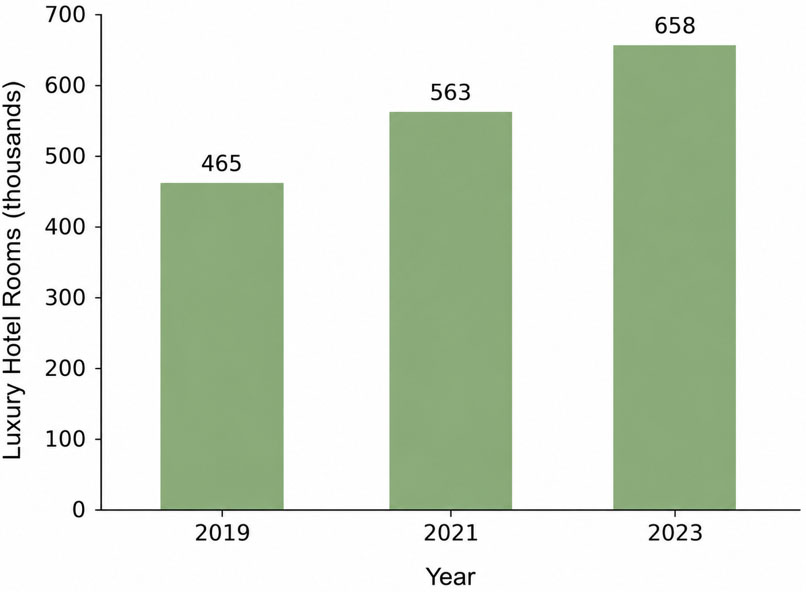
Figure 1. Number of luxury hotel rooms in China from 2019 to 2023. Values are expressed in thousands of rooms. Data source: WTTC[9]. WTTC: World Travel & Tourism Council.
Despite the increasing body of research on sustainable hospitality and tourism, comparative studies that explicitly clarify the functional roles, assumptions, and limitations of hotel GHG assessment frameworks remain limited[17,18,20]. Existing studies often focus on individual case studies or single methodologies, while industry tools, benchmarking systems, and certification schemes are frequently discussed together despite serving different purposes. This limits the ability of researchers and practitioners to interpret reported carbon footprints consistently and to select assessment tools that are appropriate for specific decision-making contexts.
To address this gap, the present study conducts a structured comparative methodological review of hotel-specific GHG assessment frameworks identified through database searches and targeted screening of peer-reviewed and grey literature. Rather than proposing a new carbon accounting method, the study develops a harmonized interpretive structure that organizes existing approaches according to their primary function, system-boundary depth, data requirements, and intended use. The resulting three-level logic distinguishes between core operational accounting, extended operational assessment, and comprehensive life-cycle analysis.
The practical implications of this structure are illustrated through a high-end international hotel case in Beijing, China. The case is not intended to provide a representative estimate for the Chinese hotel sector as a whole, but to demonstrate how differences in inventory, data availability, and methodological assumptions affect the interpretation of hotel carbon results. By connecting framework comparison with case-based illustration, the study aims to improve transparency, comparability, and context-sensitive interpretation of GHG assessment in high-end hotels.
METHODOLOGY
Literature search and screening
A structured literature review was conducted to identify the methodological approaches, benchmarking systems, and certification frameworks employed to evaluate GHG emissions in the hotel sector. Searches were conducted using the Scopus database (Elsevier; https://www.scopus.com) and the Web of Science Core Collection (Clarivate; https://www.webofscience.com) with Boolean combinations of keywords related to hotels or hospitality, LCA, carbon footprint, GHG emissions, benchmarking, sustainability assessment, and certification. Database searches were conducted in November and December 2025. The Scopus database was searched on 10 November 2025, and the Web of Science Core Collection was searched on 13 November 2025. Screening, refinement, and the selection of eligible studies continued until the literature review was finalized on 15 December 2025. The Scopus search covered publications from January 2010 to 10 November 2025, while the Web of Science search covered publications from January 2015 to 13 November 2025. The search strategy involved an iterative refinement process applied independently to each database. In Scopus, an initial broad query produced 102 records, which were progressively refined by narrowing the subject areas, restricting the results to English-language peer-reviewed publications, and applying a publication-year filter of 2010-2025. This refinement reduced the working set to 82 records, which were then screened by title and abstract for relevance; 36 records were excluded at this stage, yielding 46 records retained for comparative analysis. A parallel but independently conducted protocol was applied in the Web of Science, where an initial set of 183 records was similarly refined; a narrower publication-year filter of 2015-2025 was applied at this stage, as searches for records before 2015 in this database consistently returned results that were off-topic or lacked sufficient methodological relevance. This refinement reduced the working set to 68 records, which were screened by title and abstract for relevance; 43 records were excluded at this stage, yielding 25 records retained for comparative analysis. The two database searches were conducted and screened independently rather than pooled, and no deduplication step was applied between them, consistent with the structured comparative, rather than fully systematic, nature of this review. The titles and abstracts of the combined records were reviewed to exclude studies that addressed generic building assessments without specific applicability to hotels, research on tourism sustainability that lacked quantitative environmental evaluation, and publications that did not provide methodological transparency regarding emissions accounting or life-cycle system boundaries. Full-text screening was then conducted to confirm the final eligibility for inclusion in the comparative analysis of hotel-specific GHG and environmental assessment methodologies. Across both databases, this screening process yielded a combined total of 71 records (46 from Scopus and 25 from Web of Science) retained for the comparative framework analysis presented in this study.
In addition to peer-reviewed sources, widely used hotel sustainability frameworks are often documented in industry methodologies, technical manuals, and organizational reports rather than in peer-reviewed literature. Consequently, a targeted screening of the grey literature was conducted. This approach allowed for the inclusion of globally applied tools, such as operational carbon-accounting methodologies, benchmarking indices, and certification schemes, that influence real-world sustainability practices in the hospitality sector[12,13]. While benchmarking and certification documentation were reviewed for contextual understanding, they were not treated as peer-reviewed analytical sources within the literature dataset but were incorporated into the framework comparison stage.
Grey-literature sources were included when they were issued by recognized hospitality, tourism, sustainability, benchmarking, or certification organizations and provided methodological information relevant to hotel carbon, water, resource-use, benchmarking, or certification assessment. Sources were excluded when they were primarily promotional, lacked methodological or indicator-level detail, were not specific to hotels or accommodation services, or did not address emissions, resource use, benchmarking, or certification logic. Grey-literature documents were therefore used to characterize applied industry frameworks and their practical role in hotel sustainability assessment, rather than to replace peer-reviewed evidence.
After screening and integrating sources, the unit of analysis was established as assessment frameworks and methodological approaches rather than individual empirical hotel case studies. This aligns with the study’s aim of elucidating the methodological landscape of hotel GHG assessments rather than synthesizing emissions results across properties. In line with this aim, this review is framed as a structured comparative methodological review rather than a fully systematic literature review (SLR). Although transparent database searching and screening procedures were applied, the review was designed to support framework comparison rather than exhaustive bibliometric mapping. The inclusion of grey literature was necessary because several widely used hotel assessment tools are defined primarily through industry guidance, technical manuals, and certification documentation rather than peer-reviewed publications.
From this combined pool of 71 retained peer-reviewed and grey-literature sources, specific assessment frameworks were shortlisted for detailed comparative mapping [Table 1] according to three explicit, traceable inclusion criteria: (1) explicit status as a primary operational standard or reference framework within the 71 retained documents, rather than an incidental citation; (2) active, documented application in real-world hospitality carbon reporting as of 2023-2024; and (3) distinct categorization across the three identified functional sectors (methodological accounting, benchmarking, and certification) to ensure a balanced structural overview. Applying these criteria to the 71 sources directly isolated eight primary frameworks for comparison (HCMI, HWMI, Greenview HFT, Academic LCA, CHSB, EarthCheck, GSTC, and Ecostars). Frameworks that were mentioned only contextually in the literature pool or lacked sufficient public methodological documentation to analyze system boundaries and functional units were systematically excluded [Table 2].
Categorization of the three hotel sustainability frameworks according to their primary functional role, accompanied by representative examples
| Framework Classification | Summary | Key characteristics | Examples |
| Methodological | Tools that calculate emissions or resource impacts | • Systems boundaries defined • Functional units • Data inputs required • Emission scope | • HCMI[24] • HWMI[25] • Greenview HFT[26,27] • Academic LCA studies[14-17] |
| Benchmarking | Systems that compare performance across hotels | • Aggregated indicators • Normalization metrics • Cross-property comparison | • Cornell CHSB[12] • Greenview benchmarking indicators[26,27] |
| Certifications/Standards | Governance and verification systems | • Auditing and verification • Sustainability criteria • Communication/labeling | • EarthCheck[28] • GSTC[29] • Ecostars[30] |
Rationale for inclusion of selected hotel sustainability frameworks in the comparative analysis
| Framework | Category | Rationale for inclusion |
| HCMI[24] | Methodological accounting | Hotel-specific carbon accounting methodology designed for standardized operational emissions reporting and cross-property comparison |
| HWMI[25] | Methodological - resource accounting | Hotel-specific water accounting methodology relevant to extended operational resource assessment and indirect water-energy interactions |
| Greenview HFT[26,27] | Methodological accounting - applied data platform | Hotel-focused tool used to calculate operational carbon footprints and support portfolio-level emissions tracking |
| Academic LCA studies[14-17] | Methodological assessment | Peer-reviewed approaches that represent broader system-boundary assessment, including infrastructure, supply chains, and indirect emissions |
| CHSB[12] | Benchmarking | Major hospitality benchmarking initiative used to compare environmental performance across hotel categories, regions, and properties |
| EarthCheck[28] | Certification - governance | Widely used tourism and hospitality certification program and directly relevant to the Beijing case-study hotel |
| GSTC[29] | Certification - standard-setting | Global criteria framework that underpins sustainability certification and governance in the tourism and hospitality sector |
| Ecostars[30] | Certification - rating | Hotel-focused sustainability rating system used to communicate environmental performance to guests and market stakeholders |
Analytical classification of frameworks
In the analytical phase of this study, we focused on characterizing and comparing hotel-specific sustainability assessment frameworks identified through the database search and grey literature screening detailed in Section Literature search and screening Instead of aggregating quantitative emission outcomes from individual hotel case studies, the analysis delves into the methodological structure, functional purpose, and operational applicability of each framework. This approach aligns with the study’s primary goal of elucidating the conceptual and methodological landscape of GHG assessments in the hospitality sector, particularly in high-end hotel operations. The classification was therefore intended to distinguish the role each framework plays in assessment practice, rather than to rank frameworks according to methodological quality.
To facilitate a structured comparison of various assessment approaches, frameworks were categorized based on their primary functional role in evaluating GHG and carbon footprints. This classification process combined deductive reasoning, guided by established distinctions in the environmental assessment and sustainability accounting literature[22], with an inductive interpretation of recurring patterns observed in the reviewed academic methodologies and industry tools. Through this mixed interpretive approach, three analytically distinct yet conceptually related functional categories were identified: methodological calculation frameworks that outline procedures for quantifying emissions or environmental impacts; benchmarking systems that aggregate and normalize performance metrics to enable comparisons between hotels; and certification frameworks that focus on auditing, standardization, and communication of sustainability performance rather than on primary emissions quantification. This functional differentiation offers a coherent analytical structure for comparing tools that would otherwise remain methodologically non-equivalent to each other.
After classification, each framework was scrutinized using a consistent comparative structure aimed at capturing the essential methodological attributes pertinent to carbon footprint assessment in hotel settings. The determining factors were drawn from LCA standards and environmental accounting principles[23] but remained flexible enough to accommodate the unique characteristics of each framework identified during the review. Special attention was paid to defining system boundaries, selecting functional units, determining the scope of the included emission sources, and ensuring data requirements and transparency. Additionally, the degree of methodological standardization and practical applicability to various hotel types were considered in this study. The focus on high-end hotels highlights their unique blend of intensive service provision, extensive infrastructure, and diverse indirect emission sources, which can challenge the simplified accounting assumptions embedded in standardized tools.
In this study, LCA serves as a conceptual foundation for interpreting and harmonizing the various frameworks examined. LCA is a structured methodology designed to quantify environmental impacts throughout the entire life cycle of a product, service, or system, from resource extraction through operation to end-of-life management[23]. This approach enables consistent evaluation of energy use, emissions, and resource consumption within complex systems. In the hospitality sector, previous LCA applications have demonstrated their ability to identify environmental hotspots across hotel construction, operation, and waste management stages, while highlighting persistent challenges related to data availability, regional variability, and methodological inconsistency. Building on these insights, the present research does not conduct new case-study LCAs but instead applies LCA methodological principles as an analytical reference for evaluating boundary completeness, functional unit consistency, and emission scope coverage across existing hotel carbon footprint assessment frameworks. The Beijing case study presented in Section 3.5 is not a newly conducted LCA but a reuse of a previously completed thesis-based inventory analysis, presented here to illustrate boundary and methodological effects rather than to report original primary data collection.
The analytical procedure outlined above facilitated a structured comparison of how existing hotel assessment frameworks define system boundaries, functional units, emission scopes, data requirements, and governance roles for sustainability evaluation. Instead of merely aggregating numerical emissions results, the analysis aimed to clarify the conceptual and methodological differences between the framework types and identify areas of overlap or inconsistency. This comparative interpretation lays the groundwork for the framework-specific review presented in Section COMPARATIVE OVERVIEW OF HOTEL SUSTAINABILITY FRAMEWORKS, where methodological calculation approaches, benchmarking systems, and certification schemes are examined in detail and assessed for their applicability to high-end hotel contexts. This classification provides the structure used to examine the frameworks in the following section.
COMPARATIVE OVERVIEW OF HOTEL SUSTAINABILITY FRAMEWORKS
Hotel sustainability assessment has progressed through the concurrent development of various framework types, each differing in its methodological purpose, analytical depth, and operational application[24-30]. Instead of forming a single unified system, these existing approaches collectively create a layered assessment landscape in which emissions quantification, performance comparison, and governance certification are conducted using distinct yet interrelated mechanisms. Thus, understanding the structural relationships among these framework types is crucial for clarifying how GHG emissions are measured, interpreted, and communicated in the hospitality sector.
This section offers a structured overview of hotel sustainability frameworks by examining their shared methodological elements and their differences. Several core dimensions recur across frameworks, including the definition of system boundaries, selection of functional units, scope of included emission sources, and nature and intensity of required data inputs. These structural characteristics determine not only the completeness and comparability of the reported GHG results but also the practical feasibility of the framework’s application in operational hotel contexts. Identifying commonalities and inconsistencies across these dimensions provides an analytical basis for the harmonization discussion developed later in this paper.
To reflect their differing functional roles within sustainability assessments, hotel-related frameworks are reviewed in three groups: methodological calculation frameworks, benchmarking systems, and certification or standard-setting schemes [Table 1]. While analytically distinct, these categories operate in a partially hierarchical relationship, where benchmarking and certification mechanisms frequently rely on the underlying methodological calculations[12,24]. The following subsections examine each category, with particular attention to the implications for high-end hotel operations characterized by complex service provision, extensive infrastructure, and diverse indirect emission sources.
The representative frameworks included in the comparison were selected because they are either hotel-specific, widely applied in hospitality sustainability practice, directly relevant to operational carbon or resource accounting, or commonly used to support benchmarking and certification. As summarized in Table 2, the selected frameworks capture the main functional roles through which GHG-related sustainability assessment is conducted in the hotel sector, rather than providing an exhaustive inventory of all environmental rating systems used in buildings or tourism. Representative literature and grey-literature sources supporting each framework category are provided in Table 2. Together, these frameworks provide the basis for examining how hotel sustainability performance is calculated, benchmarked, verified, and communicated across different assessment contexts.
Methodological frameworks
Methodological frameworks serve as the analytical backbone of GHG assessments in the hospitality sector, as they dictate how emissions are calculated, which processes fall within the system boundaries, and what types of data are necessary for quantification. Unlike benchmarking systems or certification schemes that depend on aggregated indicators or governance criteria, methodological approaches offer core computational logic for measuring hotel-related emissions[12,13]. A review of the literature and industry documentation identified four key methodological approaches pertinent to hotel GHG assessments: the Hotel Carbon Measurement Initiative (HCMI), Hotel Water Measurement Initiative (HWMI), Greenview Hotel Footprinting Tool (HFT), and academic LCA models developed for hotel case studies. These approaches exhibit methodological variations primarily through four structural dimensions: system boundary definition, functional unit selection, data requirements, and the included GHG scope. Collectively, these factors determine the level of analytical completeness, comparability across hotels, and practical feasibility of implementation in the study’s operational contexts.
HCMI
The HCMI is the most widely adopted standardized operational accounting methodology for hotel emissions in international hospitality practices[24]. Its methodological framework deliberately limits system boundaries to direct fuel combustion and purchased energy related to hotel operations, allowing consistent calculation and reporting across properties. Emissions are normalized using service-based functional units, typically measured in kilograms of CO2 equivalent per occupied room-night or per unit floor area, based on metered energy consumption, occupancy metrics, and regionally appropriate emissions factors[24].
This operational focus enhances comparability and scalability across hotel portfolios, a feature highlighted in the industry benchmarking literature[12]. However, upstream supply chains, construction impacts, and other indirect life cycle processes fall outside the defined boundaries. While the HCMI provides robust operational intensity indicators, it does not capture the full environmental profile of hotel service provision, a limitation noted in comparative hospitality sustainability research[14,17].
HWMI
The HWMI offers a standardized approach to measure hotel water consumption and wastewater generation, employing harmonized operational accounting principles similar to those used in the HCMI[25]. Although HWMI does not directly measure greenhouse gas emissions, it is methodologically pertinent to carbon assessment, as water supply, heating, distribution, and treatment are energy-intensive processes that indirectly contribute to operational emissions throughout a hotel’s life cycle[31].
The HWMI primarily sets system boundaries at the level of on-site operational water flows, encompassing potable water consumption, non-potable water use, and wastewater discharge related to guest services and facility operations. Functional units are normalized to hotel activity, typically expressed per occupied room-night or per unit floor area, allowing for comparability across properties and supporting the integration with broader sustainability reporting frameworks[25].
Consequently, the required data inputs emphasize metered water consumption, occupancy statistics, and operational characteristics, rather than upstream infrastructure or supply chain processes[25]. In line with other operational accounting methodologies in the hospitality sector, the HWMI prioritizes reporting consistency, benchmarking compatibility, and practical feasibility over life-cycle completeness[24,25]. Upstream environmental burdens embedded in water production, conveyance, and treatment infrastructure are generally excluded from the defined boundary, limiting the framework’s ability to capture indirect resource emissions[25]. Nonetheless, the HWMI adds a valuable complementary dimension to operational sustainability assessment by enabling the harmonized quantification of resource-use intensity and facilitating integration with energy- and emissions-accounting approaches within hotel environmental management systems. For this reason, HWMI is treated in this study as an extended operational assessment framework rather than as a direct carbon-accounting tool[22].
Greenview HFT
The Greenview HFT, implemented through the Net-Zero Methodology for Hotels, offers a systematic approach to measure hotel carbon emissions by integrating portfolio-level data, utilizing standardized emission factor libraries, and employing centralized reporting logic[26,27]. This methodology is designed to aid in net-zero transition planning by establishing a consistent baseline for operational emissions and allowing for the gradual inclusion of indirect sources as data availability and organizational maturity evolve. Operational consumption data are collected from various properties, while functional units are aligned with management-relevant indicators, such as emissions per occupied room or revenue-normalized intensity metrics, enabling internal comparisons and performance tracking across hotel portfolios[26,27].
Methodologically, the Greenview approach is primarily operational in scope, focusing on direct fuel use and purchased energy as its core system boundaries. It also allows optional extensions to selected indirect emission sources, aligning with Scope 3 accounting guidance[26]. This modular boundary structure enhances the practical feasibility and scalability of corporate reporting but introduces variability in the completeness of the emissions inventories across different implementations. Consequently, transparency regarding boundary assumptions and indirect-emission coverage is contingent on the reporting configuration, highlighting the trade-off between methodological rigor and managerial usability in portfolio-scale sustainability assessment tools within the hospitality sector.
Academic LCA-based hotel assessment approaches
In academic contexts, LCA applications offer the most comprehensive methodological perspectives in the literature[14-17]. Unlike operational accounting tools, which are primarily designed for standardized reporting, these studies extend system boundaries beyond the daily operations of hotels to encompass construction materials, infrastructure systems, supply chains, and renovation activities. This broader perspective enables the assessment of environmental impacts across various stages of the hotel life cycle, uncovering emission sources that operational inventories do not capture.
Functional units typically align with hotel service delivery and are often expressed per guest-night, per occupied room, or per unit of floor area[14-17]. However, the datasets required to support these analyses are far more detailed than those used in industry accounting frameworks. Beyond operational energy consumption, inventories frequently include materials, equipment, building components, and selected supply chain processes. This broader scope enables researchers to identify environmental hotspots and evaluate how infrastructure and service intensity affect overall emissions[14-17].
Despite the analytical depth of life cycle approaches, their routine application in the hospitality sector poses several practical challenges. Data availability can vary significantly across properties, and modeling choices often rely on case-specific assumptions and external databases[14,17]. These constraints limit the comparability across studies and complicate the implementation of comprehensive life-cycle approaches within standardized industry reporting systems.
Summary of methodological framework characteristics
The methodological frameworks reviewed in this section collectively demonstrate the range of approaches employed to evaluate the sustainability performance of hotels. Operational accounting tools focus on standardized metrics and comparability across properties, whereas hybrid industry systems broaden environmental coverage while remaining user-friendly for hotel operators. Academic LCA models offer the most comprehensive depiction of environmental impacts. Therefore, each approach represents a distinct balance between analytical depth and practical implementation. Table 3 summarizes the main methodological characteristics of the frameworks reviewed in this section.
Comparison of methodological frameworks used in hotel GHG emissions assessment
| Framework | Type | System boundary | functional unit | Data requirements | Typical use |
| HCMI[24] | Operational accounting | Direct fuel + electricity | Room-night | Low | Corporate reporting |
| HWMI[25] | Resource accounting | Water + wastewater | Room-night | Low | Resource benchmarking |
| Greenview HFT[26,27] | Hybrid industry tool | Operational + selected indirect | Room-night/portfolio | Medium | Portfolio analysis |
| Academic LCA[14-17] | Life-cycle analysis | Construction + operation + supply chains | Room-night/floor area | High | Research/deep assessment |
These differences are primarily manifested through variations in the system boundaries, data requirements, and intended applications. Operational frameworks concentrate on measurable on-site activities and energy use, whereas life cycle approaches encompass broader infrastructure and supply chain processes that shape the overall environmental profile of hotel services. Consequently, findings from different frameworks cannot always be directly compared, even when they target similar sustainability objectives. Understanding these structural differences is crucial for interpreting sustainability metrics reported in the hospitality sector. The patterns identified in this section lay the groundwork for the comparative analysis, where the implications of these methodological variations are explored, and a harmonized interpretive structure is proposed.
Benchmarking frameworks
Benchmarking frameworks consolidate environmental performance data from various hotels to facilitate comparisons across properties, brands, and geographic regions. In contrast to methodological accounting tools, benchmarking systems generally do not establish emission calculation methods. Instead, they compile standardized indicators derived from foundational reporting systems and operational datasets. Consequently, benchmarking primarily serves as an interpretive layer within broader sustainability assessments. Within the hospitality sector, the Cornell Hotel Sustainability Benchmarking Index represents one of the most prominent examples of this framework type[12]. In this study, benchmarking frameworks are therefore treated as contextual comparison tools rather than primary calculation methodologies. This distinction is important because benchmark values can support interpretation of hotel performance, but they should not be used as direct substitutes for transparent inventory-based assessment.
Cornell Hotel sustainability benchmarking index
The Cornell Hotel Sustainability Benchmarking Index (CHSB) stands as the most comprehensive benchmarking initiative currently available in the hospitality sector[12]. Developed through collaboration between academic researchers and industry partners, the CHSB compiles environmental performance data from thousands of hotels worldwide. Participating properties report metrics such as energy consumption, water use, and greenhouse gas emissions, which are normalized using activity-based indicators such as per occupied room or per square meter[12].
Since the dataset is drawn directly from operational reporting, the CHSB offers valuable insights into sector-wide sustainability performance and facilitates comparisons between hotel categories, geographic regions, and management practices. The database supports academic and industry research on environmental trends in hospitality and to contextualize individual property performance[32]. However, benchmarking systems such as the CHSB remain dependent on the methodological assumptions embedded in the data reported by participating hotels. Variations in emission factors, reporting boundaries, and data availability can affect result comparability. Consequently, benchmarking indicators are most useful as contextual reference points rather than precise measurements of environmental performance.
Greenview’s intermediate position
Greenview holds a middle ground in hotel sustainability assessment tools. As outlined in Section Greenview HFT, the Greenview HFT is primarily crafted as a methodological platform that allows hotels to compute their operational carbon emissions using standardized activity data, emission factors, and reporting structures. Simultaneously, the aggregated datasets produced through the HFT platform are often employed for comparative analyses across hotel portfolios and geographic regions. These datasets enable participating hotels to assess their environmental performance against industry averages, serving a benchmarking role within the sector[26,27].
However, it is crucial to recognize that such comparisons rely heavily on the methodological assumptions used to generate underlying data. Variations in system boundaries, emission factors, data completeness, and reporting practices can significantly impact the calculated averages. Consequently, benchmarking indicators derived from Greenview datasets are most valuable when interpreted with a clear understanding of the calculation methodology on which they are based[26,27].
Certification frameworks
Certification frameworks constitute a third and distinct category of sustainability tools in the hospitality sector. While methodological accounting approaches concentrate on quantifying environmental impacts and using benchmarking systems to compare performance across properties, certification programs prioritize governance, verification, and communication of sustainability performance[13]. These frameworks set criteria that hotels must meet to demonstrate environmental responsibility and ongoing improvement. Although certification programs often require the reporting of environmental data, the underlying calculation methods are usually derived from external accounting tools or internal proprietary systems rather than publicly standardized methodologies. Unlike methodological accounting frameworks, certification programs typically do not define how emissions are calculated. Instead, they rely on externally generated environmental indicators and translate them into governance standards that can be audited and communicated across the hospitality industry.
EarthCheck
EarthCheck is one of the most established sustainability certification systems in the global tourism and hospitality sectors[28]. The program assesses participating hotels using various environmental indicators, such as energy use, water consumption, waste management, and greenhouse gas emissions. The performance data reported by these hotels were compared with regional baselines derived from aggregated industry data, enabling them to demonstrate progress relative to sector averages. Certification is granted through a tiered system that reflects a property’s performance level and duration of participation in the program. Hotels can advance through the Bronze, Silver, Gold, and Platinum levels as they enhance their environmental management practices[28]. Since EarthCheck incorporates benchmarking and auditing procedures within a broader governance framework, the detailed emissions inventories used in the certification process are not always publicly disclosed. This structure allows hotels to demonstrate environmental progress while maintaining flexibility in their choice of underlying accounting methodologies.
The luxury hotel analyzed in this study is a participant in the EarthCheck program[28] and currently holds a Silver certification, signifying verified improvements in environmental performance over multiple reporting cycles. However, the specific emissions calculations supporting this rating are not publicly available, which restricts direct methodological comparisons with the accounting approaches examined earlier in this study.
Global Sustainable Tourism Council
The Global Sustainable Tourism Council (GSTC) offers internationally recognized sustainability criteria that underpin numerous tourism certification programs worldwide[29]. Instead of serving as a direct measurement tool, the GSTC outlines a set of principles encompassing environmental management, social responsibility, cultural heritage protection, and sustainable economic practices.
In the hospitality sector, the GSTC criteria assist certification bodies in assessing sustainability practices in hotels[29]. Hotels aiming for certification must comply with requirements related to energy efficiency, waste reduction, water management, and implementation of environmental policies. The GSTC emphasizes governance standards over emissions quantification; therefore, it does not mandate a specific methodology for calculating carbon footprints. Instead, certified organizations may use existing accounting frameworks or internal monitoring systems to report their environmental performance. As a result, the GSTC functions primarily as an umbrella governance framework that aligns diverse sustainability tools under a common set of principles rather than prescribing a single calculation method.
Ecostars
Ecostars is a sustainability certification initiative that primarily targets the European hospitality industry[30]. The program assesses hotels based on their environmental management practices and operational performance indicators, such as energy consumption, water usage, waste generation, and sustainability policy. Participating hotels receive sustainability ratings that convey their environmental performance to guests and stakeholders alike.
Similar to other certification systems, Ecostars mainly serves as a verification and communication tool rather than a methodological accounting instrument[30]. In this way, the program emphasizes transparency and consumer communication over methodological standardization. Environmental indicators are employed to evaluate progress and promote improvements in resource efficiency; however, detailed emissions calculations are generally obtained from external tools or internal reporting systems.
Role of certification frameworks
Certification frameworks collectively serve as governance layers for sustainability assessments within the hospitality sector. They convert environmental performance into recognizable labels that indicate adherence to established standards and promote improvement. Since certification programs depend on underlying accounting methodologies and performance indicators, they are best understood in conjunction with the methodological and benchmarking frameworks previously discussed. Understanding these relationships is crucial for evaluating sustainability claims and comparing the environmental performance of hotels. Consequently, certification schemes should not be interpreted as independent carbon accounting methods, but rather as institutional mechanisms that translate environmental data into recognizable sustainability signals for the market[28-30].
Comparative analysis and harmonization
Comparison across frameworks
While the reviewed frameworks all aim to support environmental performance assessment in the hospitality sector, they vary significantly in their approaches to emission scopes, system boundaries, data requirements, and practical applicability for sustainable hotel operations. These methodological differences impact both the comprehensiveness of the reported GHG emissions and the comparability of the results across different hotels.
A key distinction lies in the scope of emissions included in each framework. Operational accounting tools, such as the HCMI, primarily focus on direct fuel consumption and purchased electricity related to hotel operations, adhering to standardized GHG accounting principles that facilitate consistent comparisons between properties[24]. This operational focus aids portfolio-level reporting and benchmarking but omits many upstream and downstream processes from the analysis. Conversely, academic life-cycle studies often expand system boundaries to include construction materials, supply chains, maintenance activities, renovations, and end-of-life considerations, thereby capturing a broader range of environmental burdens associated with hospitality services[15,14,17].
Another point of variation is the definition of the system boundaries. Industry-oriented methodologies are typically designed to prioritize standardized reporting and manageable data collection across hotel portfolios. Tools such as HCMI and related sector initiatives thus focus on operational emissions that can be directly measured through utility data and activity indicators[24]. Corporate tools, such as the Greenview HFT, extend this approach by integrating property-level operational data into centralized reporting systems and standardized emission factor libraries[26]. While these methods support comparability and large-scale applications, they may exclude infrastructure and supply chain processes commonly addressed in LCA studies[14,17].
The data requirements further distinguish these frameworks. Operational accounting methodologies are intentionally structured around data that hotels routinely collect, such as electricity and fuel consumption, occupancy levels, and basic facility characteristics. This design facilitates widespread adoption and consistent reporting across international hotel portfolios. However, life-cycle approaches require much more detailed inventories of materials, services, and upstream activities, often relying on databases and assumptions when direct information is unavailable[15]. As a result, such models are generally applied in research contexts or individual case studies rather than in routine industry practices.
Differences in methodological structures also influence the applicability of each framework to complex hotel settings. High-end hotels often include restaurants, wellness facilities, conference spaces, and other service-intensive operations that significantly affect energy demand and the indirect emissions. Standardized accounting frameworks provide accessible indicators suitable for benchmarking and corporate reporting, whereas life-cycle models offer deeper analytical insights but require substantial data collection and modeling[14,17]. These contrasts highlight a recurring trade-off between analytical completeness, cross-property comparability, and practical feasibility, which characterizes the current approaches to GHG assessment in the hospitality sector.
Toward a harmonized GHG assessment
The comparative analysis reveals that current hotel sustainability frameworks function at varying analytical levels and are crafted to support diverse decision-making contexts. Industry methodologies often focus on standardized operational accounting, whereas academic studies tend to adopt broader life-cycle perspectives to capture additional environmental impact sources. Previous research has consistently demonstrated that methodological choices significantly affect both the magnitude of reported emissions and the comparability of results across hotels and regions[2,6,14].
Several methodological patterns have consistently emerged in the literature reviewed in this study. Most assessments rely on activity-based functional units linked to hotel service provision, typically expressed per guest-night, per occupied room, or per unit of floor area[14,17]. Operational energy consumption related to heating, cooling, and electricity use is widely recognized as the primary contributor to hotel emissions[4,6]. Consequently, operational energy data form the basis of most existing accounting methods.
Previous studies have highlighted significant limitations in the narrowly defined operational frameworks. Life cycle analyses have shown that substantial environmental impacts may arise from indirect sources such as construction materials, infrastructure, and supply chains[15,14,17]. However, incorporating these processes significantly increases data requirements and methodological complexity, which can limit their applicability in routine hotel operations. As a result, many industry tools deliberately restrict system boundaries to maintain consistency and feasibility across large hotel portfolios. These observations suggest that hotel GHG assessments can be more clearly interpreted through a layered analytical structure that reconciles the strengths of existing approaches. Therefore, the conceptual framework proposed in this study distinguishes three progressively broader levels of assessment [Figure 2]. These three levels reflect the progression from standardized reporting to comprehensive environmental analysis.
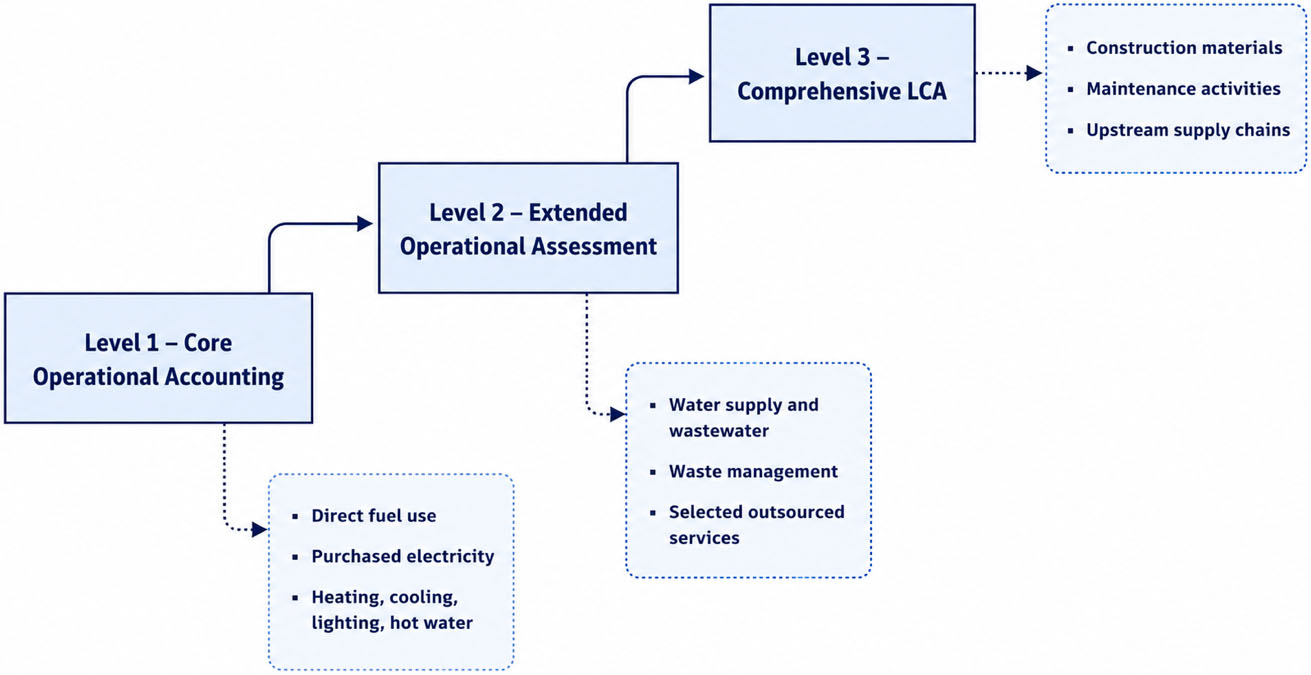
Figure 2. The tiered conceptual structure of hotel assessment approaches emerged from the comparative framework analysis conducted in this study, with each level expanding outward and increasing in complexity. LCA: Life-cycle assessment.
• Level 1 - Core Operational Accounting: This level defines the essential system boundary required for a standardized comparison among hotels and aligns closely with current operational accounting practices. It emphasizes emissions linked to direct on-site fuel use and electricity purchased for key hotel services, including heating, cooling, lighting, and hot water. Functional units are generally activity-based, such as emissions per guest-night or per occupied room, facilitating consistent benchmarking across different properties.
• Level 2 - Extended Operational Boundary: The second level broadens the operational perspective by incorporating additional resource flows that impact hotel emissions, all of which can still be measured using management data systems. These typically encompass water supply and wastewater treatment, waste management processes, and certain service-related supply chains, such as outsourced laundry or food services. By including these elements, the environmental representation is enhanced without adding undue complexity.
• Level 3 - Comprehensive LCA: The third level involves a comprehensive life-cycle analysis, which broadens the system boundary to encompass modeling, construction materials, maintenance activities, and upstream supply chains. This method allows for the identification of environmental hotspots and wider system impacts, but it demands significantly more detailed data and modeling efforts, making it more commonly applied in academic research.
Examining existing frameworks through this tiered lens elucidates how operational accounting tools, industry reporting systems, and academic life-cycle models each play a complementary role in sustainability assessments. This is particularly relevant for high-end hotels, where diverse facilities and service-intensive operations result in complex resource flows. By integrating insights from these various analytical levels, a more comprehensive understanding of environmental performance can be achieved. The proposed harmonized structure does not seek to replace existing methodologies but rather offers a conceptual foundation for interpreting their interrelationships and appropriate applications. By clarifying how different approaches are interconnected, the framework can enhance the transparency, comparability, and practical utility of GHG assessments in the hospitality sector.
Case study: high-end hotel in China
To demonstrate the practical application of various carbon footprint assessment frameworks, this study focused on a large international luxury hotel in Beijing, China. This property, part of a globally renowned hotel chain, caters to both domestic and international guests, blending European-style luxury with local hospitality expectations. The hotel includes approximately 480 guest rooms over about 46,000 m2, six restaurants, ten conference rooms, wellness facilities, a heated rooftop pool, and centralized HVAC systems. Because the operational records were provided at hotel level, energy and water demand could not be attributed to individual compartments; this limitation is reflected in the inventory treatment summarized in Table 4. Such large-scale properties operate continuously and demand significant energy and resource inputs, making them ideal for exploring the practical implications of different sustainability assessments.
Inventory categories, data sources, boundary levels, and limitations for the Beijing hotel case study
| Inventory category | Data source | Treatment in analysis | Boundary level | Notes and limitations |
| Electricity consumption | Hotel operational records | Included as purchased electricity use | Level 1 / Level 2 | Corrected using recovered March meter-log data from internal facility records. The 2022 Beijing provincial grid CO2 emission factor (MEE, December 2024)[34] was applied |
| Heating / boiler energy | Hotel operational records | Included as operational energy demand | Level 1 / Level 2 | Represents energy used for space heating and hot water production. Emission factor based on Meng et al. (2025)[35], derived using the 2019 IPCC Refinement |
| Kitchen / service energy | Hotel operational records | Included as service-related operational energy | Level 2 | Represents restaurant and food-service operations where data were available. Emission factor based on Meng et al. (2025)[35], derived using the 2019 IPCC Refinement |
| Water consumption | Hotel operational records | Included as an operational resource flow | Level 2 | Assessed at the whole-building level. Emission factor based on Smith and Liu (2017)[31], adjusted using the 2022 Beijing electricity grid emission factor |
| Waste generation | Hotel records and available estimates | Included where data were available | Level 2 | Waste streams were treated in aggregated form because detailed waste composition data were unavailable |
| Occupancy / guest-nights | Hotel operational records | Used to normalize emissions intensity | All levels | The functional unit is expressed as kg CO2-eq per guest-night |
| Floor area | Hotel and property information | Used as contextual information and an optional normalization reference | All levels | Approximate total floor area was used to characterize the case study |
| Infrastructure and supporting processes | Thesis-based LCA inventory[33] and secondary data where required | Included only where sufficient data or defensible assumptions were available | Level 3 | Not fully disaggregated because of data availability and confidentiality constraints |
The hotel’s environmental performance was assessed by drawing on the 2023 operational dataset and inventory-based calculation originally compiled for the first author’s master’s thesis[33], which is summarized and reframed here to illustrate the practical implications of the harmonized structure proposed in this study. The dataset included 2023 hotel-level operational records for electricity consumption, heating gas, kitchen gas, water consumption, waste generation where available, and monthly occupancy rates. These data were treated at the whole-building level because facility-level disaggregation by restaurants, conference rooms, wellness areas, or laundry operations was not available. Activity-based functional units commonly employed in hospitality sustainability studies were utilized, including emissions per guest-night and per floor area[14,17]. Reliance on operational records ensured that the analysis accurately reflected the actual performance of the building rather than generalized assumptions. To improve transparency regarding the case-study application, Table 4 summarizes the main inventory categories, data sources, treatment, and limitations considered in the Beijing hotel assessment. Electricity emissions were calculated using a China/Beijing grid-based factor where available, while water and gas-related factors were derived from LCA databases and literature sources when region-specific values were not available.
Data processing for the baseline case study began with a rigorous data audit to eliminate gaps and verify the accuracy of the available records. Although the hotel’s original commercial billing file contained incomplete data for March 2023, with only the opening day’s entry recorded, the primary facility-level daily meter logs were successfully recovered. These logs allowed the complete reconstruction of electricity consumption for the entire month, removing the need for statistical interpolation or averaging. The audit also revealed that electricity consumption had been overstated in the preliminary billing summaries. After integrating the verified daily meter data, the annual electricity consumption was corrected to 13,791,000 kWh. The corresponding greenhouse gas emissions were then calculated by applying an electricity emission factor of 0.5580 kg CO2-eq/kWh, representing the official 2022 Beijing provincial grid emission factor published by the Ministry of Ecology and Environment and the National Bureau of Statistics in December 2024[34]. A Beijing-specific factor was selected instead of the national average because China’s provincial electricity grids differ considerably in their energy mixes, and the hotel is located in Beijing. Emission factors for stationary combustion were set at 2.1622 kg CO2-eq/m3 for both heating gas and kitchen gas, based on Meng et al.(2025)[35]. Domestic water consumption was assigned a combined emission factor of 0.301 kg CO2-eq/m3, derived by multiplying the energy intensities reported for urban water supply (0.29 kWh/m3) and wastewater treatment (0.25 kWh/m3) by the same 2022 Beijing grid factor [(0.29 + 0.25) × 0.5580 = 0.301 kg CO2-eq/m3], following the energy-intensity data reported by Smith and Liu (2017)[31]. As shown in the calculation matrix provided in Supplementary Materials, multiplying the annual activity data by their respective emission factors resulted in a total annual carbon footprint of 11,161,062.7 kg CO2-eq. When divided by the hotel’s recorded 116,376 guest-nights, this corresponds to a carbon intensity of approximately 95.9 kg CO2-eq per guest-night.
For contextual reference, the Greenview Hotel Footprinting Tool reports an operational carbon-footprint benchmark of approximately 36.7 kg CO2-eq per guest-night[26,27] for five-star hotels in Beijing. The tool calculates hotel carbon-footprint estimates using market-level benchmark data from the Cornell Hotel Sustainability Benchmarking Index, with user-selected parameters including location, hotel type, rooms occupied, meeting-space area, and meeting duration[26,27]. In the present study, this value is used as an operational benchmark reference[26,27] rather than as a case-study result calculated from the Beijing hotel inventory. Consistent with common hotel-industry practice (including the HCMI and Greenview HFT methodologies described in Section Methodological frameworks), “guest-night” throughout this case study denotes an occupied room-night (one occupied room for one night), rather than an individual guest headcount; the hotel's reported 116,376 guest-nights therefore represents an occupied-room-night total (approximately 480 rooms × 365 days at the property's 2023 average occupancy rate), placing it on the same basis as the Greenview HFT benchmark. By contrast, the thesis-derived emissions estimate for the Beijing case-study hotel was calculated to be approximately 95.9 kg CO2-eq per guest-night for 2023. This estimate reflects a broader analytical boundary based on the inventory categories summarized in Table 4. The contrast between these two values, shown in Figure 3, is therefore not intended to rank the case-study hotel against the benchmark sample, but to illustrate how different system boundaries, data sources, and methodological assumptions produce different types of carbon information. Previous hotel life-cycle studies have similarly shown that incorporating indirect processes and more detailed activity data can reveal environmental impacts not captured by simplified operational accounting approaches[15,14,17].
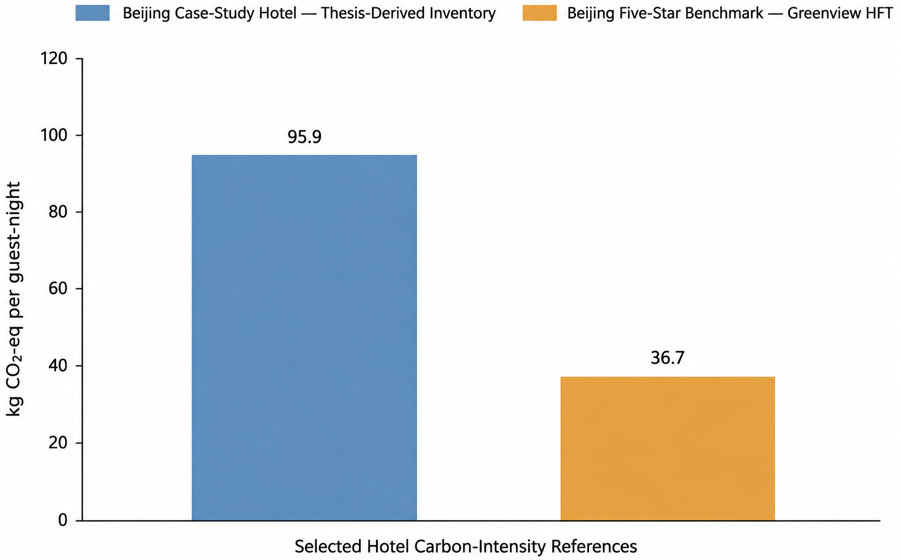
Figure 3. Methodological contrast between selected hotel carbon-intensity values expressed as kg CO2-eq per guest-night. The Beijing case-study hotel value reflects the extended operational emissions estimate derived from local property data, whereas the Beijing five-star value represents the baseline operational benchmark reference obtained from the Greenview HFT. HFT: Hotel Footprinting Tool.
The hotel reports its sustainability performance through the EarthCheck certification program, currently holding a Silver certification level. However, the detailed emissions inventory underlying this certification is not publicly disclosed, limiting direct methodological comparisons with the analytical approaches examined in this study. Therefore, this case illustrates the complex relationship between operational accounting tools, benchmarking datasets, and certification systems discussed in Section Benchmarking frameworks. A comparison of the case study results across the assessment approaches is presented in Table 5. This comparison highlights how the choice of framework fundamentally shapes both the reported emissions values and the interpretation of sustainability performance.
Methodological contrast between the thesis-derived extended operational emissions estimate, industry benchmark data, and certification frameworks for the evaluated Beijing luxury hotel
| Framework | Type | System Boundary | Functional Unit | Result |
| Thesis-derived Operational Emissions Estimate | Academic methodological approach[33] | Expanded operational + supporting processes | kg CO2-eq per guest-night | 95.9 kg CO2-eq per guest-night |
| Greenview HFT Operational Benchmark Reference | Industry benchmarking[26,27] | Standardized operational emissions | kg CO2-eq per guest-night | 36.7 kg CO2-eq per guest-night (Beijing 5-star average) |
| EarthCheck | Certification framework[28] | Certification and benchmarking criteria | Not publicly reported | Silver certification (detailed emissions inventory not publicly reported) |
Operational characteristics of high-end hotels
High-end hotels are intricate service systems rather than mere single-purpose buildings. Beyond guest accommodation, these establishments typically feature restaurants, conference facilities, laundry operations, spas, and recreational services, all of which contribute to the overall energy demand and resource consumption of the hotel. Previous studies on hotel environmental performance have consistently identified heating, cooling, lighting, and hot water production as the primary drivers of operational carbon emissions[2,4,6]. This complexity increases the likelihood that simplified accounting approaches may overlook important emission sources embedded within service provision and infrastructure systems.
The Beijing case follows this pattern, with building energy demand dominating the inventory. On an annual basis, electricity and heating gas were the largest quantified emission sources, contributing approximately 7,695.4 tonnes CO2-eq and 3,052.7 tonnes CO2-eq, respectively. By comparison, kitchen gas and domestic water contributed 336.8 tonnes CO2-eq and 76.2 tonnes CO2-eq, respectively[31,33,34]. However, a broader assessment of the operational system identified additional contributors associated with service activities and the overall scale of hotel operations. These findings reinforce earlier research indicating that hospitality emissions are significantly influenced by infrastructure size, service intensity, and occupancy patterns[14,17]. These characteristics make luxury hotels valuable test environments for evaluating sustainability frameworks. While simplified operational accounting approaches can provide consistent benchmarking indicators, they may not fully capture the structural and service-related drivers of emissions in large hospitality properties.
Regional context and data considerations
The application of international sustainability frameworks in the Chinese hospitality sector presents distinct methodological challenges. The energy systems, regulatory frameworks, and data availability in China differ significantly from those assumed in many global tools. China’s electricity mix, which is historically characterized by a substantial reliance on coal-based generation, directly affects the carbon intensity associated with energy consumption in hotels[10,20]. Consequently, emissions calculated using generic global emission factors may not accurately reflect the environmental impacts of hotel operations in the Chinese energy system.
Furthermore, district heating systems, centralized cooling infrastructure, and region-specific waste management practices influence emission accounting and boundary definitions. These structural differences suggest that sustainability tools developed for global comparisons may require adaptation when applied to local contexts. Previous research on environmental assessments in the hospitality sector has highlighted that incorporating region-specific energy data and infrastructure characteristics can significantly enhance the reliability of emissions estimates[12,21].
Data availability is also crucial in shaping sustainability assessment outcomes. Detailed operational data collected directly from hotel management, such as energy consumption records, occupancy rates, and infrastructure specifications, enable more accurate emission modeling. However, such information is not always accessible within standardized benchmarking platforms, potentially leading to discrepancies between reported performance indicators and actual environmental impacts.
Interpreting case study results using the harmonized framework
The harmonized framework introduced in Section Toward a harmonized GHG assessment offers a structured perspective for interpreting the results of the Beijing luxury hotel case study. Table 6 maps the case-study inventory to the three harmonized assessment levels, clarifying which data inputs support each level and how each level contributes to interpretation.
Mapping of Beijing case-study data to the harmonized assessment levels
| Harmonized assessment level | Purpose | Case-study data inputs | Interpretation |
| Level 1 - Core operational accounting | Supports standardized reporting and operational benchmarking | Electricity use, fuel or heating energy, occupancy / guest-night normalization | Provides a consistent operational reference for comparison with industry benchmarks |
| Level 2 - Extended operational boundary | Captures additional resource flows linked to hotel service provision | Water use, waste generation, kitchen or service-related energy, selected operational flows | Improves representation of service-intensive hotel operations while remaining feasible with management data; yields the case-study result of 95.9 kg CO2-eq per guest-night reported in Supplementary Materials[33] |
| Level 3 - Comprehensive LCA | Expands assessment toward broader life-cycle impacts | Broader life-cycle-informed inventory categories and supporting assumptions where data were available | Would identify additional emissions and structural drivers beyond the Level 2 estimate reported here; a direction for future research rather than a result of the present case study |
At Level 1, sustainability assessment emphasizes standardized operational accounting, typically encompassing direct fuel consumption and purchased electricity related to hotel operations. Viewed through this lens, the environmental performance of the case-study hotel can be contextualized using industry reference values from the Greenview HFT datasets. These datasets indicate that five-star hotels in Beijing report an average operational footprint of approximately 36.7 kg CO2-eq per guest-night [Figure 3][26,27]. This value serves as a benchmarking reference derived from aggregated industry reporting rather than a result calculated within the present study and therefore provides contextual information rather than a directly comparable measurement.
At Level 2, broadening the analytical scope to include additional operational flows, such as water supply, waste treatment, and selected service activities, provides a more comprehensive representation of environmental performance[31] while remaining feasible with operational management data. The availability of detailed records from the Beijing hotel, including electricity consumption, water use, waste generation, and occupancy information, enabled the inclusion of these resource flows alongside core energy demand. This intermediate boundary corresponds to the case-study inventory categories that extend beyond core energy use, particularly water, waste, and service-related energy flows. It also mirrors the structure of many industry methodologies that aim to balance methodological rigor with practical applicability for hotel operators.
At Level 3, a life-cycle perspective would further incorporate infrastructure, materials, and upstream supply chains. This broader boundary was not applied to the Beijing case, as the available hotel-level dataset did not include construction, infrastructure, or supply-chain inventory data; the case study therefore reflects a Level 2 (extended operational) boundary rather than a comprehensive Level 3 LCA. The contrast between the thesis-derived operational inventory Level 2 estimate (95.9 kg CO2-eq per guest-night) and the Level 1 operational benchmark (36.7 kg CO2-eq per guest-night) highlights how differences in system boundaries and data completeness can significantly influence reported carbon intensities. Previous hotel life-cycle studies suggest that a full Level 3 assessment would likely reveal additional environmental burdens not captured by the extended operational boundary applied here[15,14,17].
The three-level interpretation therefore separates benchmarking, extended operational assessment, and life-cycle analysis as distinct but connected forms of evidence. This distinction is important because the usefulness of each result depends on the decision-making context for which it is applied.
Through this layered perspective, the Beijing hotel case illustrates that different sustainability frameworks generate complementary insights rather than directly comparable results. Operational accounting tools facilitate benchmarking and routine sustainability reporting, certification programs such as EarthCheck provide governance and verification mechanisms[28], and life-cycle-based analyses help identify structural drivers of emissions and potential long-term mitigation opportunities. Interpreting hotel carbon footprints within a harmonized framework therefore enhances transparency and clarifies how different assessment approaches contribute to understanding environmental performance in complex hospitality environments.
DISCUSSION AND CONCLUSIONS
Key insights from the framework comparison
The comparison in this study shows that differences between hotel GHG assessment frameworks arise primarily from their intended analytical functions rather than from simple inconsistencies in measurement. Methodological tools such as HCMI and Greenview HFT are designed to quantify operational emissions in a standardized manner[24,27], while academic life-cycle approaches extend the assessment boundary to include broader infrastructure, supply chain, and service-related processes. Certification programs operate at a different level, emphasizing governance, verification, and communication rather than primary emissions calculation.
This distinction helps explain why hotel carbon results can vary substantially across frameworks. Operational accounting frameworks prioritize comparability and routine reporting, whereas life-cycle approaches prioritize boundary completeness and hotspot identification. The harmonized structure proposed in this study therefore provides a way to interpret existing tools according to their purpose, data requirements, and boundary depth, rather than treating them as competing or directly interchangeable methods.
Comparison with previous studies
Previous studies on hotel sustainability have commonly focused on either individual case studies or the application of a single assessment method. Much of this literature identifies operational energy demand, particularly heating, cooling, lighting, and electricity use, as a major contributor to hotel emissions[2,4]. The Beijing case is consistent with this pattern, as building energy demand represented a central component of the case-study inventory.
However, LCA-based studies show that the interpretation of hotel environmental performance changes when system boundaries extend beyond core operational energy use[14,15,17]. Studies incorporating construction materials, supply chains, waste treatment, and supporting services have shown that broader inventories can reveal emission sources that remain outside simplified operational accounting frameworks[15,17]. This supports the need to distinguish between operational benchmarking results and life-cycle-informed assessments.
The contribution of the present study is to connect these methodological differences to the functional roles of existing hotel assessment frameworks. Rather than comparing individual carbon footprint values in isolation, the proposed harmonized structure clarifies why different tools produce different types of information and how these outputs should be interpreted in relation to their boundaries, data requirements, and intended use.
Implications for high-end hotels in China
High-end hotels provide a useful setting for examining the limits of existing GHG assessment frameworks because their operations combine accommodation, food service, events, wellness facilities, and intensive building services within a single property. These functions generate resource flows that are not always visible in simplified operational accounting, particularly when data are aggregated at the whole-building level. The Beijing case illustrates this challenge by showing that framework selection affects not only the magnitude of reported emissions, but also the type of operational information made visible to hotel managers.
For hotels operating in China, this issue is further shaped by regional energy systems, infrastructure conditions, and evolving policy requirements. Carbon intensity, district energy systems, building age, and waste-management practices can all influence the interpretation of hotel emissions[20,21]. As a result, international benchmarking values should not be applied without considering the local conditions under which hotel operations take place. This is particularly important for high-end properties, where large, fixed energy loads and service-intensive activities may amplify the influence of regional emission factors and infrastructure assumptions.
The implication is not that operational benchmarks are unsuitable, but that their role should be clearly defined. Benchmarking indicators are useful for portfolio comparison and routine performance tracking, whereas extended operational inventories and life-cycle-informed assessments are better suited to identifying the drivers of emissions in complex properties. For high-end hotels in China, a harmonized assessment logic can therefore support more transparent interpretation of carbon results by linking each type of framework to its appropriate decision-making context.
Implications for framework development and policy
The findings suggest that future development of hotel GHG assessment frameworks should focus on clearer alignment between methodological purpose, data requirements, and reporting use. Rather than focusing only on additional tools, the priority should be to improve transparency around what each framework measures, which emissions sources are included, and how results should be interpreted. This is especially important when operational accounting, benchmarking, and certification outputs are used together in sustainability reporting. This gap is compounded by the fact that governance-oriented frameworks such as EarthCheck and GSTC are documented primarily through grey literature, industry manuals, certification handbooks, and organizational presentations, rather than peer-reviewed, publicly auditable methodologies, underscoring the need for a more harmonized, consistent, and scientifically validated public method for assessing hotel carbon footprints, particularly for luxury properties.
For framework users, the proposed harmonized structure provides a practical basis for selecting the appropriate level of assessment. Core operational accounting can support routine monitoring and cross-property comparison, while extended operational inventories and life-cycle-informed approaches can support deeper diagnosis of emission drivers and long-term mitigation planning. Making these distinctions explicit would reduce the risk of overinterpreting benchmark values or certification outcomes as complete carbon assessments.
In the Chinese context, this alignment is also relevant to policy and compliance. National initiatives such as the 14th Five-Year Plan, China’s 2060 carbon-neutrality commitment, and green building policies increasingly emphasize energy efficiency, emissions monitoring, and improved environmental performance in commercial buildings. Hotel assessment frameworks that incorporate local emission factors, infrastructure characteristics, and operational data can therefore better support both international comparability and regionally meaningful carbon management.
Conclusions
This study examined how hotel GHG assessment frameworks differ in their methodological assumptions, analytical functions, and practical applications. The comparison shows that operational accounting tools, benchmarking systems, certification programs, and life-cycle-based approaches should not be interpreted as interchangeable measures of environmental performance. Rather, they provide different types of information depending on their system boundaries, data requirements, and intended use.
The harmonized structure proposed in this study offers a way to organize these approaches into complementary assessment levels. Core operational accounting supports standardized reporting and benchmarking; extended operational assessment incorporates additional resource flows relevant to hotel service provision; and life-cycle-informed analysis enables broader identification of structural and indirect emission drivers. This tiered interpretation helps clarify why carbon results may differ across frameworks and how each type of assessment can be used appropriately.
The Beijing high-end hotel case illustrates the practical importance of this distinction. By making the case-study inventory, assumptions, and boundary levels more explicit, the analysis demonstrates how different assessment approaches can generate different but complementary insights. The case should therefore be understood as an illustrative application of the harmonized framework rather than as a representative estimate of the Chinese hotel sector as a whole.
For practitioners and framework users, the findings highlight the importance of aligning assessment methods with decision-making needs. Benchmarking and certification can support communication, monitoring, and comparison, while broader inventories and life-cycle approaches are more suitable for diagnosing emission drivers and identifying mitigation opportunities in complex hotel systems.
This study is subject to several limitations. The review focused on selected hotel-specific and sector-relevant frameworks rather than all environmental assessment tools used in buildings or tourism. In addition, the case study relied on available hotel-level data and was constrained by confidentiality and limited disaggregation of some inventory categories. Future research could apply the harmonized structure across multiple hotel types, regions, and data conditions to further test its usefulness and refine guidance for hotel carbon assessment.
Overall, improving transparency around framework purpose, boundary definition, and data requirements can strengthen the interpretation of hotel carbon footprints and support more consistent sustainability assessment across the hospitality sector.
DECLARATIONS
Acknowledgments
The authors gratefully acknowledge the management and staff of the participating Beijing hotel for having provided access to operational data during the original data collection and audit process underlying the first author's master's thesis[33].That previously compiled inventory is revisited in the present manuscript to examine broader patterns relevant to the harmonized assessment framework proposed here, rather than to report newly collected or newly audited hotel data. The authors also thank the faculty members, researchers, and students at the School of Environment at Tsinghua University for their guidance, valuable discussions, and technical assistance throughout the development of this research. The authors further declare that this manuscript is an expanded and substantially revised extension of the first author's master's dissertation completed at Tsinghua University in April 2025, entitled Study on the Net-Zero Pathways of Typical Luxury Hotels in China Based on Life Cycle Assessment, which is cited in this manuscript as Reference[33].
Authors’ contributions
Conceived the study, conducted the literature review, performed the comparative framework analysis, analyzed the case-study inventory, prepared the figures and tables, and drafted the manuscript: Morales, K. M.
Contributed to the conceptual development of the study and critically revised the manuscript: Lam, C. P.
Contributed to the study design, supervision, interpretation of the results, and critical revision of the manuscript: Tian, J.
Contributed to the methodological development, data interpretation, and manuscript revision: Wu, J.
Supervised the research, contributed to the conceptual framework and interpretation of the findings, and critically revised the manuscript: Manzardo, A.
All authors read and approved the final manuscript.
Availability of data and materials
The primary calculation matrix, mathematical equations, emission factors, and supporting datasets used in this study are available as Supplementary Materials accompanying this article. These datasets were originally compiled, audited, and validated as part of the first author's master's thesis and are revisited here for comparative analysis rather than reported as newly collected or newly audited data. The underlying raw facility log data are not independently publicly available, as they contain proprietary information provided by the participating hotel and are subject to confidentiality agreements.
AI and AI-assisted tools statement
During the preparation of this manuscript, the AI tool ChatGPT Go (OpenAI, free tier; used December 2025-August 2026, spanning GPT-5 through GPT-5.5 across OpenAI's standard rollout) was used for outline development and language editing. The AI tool Gemini (Google, free Flash tier; used December 2025-August 2026, spanning Gemini 3 Flash through Gemini 3.6 Flash) was used only to generate a conceptual outline for Figure 2 and to assist with calculation verification; the final figures were created directly by the authors in Canva, and no graphical-abstract elements were generated by or sourced from Gemini. These tools did not influence the study design, data collection, analysis, interpretation, or the scientific content of the work. All authors take full responsibility for the accuracy, integrity, and final content of the manuscript.
Financial support and sponsorship
None.
Conflicts of interest
All authors declared that there are no conflicts of interest.
Ethical approval and consent to participate
Not applicable.
Consent for publication
Not applicable.
Copyright
© The Author(s) 2026.
Supplementary Materials
REFERENCES
1. Camarasa, C.; Mata, É.; Navarro, J. P. J.; et al. A global comparison of building decarbonization scenarios by 2050 towards 1.5-2 °C targets. Nat. Commun. 2022, 13, 3077.
2. Bohdanowicz, P.; Martinac, I. Determinants and benchmarking of resource consumption in hotels - case study of Hilton international and scandic in Europe. Energy. Build. 2007, 39, 82-95.
3. Salehi, M.; Filimonau, V.; Asadzadeh, M.; Ghaderi, E. Strategies to improve energy and carbon efficiency of luxury hotels in Iran. Sustainable. Prod. Consumption. 2021, 26, 1-15.
4. Shiming, D.; Burnett, J. Energy use and management in hotels in Hong Kong. Int. J. Hosp. Manag. 2002, 21, 371-80.
5. Casals, Miralles. C.; Barioni, D.; Mancini, M. S.; et al. The footprint of tourism: a review of water, carbon, and ecological footprint applications to the tourism sector. J. Clean. Prod. 2023, 422, 138568.
6. Gössling, S.; Peeters, P. Assessing tourism’s global environmental impact 1900-2050. J. Sustain. Tour. 2015, 23, 639-59.
7. Byrne, P.; Putra, N.; Maré, T.; et al. Design of a solar AC system including a PCM storage for sustainable resorts in tropical region. Evergreen 2019, 6, 143-8.
8. Singh, A. B.; Mishra, Y.; Yadav, S. Toward sustainability: interventions for implementing carbon neutrality into hotel buildings. Eng. Proc. 2024, 67, 80.
9. World Travel & Tourism Council (WTTC). Travel & tourism economic impact 2023. London: WTTC; 2023. Available from: https://wttc.org/research/economic-impact (accessed 2026-8-26).
10. Wang, L. Low carbon management of China’s hotel tourism through carbon emission trading. Sustainability 2023, 15, 4622.
11. Budeanu, A.; Miller, G.; Moscardo, G.; Ooi, C. Sustainable tourism, progress, challenges and opportunities: an introduction. J. Clean. Prod. 2016, 111, 285-94.
12. Chong, H.; Ricaurte, E. E. Hotel sustainability benchmarking tool. Ithaca (NY): Cornell Center for Hospitality Research; 2015. Available from: https://api.semanticscholar.org/CorpusID:106516515 (accessed 2026-8-26).
13. World Sustainable Hospitality Alliance. Global hotel decarbonisation report. London: International Tourism Partnership & Greenview; 2017. Available from: https://sustainablehospitalityalliance.org (accessed 2026-8-26).
14. Filimonau, V.; Dickinson, J.; Robbins, D.; Huijbregts, M. A. Reviewing the carbon footprint analysis of hotels: Life Cycle Energy Analysis (LCEA) as a holistic method for carbon impact appraisal of tourist accommodation. J. Clean. Prod. 2011, 19, 1917-30.
15. Camillis C, Raggi A, Petti L. Tourism LCA: state-of-the-art and perspectives. Int. J. Life. Cycle. Assess. 2010, 15, 148-55.
16. Zhang, Z. Exploring sustainable development and green management methods in hotels: a comparative analysis. Pak. j. life. soc. sci. 2024, 22.
17. Rico, A.; Martínez-Blanco, J.; Montlleó, M.; et al. Carbon footprint of tourism in Barcelona. Tourism. Manage. 2019, 70, 491-504.
18. Michailidou, A. V.; Vlachokostas, C.; Moussiopoulos, N. A methodology to assess the overall environmental pressure attributed to tourism areas: a combined approach for typical all-sized hotels in Chalkidiki, Greece. Ecol. Indic. 2015, 50, 108-19.
19. Filimonau, V.; Rosa, M. S.; Franca, L. S.; et al. Environmental and carbon footprint of tourist accommodation: a comparative study of popular hotel categories in Brazil and Peru. J. Clean. Prod. 2021, 328, 129561.
20. Pan, D.; Yu, X.; Zhou, Y. Cradle-to-grave lifecycle carbon footprint analysis and frontier decarbonization pathways of district buildings in subtropical Guangzhou, China. J. Clean. Prod. 2023, 416, 137921.
21. Sun, L.; Luo, L.; Dong, C.; Hua, H.; Shi, R. Effects of China’s pilot low-carbon city policy on carbon emission reduction in the hotel industry: a quasi-natural experiment in tourism cities. Energy. Reports. 2024, 11, 3037-49.
22. Zhao, Q.; Wu, Z.; Yu, Y.; Wang, T.; Huang, S. Exploring carbon emissions in the construction industry: a review of accounting scales, boundaries, trends, and gaps. Buildings 2025, 15, 1900.
23. International Organization for Standardization (ISO). ISO 14040:2006 Environmental management - Life cycle assessment - Principles and framework. Geneva: ISO; 2006. Available from: https://www.iso.org/standard/37456.html (accessed 2026-8-26).
24. Sustainable Hospitality Alliance & World Travel & Tourism Council (WTTC). About Hotel Carbon Measurement Initiative (HCMI). London: Sustainable Hospitality Alliance; 2022. Available from: https://sustainablehospitalityalliance.org/resource/hotel-carbon-measurement-initiative/ (accessed 2026-8-26).
25. Sustainable Hospitality Alliance (as International Tourism Partnership) & KPMG. Hotel Water Measurement Initiative (HWMI) v1.1 Methodology. 2020. Available from: https://sustainablehospitalityalliance.org/wp-content/uploads/2020/02/Hotel-Water-Measurement-Initiative-methodology-v1.1-1.pdf (accessed 2026-8-26).
26. Sustainable Hospitality Alliance, WTTC, Greenview, Tourism Declares, PATA. Net Zero Methodology for Hotels. 2nd ed. Singapore: Sustainable Hospitality Alliance; 2023. Available from: https://sustainablehospitalityalliance.org/resource/net-zero-methodology-for-hotels/ (accessed 2026-8-26).
27. Greenview & WTTC/Sustainable Hospitality Alliance. Hotel Footprinting Tool. Singapore: Greenview; 2023. Available from: https://greenview.sg/resources/hotel-footprinting-tool/ and https://www.hotelfootprints.org/ (accessed 2026-8-26).
28. EarthCheck Pty Ltd. EarthCheck Certification Standard. EarthCheck; 2024. Available from: https://earthcheck.org/ (accessed 2026-8-26).
29. Global Sustainable Tourism Council (GSTC). GSTC Industry Criteria for Hotels and Tour Operators, Version 3. GSTC; 2016. Available from: https://www.gstc.org/gstc-criteria/gstc-industry-criteria/ (accessed 2026-8-26).
30. Ecostars Ecological Hotel Rating, S.L. Ecostars Standard v3.0. Ecostars; 2023. Available from: https://ecostars.ai/ (accessed 2026-8-26).
31. Smith, K.; Liu, S. Energy for conventional water supply and wastewater treatment in urban China: a review. Glob. Chall. 2017, 1, 201600016.
32. Pousa-Unanue, A.; Alzua-Sorzabal, A.; Álvarez-Fernández, R.; Delgado-Jiménez, A.; Femenia-Serra, F. Calculating the carbon footprint of urban tourism destinations: a methodological approach based on tourists’ spatiotemporal behaviour. Land 2025, 14, 534.
33. Morales, K. M. Study on the net-zero pathways of typical luxury hotels in China based on life cycle assessment. Master Thesis. Tsinghua University, Beijing, 2025. https://newetds.lib.tsinghua.edu.cn/qh/paper/summary?dbCode=ETDQH&sysId=298430 (accessed 2026-8-26).
34. Ministry of ecology and environment, national bureau of statistics. Announcement on the Release of the 2022 Electricity Carbon Dioxide Emission Factors. Beijing: MEE; 2024. Available from: https://www.mee.gov.cn/xxgk2018/xxgk/xxgk01/202412/t20241226_1099413.html (accessed 2026-8-26).
Cite This Article
 Open Access
How to Cite
Download Citation
Export Citation File:
Type of Import
Tips on Downloading Citation
Citation Manager File Format
Type of Import
Direct Import: When the Direct Import option is selected (the default state), a dialogue box will give you the option to Save or Open the downloaded citation data. Choosing Open will either launch your citation manager or give you a choice of applications with which to use the metadata. The Save option saves the file locally for later use.
Indirect Import: When the Indirect Import option is selected, the metadata is displayed and may be copied and pasted as needed.
About This Article
Special Topic
Copyright

Data & Comments
Data
0










Comments
Comments must be written in English. Spam, offensive content, impersonation, and private information will not be permitted. If any comment is reported and identified as inappropriate content by OAE staff, the comment will be removed without notice. If you have any queries or need any help, please contact us at [email protected].