



Design principles for practical lithium-sulfur cells: high-loading sulfur cathodes, thin lithium-metal anodes, and lean electrolyte conditions
 0
0 Abstract
Lithium-sulfur cells are among the most promising candidates for next-generation energy-storage systems because of their high theoretical capacity (1,675 mA·h g-1) and energy density (2,600 W·h kg-1). The low cost and environmental benignity associated with sulfur’s natural abundance further position lithium-sulfur cells as sustainable solutions for large-scale applications such as electric vehicles and grid storage. This review summarizes recent advances and remaining challenges in three critical aspects that govern the performance of practical lithium-sulfur cell: high-loading sulfur cathodes, thin lithium-metal anodes, and lean-electrolyte configurations. High-loading cathodes continue to suffer from limited sulfur utilization, sluggish redox kinetics, and structural instability, all of which restrict the achievable high charge-storage capacity. Thin lithium-metal anodes, while essential for reducing the negative-to-positive capacity (N/P) ratio, are prone to rapid deterioration arising from unstable interfaces, uneven lithium deposition, and dead-lithium accumulation. Lean-electrolyte systems, which are essential for achieving high energy density, face additional challenges associated with polysulfide dissolution, resulting in increased cell impedance and shortened cycle life. Recent progress in multifunctional binders, catalytic sulfur hosts, and engineered separators or interlayers offers promising pathways to mitigate these interrelated challenges. By integrating these material and architectural strategies, lithium-sulfur batteries are steadily progressing from laboratory demonstrations toward industrial scalability, opening viable opportunities for high-energy, low-cost rechargeable storage.
Keywords
INTRODUCTION
The commercialization of lithium-ion batteries in 1991 marked a major milestone in portable energy-storage systems, initially delivering energy densities of approximately 100 W·h kg-1 and 200 W·h L-1. Over the subsequent three decades, continuous improvements in electrode materials, understanding of reaction mechanisms, and manufacturing techniques have enabled second- and third-generation lithium-ion systems to surpass 300 W·h kg-1 and 700 W·h L-1, nearly tripling the performance of early devices[1-3]. These systems operate through the reversible intercalation and deintercalation of lithium ions between graphite anodes and layered or tunneled oxide cathodes, a mechanism that provides long cycle life, high Coulombic efficiency, and low self-discharge[2-4]. Despite these strengths, the intercalation chemistry that underpins lithium-ion batteries is approaching its theoretical limit, creating a widening gap between current battery technologies and the requirements of long-range electric vehicles and grid-scale energy-storage systems, which often demand energy densities above 500 W·h kg-1[3,4]. This limitation has intensified global interest in alternative rechargeable chemistries capable of delivering higher energy density, reducing cost, and improving environmental sustainability, as illustrated in Figure 1.
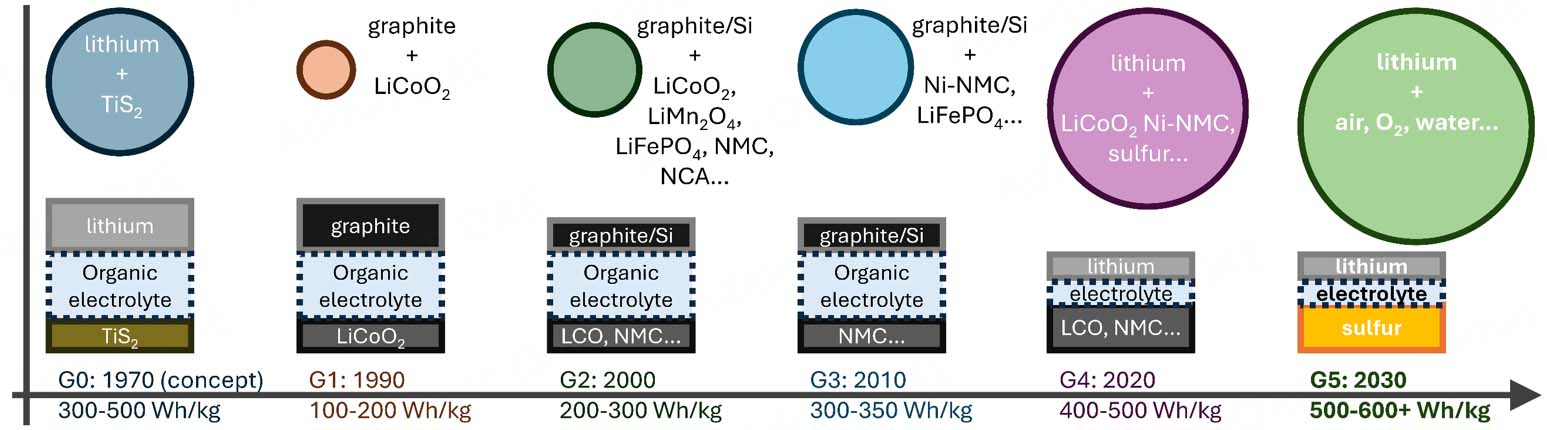
Figure 1. Schematic diagram of the development of lithium-ion batteries of different generations with the battery materials, electrochemistry, and cell configurations (circles representing energy density ratios).
Lithium-sulfur cell electrochemistry
Among the various alternatives under investigation, lithium-sulfur cells stand out for their high theoretical energy density of 2,600 W·h kg-1, which is five to eight times greater than that of conventional lithium-ion systems[1-5]. This advantage arises from pairing a lithium-metal anode (3,860 mA·h g-1) with a sulfur cathode (1,675 mA·h g-1). In addition to its high specific capacity, sulfur is naturally abundant, inexpensive, and environmentally benign, making lithium-sulfur cells attractive for large-scale applications[5,6].
Lithium-sulfur cells differ fundamentally from intercalation-based systems. Their operation proceeds through a multistep solid-liquid-solid conversion involving the electrochemical transformation of solid sulfur (S8) into liquid lithium polysulfides (Li2Sn, 4 ≤ n ≤ 8) and ultimately into solid lithium sulfide (Li2S)[5-7]: S8 + 16Li+ + 16e- → 8Li2S. Although this multistep pathway enables specific energy exceeding
To mitigate these challenges, sulfur is commonly incorporated into conductive carbon, metal, or oxide hosts that provide improved electronic conductivity and confinement of polysulfides in the cathode region[3-5]. Beyond solid sulfur composites, liquid polysulfide catholytes (e.g., Li2S6) and pre-lithiated Li2S have been investigated to improve reaction kinetics and simplify electrode fabrication[3,7-9]. On the anode side, lithium metal remains the standard choice, but the use of thinner, more mechanically stable lithium layers has become important for reducing the negative-to-positive capacity (N/P) ratio. Approaches such as thermal melting, electroplating, and vapor deposition have been employed to promote uniform lithium deposition[3,5,10]. Electrolyte formulation is equally critical. Ether-based solvents, such as 1,3-Dioxolane (DOL) and 1,2-Dimethoxyethane (DME), combined with lithium bis(trifluoromethanesulfonyl)imide (LiTFSI) salts and LiNO3 additives, remain widely used because of the formation of stable passivation layer on the lithium surface and the reduction of polysulfide shuttling[3-5,11].
Development of lithium-sulfur batteries
Lithium-sulfur cell research has progressed significantly over the past two decades, shifting from fundamental mechanistic investigations toward application-driven cell engineering strategies. Between 2000 and 2015, efforts largely focused on understanding sulfur redox behavior, polysulfide solubility, and the shuttle mechanism[5,7,12,13]. These foundational studies enabled the development of key innovations, including carbon-sulfur composite cathodes, LiNO3-containing electrolytes, and nanostructured electrode designs[5,7,13].
A major milestone emerged in 2009 with the development of ordered mesoporous carbon-sulfur cathodes, where molten sulfur is infused into conductive porous frameworks. Confining sulfur within ordered porous frameworks reduces the dissolution of polysulfide and maintains the continuous electronic pathways, thus enhancing the utilization and cyclability of sulfur cathode[14]. During this period, the crucial role of LiNO3 as an electrolyte additive became widely recognized, as it forms a protective layer on lithium and suppresses parasitic reactions with polysulfides, resulting in discharge/charge efficiencies above 99%[15-17].
Since 2013, research has increasingly emphasized electrode-architecture engineering. Porous current collectors capable of supporting sulfur loadings above 50 mg cm-2, while maintaining high areal capacities, have demonstrated that thick electrodes can remain electrochemically accessible[18-20]. Conductive interlayers and separator coatings further suppress polysulfide migration and strengthen charge-transfer kinetics[3,21-25]. Concurrently, efforts on the lithium-metal anode focused on stabilizing the solid electrolyte interphase (SEI) through the application of materials such as lithium nitride (Li3N), lithium fluoride (LiF), and other protective layers to mitigate dendrite formation and improve operational safety[26-29]. Three-dimensional porous current collectors also played a significant role in promoting more uniform lithium distribution and enhancing long-term stability[29-31].
The development of practical electrolytes has also progressed. Ether-based systems remain standard, yet they are limited by volatility, flammability, and polysulfide solubility, motivating interest in solid-state and hybrid electrolytes that offer improved mechanical stability and competitive conductivity[7,11,16,32-34]. Electrolyte additives such as LiNO3 and Li3PO4 remain crucial for suppressing parasitic reactions and enhancing cycling stability[16,33,34].
Since 2015, the field has increasingly prioritized practical engineering parameters aligned with commercial requirements. These include sulfur loadings above 5 mg cm-2, sulfur contents above 60 wt%, and areal capacities of 2-4 mA·h cm-2 with corresponding energy densities of 10-15 mW·h cm-2[3,35-37]. For the anode, thin lithium foils with N/P ratios below 5 have become essential for evaluating realistic lithium utilization and the reversibility of the plating and stripping processes[10,28,36,37]. Regarding the electrolyte, lean-electrolyte lithium-sulfur cells, characterized by electrolyte-to-sulfur (E/S) ratios below 5 µL mg-1 and electrolyte-to-capacity (E/C) ratios below 5 µL mA·h-1, are now widely recognized as essential for evaluating practical viability[28,35-37].
As a result, coordinated progress in sulfur-based cathode design, lithium-metal anode stabilization, and electrolyte formulation has advanced the development of lithium-sulfur technology from basic research to practical device implementation. This review synthesizes these developments by examining the interconnected roles of high-loading sulfur cathodes, thin lithium-metal anodes, and lean-electrolyte operation, with a focus on identifying remaining barriers and outlining emerging opportunities for achieving commercially viable lithium-sulfur technologies. Over the past decade, the development of lithium-sulfur batteries has transitioned from fundamental mechanistic studies under idealized conditions to device-level engineering for practical applications. Over time, the research focus has shifted from low sulfur loadings
Summary of lithium-sulfur cells with practical cell fabrication parameters (high sulfur loading, low N/P ratio, or low E/S ratio)
| Targeta | -b | > 60.0c | > 5.0d | < 5.0e | <5.0f | <5.0g | -h | >2-4i | >10-15j |
| 73 | 2024 | 64.0 | 8.0 | - | 6.0 | 9.2 | 0.05 | 5.2 | 10.9 |
| 78 | 2023 | 76.5 | 6.0 | - | 7.0 | 8.0 | 0.5 | 5.3 | 11.1 |
| 80 | 2023 | 61.2 | 8.2 | - | - | - | 1.0 | 6.5 | 13.6 |
| 56 | 2025 | 86.0 | 4.0 | 1.0 | 5.0 | 4.0 | 0.05 | 5.0 | 10.1 |
| 29 | 2023 | 43.0 | 6.0 | 2.4 | 6.0 | 5.1 | 0.5 | 3.5 | 7.4 |
| 31 | 2024 | 62.5 | 6.0 | 2.0 | 4.4 | 4.2 | 0.1 | 6.3 | 13.2 |
| 90 | 2025 | 60.0 | 8.6 | 2.8 | - | - | 0.1 | 7.8 | 16.3 |
| 105 | 2023 | 64.1 | 12.0 | - | 4.0 | 5.3 | 0.2 | 9.1 | 19.1 |
| 110 | 2023 | 78.0 | 5.4 | - | gel | gel | 0.1 | 5.4 | 11.3 |
FUNDAMENTAL MECHANISMS AND PRACTICAL CONSTRAINTS
Although lithium-sulfur cells provide clear benefits in theoretical energy density, their practical use depends on satisfying several strict performance and design criteria[3,36,38-40]. High-sulfur-loading cathodes with sufficient sulfur content are essential for attaining the gravimetric and volumetric energy densities anticipated for next-generation energy-storage systems. Moreover, thin lithium-metal anodes with controlled N/P ratios are necessary to minimize excess lithium, reduce cell mass, and lower material costs[10,41,42]. Additionally, lean-electrolyte configurations, characterized by low E/S and E/C ratios, are crucial in enhancing system-level energy density[32,43].
However, the combination of high sulfur loading, thin lithium-metal anodes, and limited electrolyte volume often causes significant performance loss under typical laboratory fabrication conditions. These limitations stem from both intrinsic factors related to the chemical and physical properties of sulfur and lithium metal, as well as extrinsic factors involving practical cell design and fabrication. Therefore, to effectively discuss high-loading cathodes, thin lithium-metal anodes, and lean-electrolyte configurations, it is important to revisit the fundamental electrochemical processes that govern lithium-sulfur batteries and to understand how practical fabrication parameters affect cell performance.
Working mechanism of lithium-sulfur batteries
Lithium-sulfur batteries operate through a conversion-type electrochemical mechanism that is fundamentally different from the intercalation chemistry lithium-ion batteries. During discharge, elemental sulfur (S8) undergoes a series of reversible reduction reactions, progressively transforming from soluble long-chain lithium polysulfides (Li2S8 → Li2S6 → Li2S4) into insoluble lithium sulfides (Li2S2/Li2S)[5-7]. The charging process proceeds in the opposite direction, oxidizing solid lithium sulfides stepwise back to sulfur. However, the electrochemical oxidation of Li2S is kinetically sluggish due to its insulating nature and strong interfacial polarization, often requiring high overpotentials to initiate delithiation[44-47].
This sequence of reactions leads to several intrinsic challenges [Figure 2A]. First, the formation of soluble lithium polysulfide induces the continuous shuttling of active materials between dissolved polysulfides and solid sulfides at the anode. This phenomenon, commonly referred to as the shuttle effect, results in the loss of active material, parasitic reactions at the anode, and a decrease in Coulombic efficiency. Second, both sulfur and lithium sulfides are electronically insulating, which limits redox kinetics, requires the addition of conductive additives in the cathode, and makes it challenging to increase overall sulfur content. Third, the significant volume change (~80%) between sulfur and lithium sulfide causes continuous mechanical stress within the cathode during cycling, gradually damaging its structural integrity[3-5,7,8].
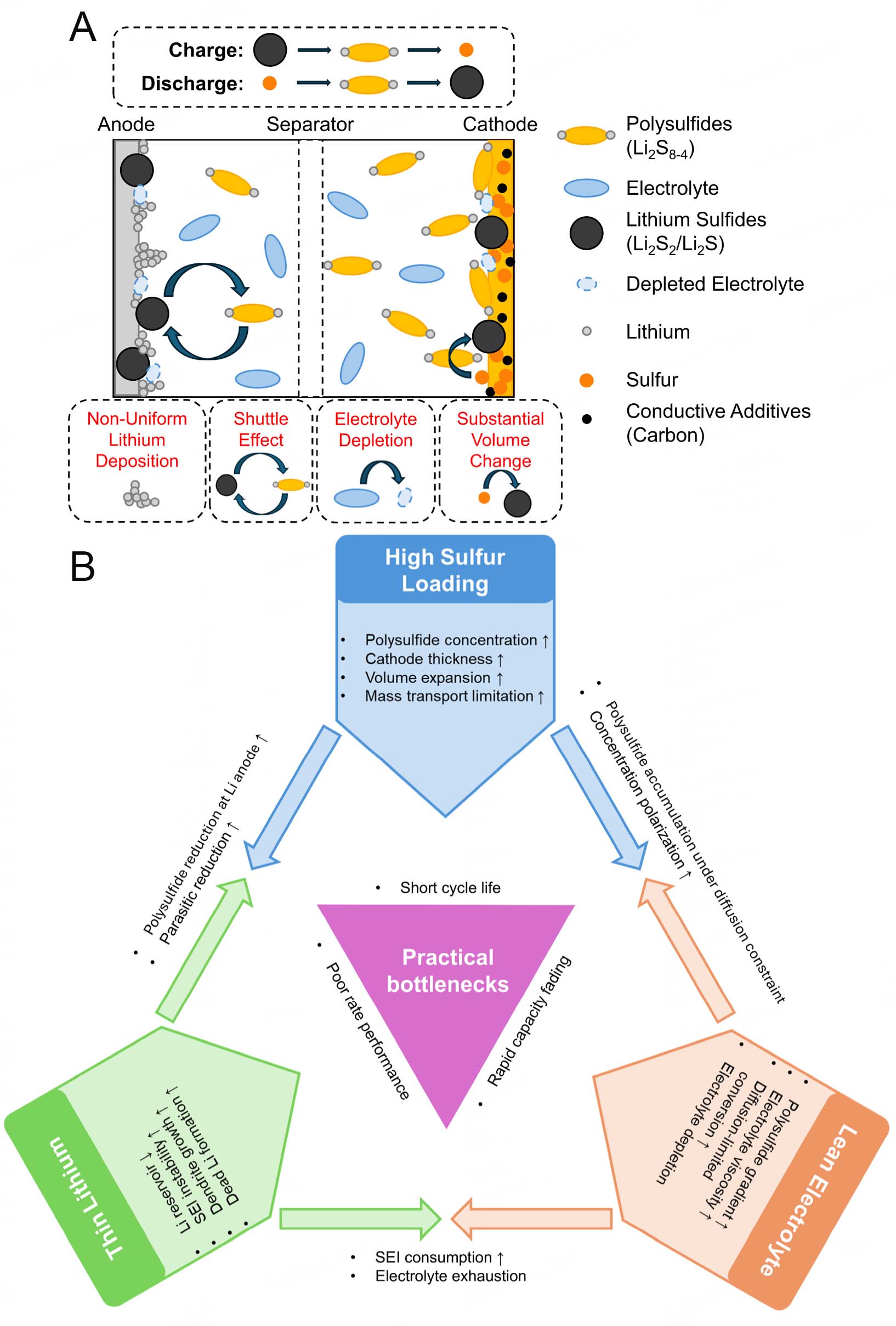
Figure 2. (A) Schematics of the intrinsic challenges that lithium-sulfur batteries face and (B) the influence of extrinsic fabrication parameters on practical cell performance.
In addition, the lithium-metal anode further complicates cell operation. Dissolved polysulfides may react chemically with lithium metal, resulting in the formation of unstable interfacial layers that promote uneven lithium deposition and accelerate electrolyte depletion[3,5,10]. These processes define the fundamental limitations of lithium-sulfur chemistry. Under practical cell configurations, these challenges become even more significant.
Intrinsic material science and engineering
The intrinsic properties of sulfur and lithium-metal electrodes pose fundamental challenges for lithium-sulfur cells. Elemental sulfur, the active material in charged state, has low electronic conductivity (~10-30 S cm-1), while its fully discharged product, lithium sulfide, is similarly insulating (~10-13 S cm-1)[3,13]. The poor conductivity limits reaction kinetics and induces significant polarization during cycling. Meanwhile, polysulfide intermediates are highly soluble in ether-based electrolytes. Their dissolution and subsequent migration away from the cathode lead to active-material loss, severe shuttle effects, and rapid capacity fading[10,48].
Lithium metal presents additional intrinsic challenges. With a standard reduction potential of -3.04 V verses the standard hydrogen electrode, lithium exhibits high reactivity towards both electrolyte components and dissolved polysulfides[10,49]. Such reactions cause the ongoing formation and degradation of the SEI, thereby increasing interfacial resistance and impeding lithium-ion transport. The instability of this interphase also promotes uneven lithium deposition, dendrite formation, and the accumulation of dead lithium, collectively compromising cycling stability and safety[10,49].
Efforts to mitigate these intrinsic issues have traditionally involved several approaches. Cathodes are often formulated with large fractions of conductive carbon to improve electronic conductivity. Excess electrolyte is frequently used to dilute polysulfides and suppress shuttling effects, while an abundant lithium supply helps compensate for irreversible lithium loss. Although these conditions are valuable for studying sulfur-cathode behavior in half-cell configurations, these conditions deviate significantly from practical full-cell conditions and obscure the true challenges of lithium-sulfur chemistry. Therefore, design strategies need to focus on solving the fundamental issues of electronic insulation, polysulfide solubility, and interfacial instability.
Extrinsic cell-fabrication parameters
Beyond intrinsic material limitations, practical cell-fabrication parameters strongly influence the electrochemical performance of lithium-sulfur cells. Many academic studies rely on low sulfur loading, thick lithium-metal foils, and excessive electrolyte volumes. These conditions artificially enhance cycling stability and do not reflect realistic device-level constraints. Thus, sulfur loading, electrolyte volume, and lithium-metal thickness must be strictly controlled when evaluating lithium-sulfur cell performance[48-51].
Sulfur loading governs areal capacity and practical energy density. Achieving application-level targets (above 5 mg cm-2 to reach 2-4 mA·h cm-2 and 10-15 mW·h cm-2) is essential but introduces significant transport and structural challenges. Higher loading increases the thickness of the cathode, prolongs ion diffusion pathways, and elevates local polysulfide concentrations, thereby intensifying concentration polarization. As a result, high-loading cathodes frequently encounter issues such as incomplete sulfur utilization, sluggish redox kinetics, and structural degradation[52,53]. These challenges have driven the development of catalytic sulfur hosts, multifunctional conductive frameworks, and robust confinement architectures.
Although excess electrolyte enhances ionic transport and dilutes polysulfides, it lowers practical energy density and masks intrinsic limitations. Under lean-electrolyte conditions (typically defined as E/S ratios below 5 μL mg-1 and E/C ratios below 5 μL mA·h-1), polysulfide concentration sharply increases, mass transport becomes diffusion-limited, cathode wettability deteriorates, and sulfur-lithium sulfide conversion kinetics are hindered[54,55]. Elevated viscosity, electrolyte depletion, and intensified concentration gradients further accelerate capacity fading and interfacial instability[54,55]. Under lean-electrolyte operation, electrolyte formulation optimization, interfacial regulation strategies, and catalytic conversion mechanisms become indispensable for sustaining stable cycling.
Thin lithium-metal anodes (N/P < 5) are less tolerant to irreversible lithium loss because of their limited lithium inventory, exposing intrinsic instability that is often masked by thick lithium foils. Reducing lithium thickness intensifies non-uniform current distribution, dendritic growth, repeated SEI rupture, dead-lithium accumulation, and accelerated electrolyte depletion[29,56]. These interfacial degradation processes are further aggravated by polysulfide shuttling, leading to rapid performance decay and shortened cycle life, especially under lean-electrolyte conditions[29,56]. Accordingly, the utilization of artificial interphases, lithiophilic three-dimensional hosts, and deposition-regulation strategies is crucial for stabilizing thin lithium-metal anodes under practical constraints.
As shown in Figure 2B, sulfur loading, electrolyte volume, and lithium thickness are tightly coupled rather than independent. Higher sulfur loading intensifies polysulfide diffusion and transport limitations; lean electrolyte increases viscosity and concentration polarization; thinner lithium aggravates interfacial instability and lithium depletion. Their combined effects define the key bottlenecks of practical lithium-sulfur systems. Therefore, strict control of these parameters is essential for realistic performance evaluation and for bridging the gap between laboratory studies and commercial applications.
HIGH-LOADING SULFUR CATHODE
Realizing commercially viable lithium-sulfur cells requires sulfur cathodes that deliver both high areal capacity and high energy density. Given that the average discharge voltage of lithium-sulfur cells is ~2.15 V, achieving practical performance typically requires sulfur loadings above 5 mg cm-2 and sulfur contents of 60-80 wt%, thereby enabling areal capacities of 4 mA·h cm-2. Nonetheless, increasing sulfur loading introduces a series of interrelated challenges. The intrinsically low electronic conductivity of sulfur increases electrode resistance, while intensified polysulfide concentration gradients exacerbate shuttling. Thicker cathodes also face mechanical issues, uneven coating, crack formation, aggravated volume expansion, and higher diffusion resistance, all of which slow sulfur redox kinetics during cycling[3,57-62].
These limitations result in elevated impedance, reduced sulfur utilization, sluggish conversion kinetics, poor rate capability, and shortened cycle life. As a result, despite the importance of high-loading cathodes for practical device integration, research progress in this area remains comparatively limited, with many studies still dependent on low-loading electrodes that do not meet commercial standards[52,63-67]. This section highlights recent advances in electrode materials and design strategies that address these long-standing challenges and enable sulfur loadings exceeding 5 mg cm-2 with 60-80 wt% sulfur content.
Materials and the corresponding synthesis methods
Materials engineering is central to overcoming the intrinsic limitations of high-loading sulfur cathodes. Innovations in binders, active materials, and conductive substrates have all contributed to the improvement of structural stability, reaction kinetics, and sulfur utilization of high-loading sulfur cathodes.
An effective binder must maintain electrode integrity, preserve conductive networks, tolerate substantial volume fluctuations, suppress polysulfide migration, and facilitate ion/electron transport while remaining electrochemically and mechanically stable at low binder contents. Although Poly(vinylidene fluoride) (PVDF) is widely adopted, its weak adhesion, poor ability to accommodate volume change, and limited polysulfide affinity limit its applicability for high-loading electrodes[68-73]. Recent multifunctional binders offer promising solutions. For instance, Sul et al. fabricated crack-free, high-loading sulfur cathodes by fibrillating a polytetrafluoroethylene (PTFE) binder via a dry-processing approach. By eliminating solvent evaporation and its associated capillary stress, this method enabled the formation of free-standing electrode films with an interconnected network. This unique structure significantly improved the mechanical integrity of thick sulfur electrodes. Thus, cells assembled with dry-processed cathodes at a high sulfur loading of 8 mg cm-2 exhibited noticeably improved cycling stability compared with counterparts prepared by conventional slurry-based processing [Figures 3A-C][73].
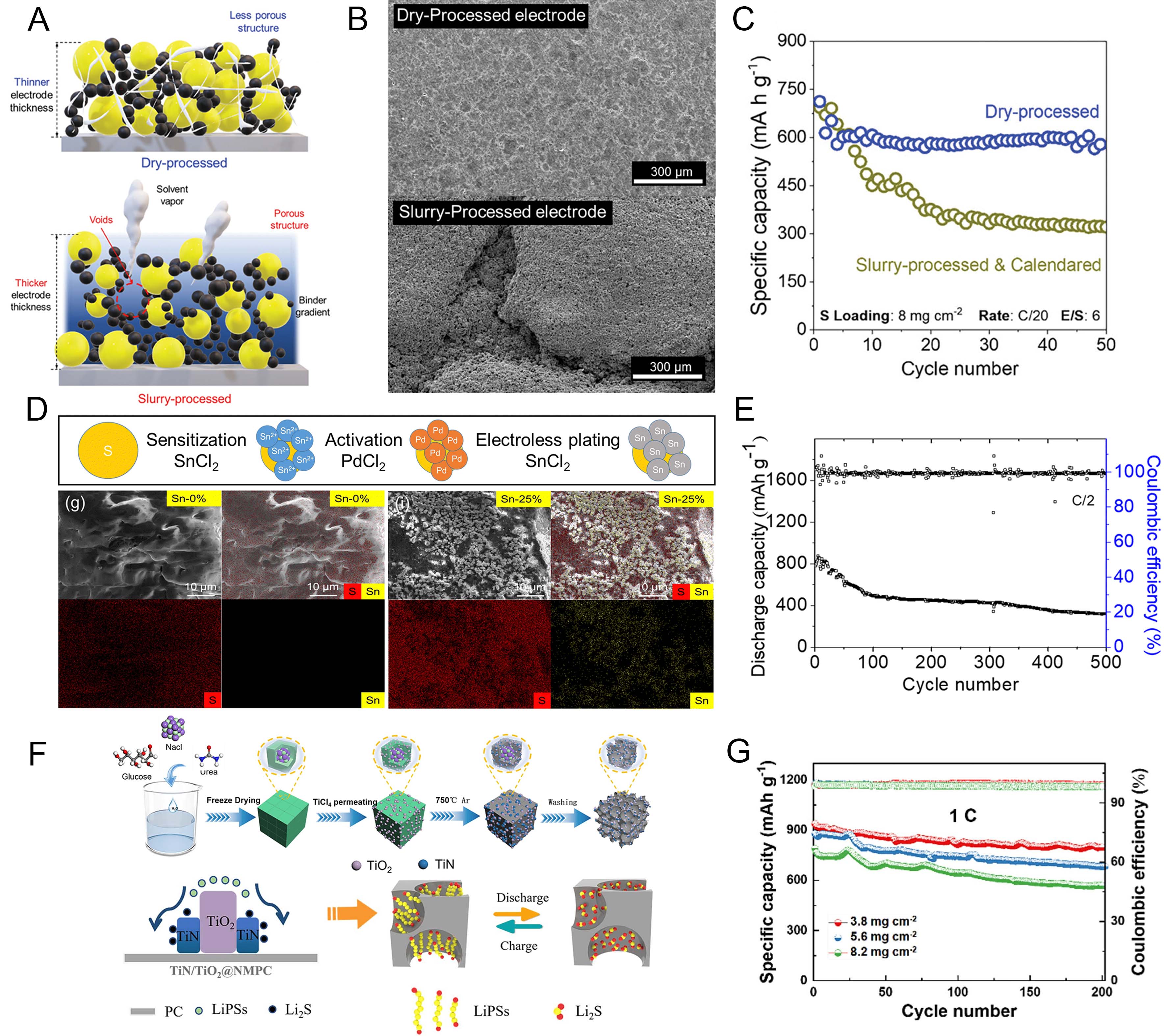
Figure 3. (A) Architectural schematics, (B) surface SEM images, and (C) cycling performances of dry-processed and slurry-processed sulfur electrodes. (A-C) are adapted with permission from[73] Copyright © 2024 Wiley-VCH GmbH. (D) Illustration of the fabrication and SEM images of the tin-plated sulfur nanocomposite. (E) Cycling performance of Sn-25% with a high sulfur loading of 6 mg cm-2. (D and E) are adapted with permission from[78] Copyright © 2023 Royal Society of Chemistry. (F) Illustrations of the synthesis procedure and working mechanisms of TiN/TiO2@NMPC. (G) Cycling performances of the TiN/TiO2@NMPC cathode at 1C under high sulfur loading. (F and G) are adapted with permission from[80] Copyright © 2023 Elsevier.
Under high-loading conditions, the electrochemical oxidation of Li2S becomes increasingly challenging due to aggravated polarization and restricted ionic accessibility. Direct use of Li2S cathode mitigates lithium consumption and improves initial Coulombic efficiency due to its pre-lithiated nature, but requires catalytic activation to lower nucleation barriers. Introducing catalytic sites into sulfur or Li2S hosts effectively reduces the activation energy and accelerates redox kinetics[44-47]. Representative catalytic materials include single-atom sites, transition-metal species, metal oxides, nitrogen-doped carbons, and other nanoscale architectures[74-79]. By employing an electroless plating strategy, Kung et al. developed a Sn/S nanocomposite in which sulfur particles were uniformly encapsulated by a conductive metallic tin shell. This well-defined core-shell architecture effectively alleviated the high interfacial impedance typically associated with thick sulfur electrodes, while simultaneously suppressing polysulfide dissolution and shuttling during cycling. As a result, even at a high sulfur loading of 6 mg cm-2, the assembled cells exhibited improved electrochemical utilization, achieving stable rate performance from C/10 to C/2 and maintaining continuous operation for 500 cycles at a C/2 rate[78]. These results demonstrate metallic electrocatalysts effectively address kinetic and stability limits in high-loading lithium-sulfur batteries, enabling longer cycle life for practical cell operation [Figures 3D and E][78].
Tailoring the structure and surface chemistry of carbon substrates enhances conductivity, ion accessibility, and polysulfide confinement. Strategies include surface decoration with catalytic or adsorptive species and optimization of pore structure[28,55,80,81]. To overcome sluggish redox kinetics and mitigate the polysulfide shuttle effect, Bai et al. designed a hierarchical nitrogen-doped porous carbon substrate incorporating uniformly distributed TiN and TiO2 heterostructures[80]. This interfacial engineering approach enables effective polysulfide immobilization while simultaneously promoting their catalytic conversion via a synergistic adsorption and catalysis mechanism. As a result, the corresponding cells showed stable rate performance in the range of C/2 to 1C and maintained reliable cycling over 200 cycles, even at a high sulfur loading of 8.2 mg cm-2. These results demonstrate that rational construction of heterostructured electrocatalysts provides an effective strategy for alleviating kinetic limitations in high-energy-density lithium-sulfur batteries [Figure 3F and G][80].
As a result, advances in binder chemistry, catalytic modification, and carbon-framework engineering have significantly improved the structural stability, electronic/ionic transport, and reaction kinetics required for high-loading sulfur cathodes to function under practical conditions.
Current progress
High-loading sulfur cathodes remain constrained by several interrelated challenges, including mechanical instability, elevated interfacial impedance, sluggish polysulfide conversion kinetics, and incomplete sulfur utilization[3,60-62]. These issues become increasingly pronounced as electrode thickness increases, ultimately limiting achievable areal capacity, rate capability, and long-term cycling stability[28,59-62,72,73,78-81].
Recent progress has demonstrated that these limitations can be partially alleviated through coordinated materials and structural engineering. Multifunctional binders with enhanced adhesion and polysulfide affinity help preserve electrode integrity under large volume fluctuations[68,71-73]. The introduction of electrocatalytic components within sulfur hosts accelerates polysulfide redox reactions and reduces charge-transfer resistance[74-76,78,79], while rationally engineered carbon frameworks improve electronic conductivity, ion accessibility, and sulfur confinement in thick electrodes[28,55,80,81].
Further progress requires a more detailed integration of these strategies with scalable fabrication processes and realistic lean-electrolyte conditions. In particular, optimizing catalyst dispersion, binder functionality, and electrode architecture at the device level will be critical for advancing high-loading sulfur cathodes from laboratory demonstrations toward practical lithium-sulfur batteries.
THIN LITHIUM-METAL ANODE
The implementation of thin lithium-metal anodes is essential for advancing lithium-sulfur cells toward practical, high-energy-density configurations. Lithium metal possesses a high theoretical capacity and the lowest reduction potential, making it an ideal anode for next-generation battery systems[82]. However, the common laboratory practice of using excess lithium might obscure the true anode limitations, artificially enhance cycling stability, and lead to unrealistic estimates of attainable energy density. Therefore, employing thin lithium-metal anodes and maintaining a low N/P ratio is critical for accurately evaluating lithium utilization and ensuring practical cell designs[83].
Reducing lithium thickness amplifies the intrinsic challenges of lithium metal. With a limited lithium reservoir, non-uniform ion flux becomes severe during repeated plating and stripping, accelerating dendrite initiation, interfacial instability, and significant volume fluctuations. The high chemical reactivity of lithium with liquid electrolytes further accelerates the degradation of the SEI, leading to cycles of fracture and regeneration. This instability consumes both active lithium and electrolyte, increases interfacial resistance, and promotes the formation of dead lithium. These degradation mechanisms reduce Coulombic efficiency and shorten cycle life, especially in conditions with lean electrolytes and high-loading cathodes[49,84,85]. While these issues make long-term stability more difficult, they better represent the real electrochemical performance of practical lithium-sulfur cells[84,85].
Despite the difficulties associated with thin lithium, recent advances in materials design and interface engineering have demonstrated promising solutions. Current strategies focus on surface and interface engineering and advanced composite electrode design.
Materials and the corresponding synthesis methods
Interfacial engineering remains one of the most effective strategies for stabilizing thin lithium-metal anodes. Artificial and reinforced SEIs can suppress dendrite formation, strengthen interfacial stability, and minimize parasitic reactions with dissolved polysulfides[10,86-88]. For example, Luo et al. developed a copper-nickel-phosphorus (CNP)-coated current collector with excellent corrosion resistance. The lithiophilic CNP coating enabled stable deposition of thin and stacked lithium layers during cycling[56]. The CNP coating exhibits high lithium affinity, enabling uniform, dense lithium deposition and strong corrosion inhibition during cell cycling [Figure 4A]. This modification enabled a stable lithium symmetric cycle for more than 1,000 h and extended full-cell operation at an N/P ratio of 1.04 [Figure 4B][56]. Lu et al. proposed an artificial SEI comprising poly(methyl methacrylate) (PMMA), polypropylene carbonate (PPC), and LiNO3 to enhance lithium-sulfur cyclability under a low N/P ratio [Figure 4C]. The fabricated symmetric cells with 20 μm lithium can operate for 1,300 h, and the full cells can cycle stably with a N/P ratio of 1.67
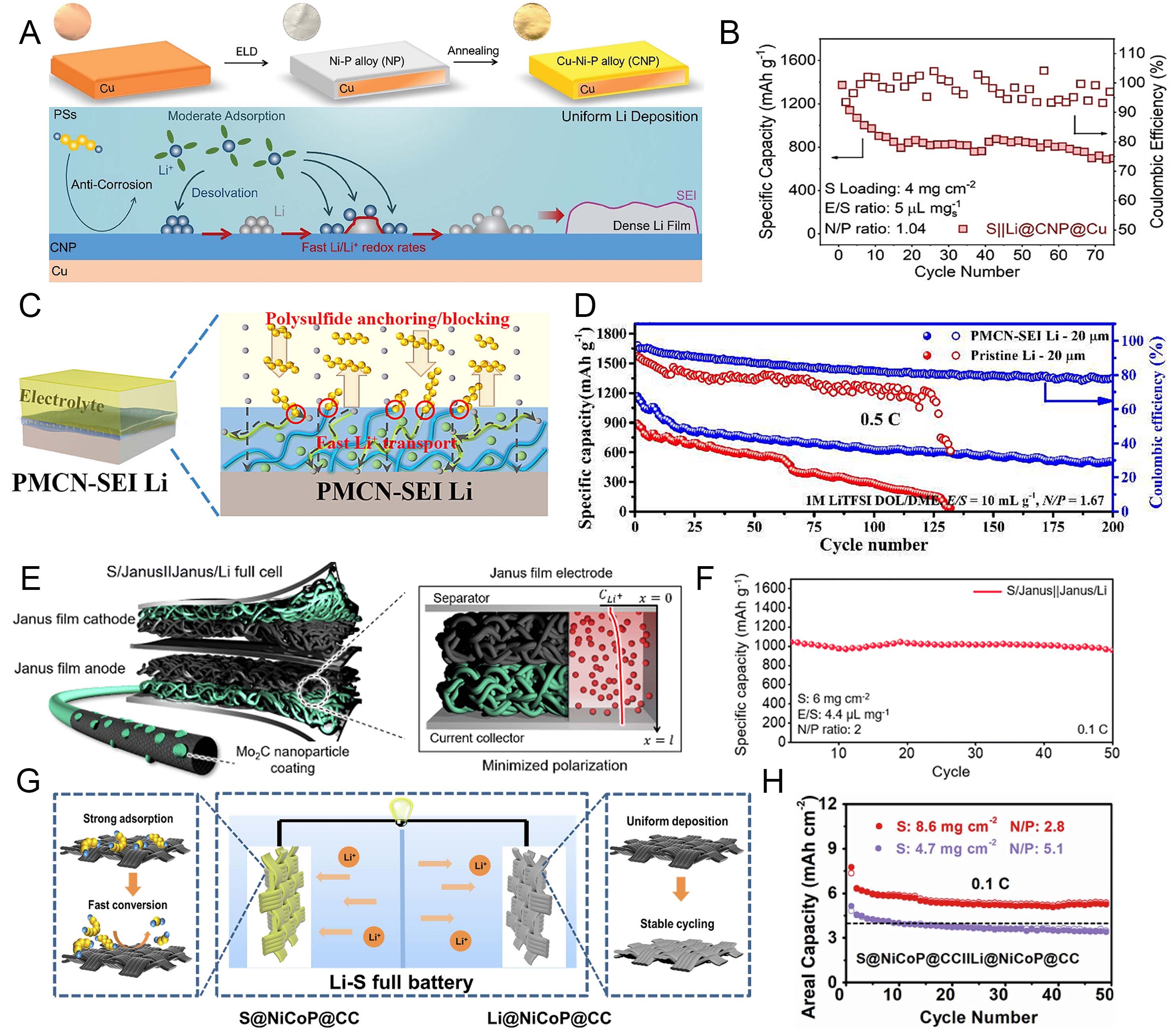
Figure 4. (A) Schematics of the CNP alloy coating. (B) Cycling performance of the CNP thin-lithium cell. (A and B) are adapted with permission from[56] Copyright © 2025 Wiley-VCH GmbH. (C) Schematic and working mechanism of the PMCN-SEI. (D) Cycling performance of the PMCN-SEI thin-lithium cell. (C and D) are adapted with permission from[29] Copyright © 2023 Elsevier. (E) Schematics of the Janus film electrodes and cell. (F) Cycling performance of the Janus film electrodes full cell. (E and F) are adapted with permission from[31], under CC BY 4.0 license. (G) Schematic and working mechanism of the NiCoP materials for both cathode and anode. (H) Cycling performance of the NiCoP full cell. (G and H) are adapted with permission from[90] Copyright © 2025 Elsevier.
Moreover, bifunctional composite electrode materials support high mass loadings of cathode active materials and provide structural reinforcement, with lithiophilic sites that homogenize lithium-ion flux and accommodate volume changes in the anode. With both enhancements, the thin lithium-metal anode cell can achieve stable cycling performance with low N/P ratios[28,89]. Um et al. incorporated Mo2C-coated carbon for Janus-type electrodes[31]. The Janus-type electrodes suppress polysulfide diffusion at the cathode and provide bottom-up growth of uniform lithium at the anode with high current densities [Figure 4E], demonstrating enhanced cell cycling with a 100 μm thin lithium-metal anode and 6 mg cm-2 high-loading sulfur cathode with an N/P ratio of 2 [Figure 4F][31]. Yang et al. also developed a bifunctional electrode material with NiCoP nanofibers grown on carbon cloth. The designed electrodes exhibit strong interaction with lithium atoms, thereby enhancing homogeneous lithium distribution and deposition during cell cycling and suppressing lithium dendrite growth [Figure 4G][90]. Such electrodes provide > 1,000 h of stable lithium symmetric cell cycling and enabled lithium-sulfur full cells to deliver 901 mA·h g-1 at 8.6 mg cm-2 sulfur loading and a low N/P ratio of 2.8 [Figure 4H][90].
Overall, these findings demonstrate that both interfacial engineering and the design of composite hosts are vital for the stabilization of thin lithium-metal anodes. Artificial interphases regulate SEI chemistry and suppress parasitic reactions, while composite architectures provide mechanical robustness and lithiophilicity, facilitating uniform lithium deposition. The integration of these strategies offers a promising path toward practical lithium-sulfur cells operating under thin-lithium conditions.
Current progress
Thin lithium-metal anodes suffer from severe active lithium depletion, accelerated dendrite formation, SEI instability, and high volume change. These issues become increasingly pronounced as the active material loading increases, accompanied by higher discharge and charge current densities, ultimately resulting in lower cycling stability and reduced battery capacity. These results highlight the significant challenges associated with low-N/P-ratio lithium-sulfur cells[10,28-31,56,87,88,91]. Moreover, to accurately investigate these dynamic degradation mechanisms, besides conventional ex situ observations, advanced characterization methods, such as in situ microscopy, cryo-electron microscopy, and operando spectroscopy, have been increasingly recommended to monitor the morphological and chemical evolution of the lithium metal anode during cycling[10,57,82,91].
To address these issues, recent studies have focused on lithium-anode protection through stabilization of the SEI and the development of composite electrode architectures[91,92]. Interfacial engineering using artificial SEI layers and protective coatings suppresses parasitic side reactions and reduces active lithium consumption[10,29,30,56,86-88,93]. Composite electrodes reduce the nucleation energy of lithium sulfide at the cathode and promote uniform lithium deposition at lithiophilic sites[28,31,89,90,94-96]. All methods have demonstrated improvements in Coulombic efficiency, dendrite suppression, and cycling stability under low N/P conditions.
Future directions for thin lithium-metal anodes in lithium-sulfur cells require the development of protective interphases, electrolyte regulation, and advanced composite architectures to enhance lithium deposition stability and mitigate active lithium loss during cycling. Realizing these goals can accelerate the transition of lithium-sulfur technology from laboratory demonstrations toward commercial implementation.
LEAN-ELECTROLYTE CELL
Developing lean-electrolyte lithium-sulfur cells is crucial for achieving high energy density and advancing toward commercialization[3,35,61]. However, reducing the electrolyte reveals several intrinsic limitations of lithium-sulfur chemistry. A lower volume of electrolyte decreases the wettability of thick sulfur cathodes and results in a higher concentration of dissolved polysulfides, thereby intensifying their uncontrolled shuttling during cycling. An increased concentration of polysulfides elevates viscosity, reduces ionic conductivity, increases impedance, and decelerates the kinetics of redox conversion[97]. Moreover, insufficient electrolyte supply leads to incomplete sulfur utilization, polysulfide aggregation, and deposition of insulating sulfides on electrode surfaces. These effects result in large polarization, diminished rate capability, reduced specific capacity, and shortened cycle life.
In many laboratory studies, excess electrolytes have been used to mask these problems. Although high electrolyte volumes dilute polysulfides and improve apparent cycling stability, they reduce achievable energy density and provide limited relevance for practical device integration[3,32,33,35,50,61]. Therefore, lean-electrolyte operation with E/S ratios below 5 μL mg-1 and E/C ratios below 5 μL mA·h-1 has become a critical benchmark for realistic evaluation of lithium-sulfur cells[2-4,25-37].
Materials and the corresponding synthesis methods
To overcome the challenges associated with lean-electrolyte operation, significant advancements have been made in optimizing cathodes, separators, interlayers, and electrolytes.
For cathodes, materials engineering plays a decisive role in enabling lean-electrolyte operation. Rational cathode architectures, multifunctional binders, and catalytic sulfur hosts collectively improve electrolyte wettability, electronic connectivity, and polysulfide conversion kinetics[98-100]. These strategies effectively mitigate sluggish redox reactions and capacity fading under restricted electrolyte conditions[32,50,101-107]. For example, Wu et al. developed a core-shell cathode architecture by encapsulating liquid polysulfide catholyte within a conductive carbon tissue through a scalable fabrication process[105]. Physical confinement of active species limited diffusion while the interconnected carbon network ensured efficient charge transport and conversion kinetics. Under practical conditions of high sulfur loading at 12 mg cm-2 and an E/S ratio of
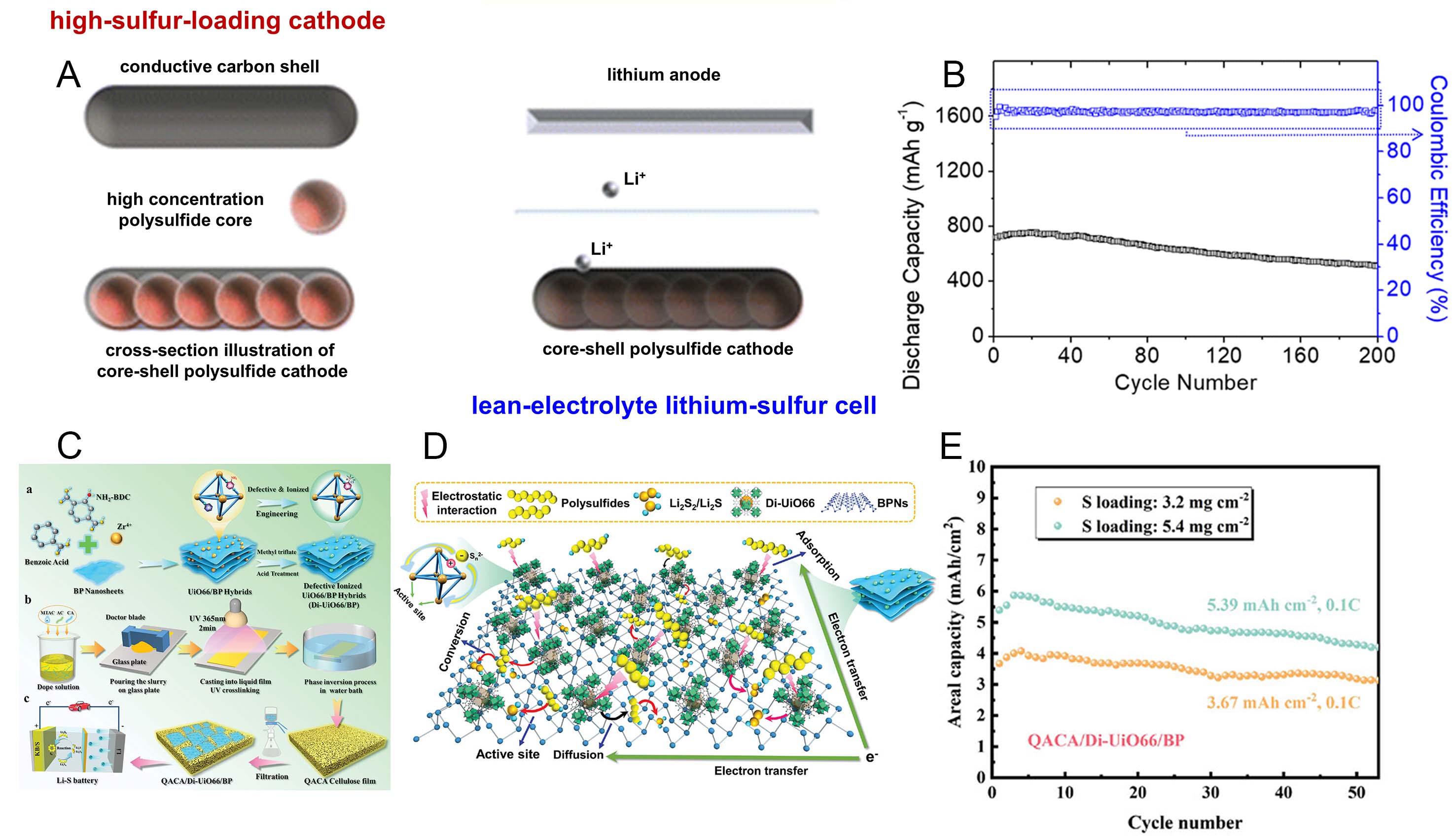
Figure 5. (A) Schematic and working mechanism of the core shell cathode architecture. (B) Cycling performance of cell at C/5 with a low E/S ratio of 4 μL mg-1. (A and B) are adapted with permission from[105] Copyright © 2023 Royal Society of Chemistry. (C) Schematics of the preparation and (D) working mechanism of QACA/Di-UiO66/BP asymmetric cellulose electrolyte membrane. (E) Cycling performance of QACA/Di-UiO66/BP cells. (C-E) are adapted with permission from[110] Copyright © 2023 Wiley-VCH GmbH.
To address the intrinsic constraints of lean-electrolyte operation, targeted engineering of separators, interlayers, and electrolytes has become increasingly important[101]. Functional separators and interlayers incorporating catalytic and adsorptive components effectively suppress polysulfide migration while promoting redox kinetics and ion transport. In parallel, hybrid gel and solid-state electrolytes offer a viable route to immobilize polysulfides and stabilize interfacial ion flux, thereby reducing impedance and sustaining electrochemical activity under lean-electrolyte conditions[108-110]. Huang et al. developed a dual-functional asymmetric cellulose gel electrolyte by integrating a cationic cellulose matrix (QACA) with a defective UiO66/black phosphorus heterostructure coating (Di-UiO66/BP). This electrolyte architecture couples chemical immobilization with catalytic regulation. The Di-UiO66/BP layer effectively anchors polysulfides and facilitates their conversion, whereas the QACA framework homogenizes lithium-ion transport and suppresses dendrite growth. As a result, the engineered gel electrolyte enabled stable symmetric cycling beyond 2,000 h and delivered areal capacities of 3.67-5.39 mA·h cm-2 at sulfur loadings of 3.2-5.4 mg cm-2. These results highlight the effectiveness of asymmetric gel electrolyte designs in simultaneously addressing polysulfide shuttling and anode instability under lean-electrolyte conditions [Figures 5C-E][110].
Current progress
Lean-electrolyte operation further exposes the fundamental limitations of lithium-sulfur chemistry, including insufficient electrode wettability, intensified polysulfide shuttling, elevated polarization, and sluggish sulfur conversion kinetics. These effects become especially pronounced in thick, high-loading cathodes, often resulting in rapid capacity decay and poor rate capability, thereby underscoring the challenge of maintaining electrochemical activity under electrolyte-restricted conditions[3,32,33,104-110].
To address these issues, recent progress has focused on coordinated optimization of individual cell components. At the cathode level, strengthening conductive networks, introducing hierarchical pore architectures, and employing multifunctional binders and catalytic sulfur hosts have improved electrolyte accessibility and accelerated polysulfide conversion. Functional separators and interlayers incorporating adsorptive or catalytic sites further suppress polysulfide migration while maintaining efficient ion transport. Furthermore, gel- and solid-state electrolyte systems have emerged as effective approaches for immobilizing soluble intermediates and stabilizing electrode interfaces, particularly at the lithium-metal anode[103-110].
Overall, advancing lean-electrolyte lithium-sulfur cells will require transforming material innovations into practical cell designs that ensure efficient sulfur conversion, stable interfaces, balanced ion transport, and limited electrolyte use. Achieving such integration is essential for bridging the gap between laboratory-scale demonstrations and practically relevant, high-energy-density lithium-sulfur batteries.
CONCLUSION AND OUTLOOK
Key points for advanced lithium-sulfur cells
Commercially viable lithium-sulfur cells require coordinated advancements in both the sulfur cathode and the lithium-metal anode to achieve high areal capacity and competitive gravimetric energy density. A widely accepted performance target includes a sulfur loading above 5 mg cm-2 with a sulfur content of 60-80 wt%, conditions that typically enable areal capacities exceeding 4 mA·h cm-2 and energy densities above
High-loading cathodes still face persistent challenges associated with the intrinsic insulation of sulfur species, structural degradation in thick electrodes, and sluggish redox kinetics. Recent progress demonstrates that advanced polymeric binders can better accommodate large volume fluctuations, maintain mechanical integrity, and suppress polysulfide shuttling by providing strong chemical affinity. Incorporating electrocatalytic species into sulfur hosts has further accelerated polysulfide conversion, reduced impedance, and improved sulfur utilization, thereby enhancing rate capability and cycle stability.
Thin lithium-metal anodes are equally essential for realistic assessments of cell-level energy density. Maintaining an N/P ratio below 5 minimizes excess lithium use and improves practical relevance. Stabilization strategies for thin lithium can be broadly categorized into interfacial engineering, electrolyte-additive design, and composite anode architectures with lithiophilic or conductive frameworks. These approaches mitigate dendrite formation and suppress parasitic reactions while promoting uniform lithium deposition.
Lean-electrolyte operation is typically defined by an E/S ratio below
In summary, these coordinated advancements in cathodes, anodes, and electrolytes are progressively advancing lean-electrolyte lithium-sulfur cells toward commercially viable configurations that incorporate high-loading sulfur cathodes, thin lithium-metal anodes, high energy density, and long-term cycling stability.
Potential issues to be addressed
Despite rapid progress, several critical challenges still hinder the seamless integration of these components, making it difficult to achieve the aforementioned practical cell-fabrication parameters simultaneously.
For high-loading cathodes, the low electronic conductivity of sulfur, increased electrode thickness, and pronounced concentration gradients elevate impedance and intensify polysulfide migration. These effects accelerate electrode degradation and reduce sulfur utilization, especially under high-rate or long-term cycling conditions. Moreover, the solid-liquid-solid conversion mechanism and associated volume expansion hinder charge transfer and promote the accumulation of inactive sulfide species. Improving sulfur encapsulation, reaction kinetics, and mechanical robustness remains important for further development.
For thin lithium-metal anodes, the intrinsic reactivity of lithium with both the electrolyte and dissolved polysulfides continuously destabilizes the SEI. This instability drives continuous lithium consumption, increased interfacial resistance, and rapid accumulation of dead lithium. Non-uniform ion flux intensifies dendritic growth and large volume fluctuations, increasing the risk of short-circuiting. Complicating matters, many reported studies still rely on thick lithium foils, which mask the degradation pathways inherent to thin lithium and result in overly optimistic cycling performance. Future efforts must focus on robust SEI coatings, optimized electrolyte formulations, and composite host structures that promote homogeneous lithium deposition.
For lean-electrolyte cells, low E/S and E/C operation presents additional constraints. A limited electrolyte volume increases polysulfide concentration, viscosity, and polarization, while reducing ionic conductivity. These conditions slow sulfur redox kinetics, promote insulating sulfide deposition, and accelerate capacity fade. Although advancements have been achieved through the utilization of multifunctional binders, catalytic interlayers, and tailored porous structures, many studies still depend on excess electrolyte, compromising energy density and limiting practical relevance.
Moving forward, meaningful progress requires maintaining strict lean-electrolyte conditions while advancing materials and architectures that ensure efficient sulfur utilization and stable interfaces under realistic thin lithium operating constraints. Introducing artificial intelligence (AI) into battery research also represents a critical future direction. Such data-driven approaches can significantly accelerate the optimization of coupled cell fabrication parameters and the screening of advanced materials for practical lithium-sulfur batteries[111].
Conclusions
Advancing lithium-sulfur cells toward commercial implementation requires an integrated strategy that simultaneously addresses the limitations of the sulfur cathode, lithium-metal anode, and electrolyte system. High-loading sulfur cathodes with high sulfur content must combine mechanical stability with efficient sulfur utilization, which can be achieved through improved binder chemistry, optimized conductive frameworks, and catalytic additives that accelerate polysulfide conversion. Thin lithium-metal anodes require protective and lithiophilic strategies to promote uniform deposition, stabilize the SEI, and maintain long-term cycling performance at realistic N/P ratios. At the same time, lean-electrolyte operation with necessary low E/S and E/C ratios demands enhanced ionic conductivity, improved redox kinetics, and more effective polysulfide confinement. With continued advances across all cell components, lean-electrolyte lithium-sulfur cells utilizing high-loading sulfur cathodes and thin lithium-metal anodes demonstrate considerable potential as next-generation energy storage systems characterized by high energy density, economic viability, and wide applicability potential.
DECLARATIONS
Authors’ contributions
Conceptualized and wrote the manuscript, reviewed the draft and subsequent revisions, reviewed and edited the manuscript: Chan, T. C.; Wu, C. C.; Chung, S. H.
All authors have given approval to the final version of the manuscript.
Availability of data and materials
Not applicable.
AI and AI-assisted tools statement
During the preparation of this manuscript, the AI tool ChatGPT (OpenAI, GPT-5.5, released 2026) was used solely for language editing. The tool did not influence the study design, data collection, analysis, interpretation, or the scientific content of the work. All authors take full responsibility for the accuracy, integrity, and final content of the manuscript.
Financial support and sponsorship
This work is supported by the National Science and Technology Council under grant 113-2628-E-006-017-MY4, 114-2221-E-006-097, and 114-2923-E-006-001. This research was supported in part by Higher Education Sprout Project (HESP), Ministry of Education (MOE) to the Headquarters of University Advancement at National Cheng Kung University (NCKU). This work was financially supported by the “Sustainable Electrochemical Energy Development Center (SEED)” from the Featured Areas Research Center Program within the framework of the HESP by MOE and by the “Center for Resilience and Intelligence on Sustainable Energy Research (RiSER)” of NCKU, from the framework of HESP by the MOE.
Conflicts of interest
All authors declared that there are no conflicts of interest.
Ethical approval and consent to participate
Not applicable.
Consent for publication
Not applicable.
Copyright
© The Author(s) 2026.
REFERENCES
1. Amici, J.; Asinari, P.; Ayerbe, E.; et al. A Roadmap for transforming research to invent the batteries of the future designed within the European large scale research initiative BATTERY 2030+. Adv. Energy. Mater. 2022, 12, 2102785.
2. Piątek, J.; Afyon, S.; Budnyak, T. M.; Budnyk, S.; Sipponen, M. H.; Slabon, A. Sustainable Li-ion batteries: chemistry and recycling. Adv. Energy. Mater. 2020, 11, 2003456.
3. Sawangphruk, M. New materials for lithium-sulfur batteries: challenges and future directions. Chem. Commun. 2025, 61, 7770-94.
5. Wild, M.; O'neill, L.; Zhang, T.; et al. Lithium sulfur batteries, a mechanistic review. Energy. Environ. Sci. 2015, 8, 3477-94.
6. Zhao, C.; Amine, K.; Xu, G. Nontraditional approaches to enable high-energy and long-life lithium-sulfur batteries. Acc. Chem. Res. 2023, 56, 2700-12.
7. Mikhaylik, Y. V.; Akridge, J. R. Polysulfide shuttle study in the Li/S battery system. J. Electrochem. Soc. 2004, 151, A1969.
8. Li, G.; Wang, S.; Zhang, Y.; Li, M.; Chen, Z.; Lu, J. Revisiting the role of polysulfides in lithium-sulfur batteries. Adv. Mater. 2018, 30, 1705590.
9. Cui, Y.; Fu, Y. Polysulfide transport through separators measured by a linear voltage sweep method. J. Power. Sources. 2015, 286, 557-60.
10. Bi, C. X.; Yao, N.; Li, X. Y.; et al. Unveiling the reaction mystery between lithium polysulfides and lithium metal anode in lithium-sulfur batteries. Adv. Mater. 2024, 36, 2411197.
11. Chen, J.; Fu, Y.; Guo, J. Development of electrolytes under lean condition in lithium-sulfur batteries. Adv. Mater. 2024, 36, 2401263.
12. Raulo, A.; Jalilvand, G. Advances in fibrous materials for high-capacity lithium sulfur batteries. Nano. Energy. 2024, 122, 109265.
13. Yin, Y. X.; Xin, S.; Guo, Y. G.; Wan, L. J. Lithium-sulfur batteries: electrochemistry, materials, and prospects. Angew. Chem. Int. Ed. 2013, 52, 13186-200.
14. Ji, X.; Lee, K. T.; Nazar, L. F. A highly ordered nanostructured carbon-sulphur cathode for lithium-sulphur batteries. Nat. Mater. 2009, 8, 500-6.
15. Aurbach, D.; Pollak, E.; Elazari, R.; Salitra, G.; Kelley, C. S.; Affinito, J. On the surface chemical aspects of very high energy density, rechargeable Li-sulfur batteries. J. Electrochem. Soc. 2009, 156, A694.
16. Mikhaylik, Y. V. Electrolytes for lithium sulfur cells. US7354680B2, 2008. Available from: https://patents.google.com/patent/US7354680B2/en [Last accessed on 15 Jun 2026].
17. Zhang, S. S. Role of LiNO3 in rechargeable lithium/sulfur battery. Electrochim. Acta. 2012, 70, 344-8.
18. Chen, X.; Yu, D.; Wang, D.; et al. Reactivating the current collector: a catalytic strategy for carbon-free sulfur-based cathodes. Adv. Mater. 2025, 38, e14168.
19. Elazari, R.; Salitra, G.; Garsuch, A.; Panchenko, A.; Aurbach, D. Sulfur-impregnated activated carbon fiber cloth as a binder-free cathode for rechargeable Li-S batteries. Adv. Mater. 2011, 23, 5641-4.
20. Peng, H. J.; Huang, J. Q.; Cheng, X. B.; Zhang, Q. Review on high-loading and high-energy lithium-sulfur batteries. Adv. Energy. Mater. 2017, 7, 1700260.
21. Su, Y.; Manthiram, A. Lithium-sulphur batteries with a microporous carbon paper as a bifunctional interlayer. Nat. Commun. 2012, 3, 1166.
22. Fan, L.; Li, M.; Li, X.; Xiao, W.; Chen, Z.; Lu, J. Interlayer material selection for lithium-sulfur batteries. Joule 2019, 3, 361-86.
23. Li, Z.; Wang, J.; Yuan, H.; Yu, Y.; Tan, Y. Recent progress and challenge in metal-organic frameworks for lithium-sulfur battery separators. Adv. Funct. Mater. 2024, 34, 2405890.
24. Lin, P.; Gao, B.; Lan, X.; Wang, M.; Li, J.; Fu, H. Advanced separator materials for enhanced electrochemical performance of lithium-sulfur batteries: progress and prospects. Langmuir 2024, 40, 15996-6029.
25. Li, J.; Sun, L.; Lv, G.; Liao, L. Application of clay minerals in lithium-sulfur batteries: a review. J. Energy. Storage. 2025, 106, 114852.
26. Dou, Y.; Guo, J.; Shao, J.; et al. Bi-functional materials for sulfur cathode and lithium metal anode of lithium-sulfur batteries: status and challenges. Adv. Sci. 2024, 11, 2407304.
27. Guo, Y.; Niu, Q.; Pei, F.; et al. Interface engineering toward stable lithium-sulfur batteries. Energy. Environ. Sci. 2024, 17, 1330-67.
28. Yu, G. T.; Chung, S. H. Rational design of a high-loading polysulfide cathode and a thin-lithium anode for developing lean-electrolyte lithium-sulfur full cells. Small 2023, 19, 2303490.
29. Lu, W.; Wang, Z.; Sun, G.; et al. Anchoring polysulfide with artificial solid electrolyte interphase for dendrite-free and low N/P ratio Li-S batteries. J. Energy. Chem. 2023, 80, 32-9.
30. Li, Z.; Li, Y.; Bi, C. X.; et al. Construction of organic-rich solid electrolyte interphase for long-cycling lithium-sulfur batteries. Adv. Funct. Mater. 2023, 34, 2304541.
31. Um, K.; Jung, C.; Nam, H.; Lee, H.; Yeom, S.; Moon, J. H. Janus architecture host electrode for mitigating lithium-ion polarization in high-energy-density Li-S full cells. Energy. Environ. Sci. 2024, 17, 9112-21.
32. Shi, H.; Sun, W.; Cao, J.; et al. Challenges and solutions for lithium-sulfur batteries with lean electrolyte. Adv. Funct. Mater. 2023, 33, 2306933.
33. Scheers, J.; Fantini, S.; Johansson, P. A review of electrolytes for lithium-sulphur batteries. J. Power. Sources. 2014, 255, 204-18.
34. Zhang, S. S. Liquid electrolyte lithium/sulfur battery: Fundamental chemistry, problems, and solutions. J. Power. Sources. 2013, 231, 153-62.
35. Chen, L.; Shaw, L. L. Recent advances in lithium-sulfur batteries. J. Power. Sources. 2014, 267, 770-83.
36. Bhargav, A.; He, J.; Gupta, A.; Manthiram, A. Lithium-sulfur batteries: attaining the critical metrics. Joule 2020, 4, 285-91.
37. Fei, Y.; Li, G. Unveiling the pivotal parameters for advancing high energy density in lithium-sulfur batteries: a comprehensive review. Adv. Funct. Mater. 2024, 34, 2312550.
38. Zhao, M.; Li, B.; Zhang, X.; Huang, J.; Zhang, Q. A perspective toward practical lithium-sulfur batteries. ACS. Cent. Sci. 2020, 6, 1095-104.
39. Majid, M.; Deng, Z.; Wang, X. Recent progress towards the diverse practical applications of Lithium-sulfur batteries. Nano. Energy. 2024, 132, 110387.
40. Pathak, A. D.; Cha, E.; Choi, W. Towards the commercialization of Li-S battery: from lab to industry. Energy. Storage. Mater. 2024, 72, 103711.
41. Hwang, J.; Park, H.; Kim, H.; Kansara, S.; Sun, Y. Advanced cathodes for practical lithium-sulfur batteries. Acc. Mater. Res. 2025, 6, 245-58.
42. Tang, B.; Wei, Y.; Jia, R.; Zhang, F.; Tang, Y. Rational design of high-loading electrodes with superior performances toward practical application for energy storage devices. Small 2023, 20, 2308126.
43. Zhao, M.; Li, B. Q.; Peng, H. J.; Yuan, H.; Wei, J. Y.; Huang, J. Q. Lithium-sulfur batteries under lean electrolyte conditions: challenges and opportunities. Angew. Chem. Int. Ed. 2020, 59, 12636-52.
44. Xiao, M.; Li, W.; Yu, M.; et al. Enhanced electronic conductivity and ionic conductivity of Li2S by doping strategy. Matter 2025, 8, 101934.
45. Yin, L.; Li, W.; Cao, Q.; Or, S. W.; Xing, Z. The industrialization of lithium sulfide nano-powder material. Chem 2024, 10, 2609-14.
46. Gao, G.; Yang, X.; Bi, J.; Guan, W.; Du, Z.; Ai, W. Advanced engineering strategies for Li2S cathodes in lithium-sulfur batteries. J. Mater. Chem. A. 2023, 11, 26318-39.
47. Li, S.; Leng, D.; Li, W.; et al. Recent progress in developing Li2S cathodes for Li-S batteries. Energy. Storage. Mater. 2020, 27, 279-96.
48. Wang, J.; Wang, H.; Jia, S.; et al. Recent advances in inhibiting shuttle effect of polysulfide in lithium-sulfur batteries. J. Energy. Storage. 2023, 72, 108372.
49. Bi, C. X.; Zhu, Y. J.; Li, Z.; et al. Evolution of lithium metal anode along cycling in working lithium-sulfur batteries. Adv. Energy. Mater. 2024, 14, 2402609.
50. Jeoun, Y.; Kim, M.; Lee, S.; Hyun, Um. J.; Sung, Y.; Yu, S. Lean-electrolyte lithium-sulfur batteries: recent advances in the design of cell components. Chem. Eng. J. 2022, 450, 138209.
51. Zhong, Y.; Wang, Q.; Bak, S.; Hwang, S.; Du, Y.; Wang, H. Identification and catalysis of the potential-limiting step in lithium-sulfur batteries. J. Am. Chem. Soc. 2023, 145, 7390-6.
52. Huang, Y.; Hsiang, H.; Chung, S. Investigation and design of high-loading sulfur cathodes with a high-performance polysulfide adsorbent for electrochemically stable lithium-sulfur batteries. ACS. Sustain. Chem. Eng. 2022, 10, 9254-64.
53. Chung, S. H.; Wu, Y. H.; Tseng, Y. H.; Nguyen, T. X.; Ting, J. M. High entropy oxide (CrMnFeNiMg)3O4 with large compositional space shows long-term stability as cathode in lithium-sulfur batteries. ChemSusChem 2023, 16, e202300135.
54. Yen, Y.; Chung, S. Lean-electrolyte lithium-sulfur electrochemical cells with high-loading carbon nanotube/nanofiber-polysulfide cathodes. Chem. Commun. 2021, 57, 2009-12.
55. Zhang, Y.; Zhang, Z.; Liu, S.; Li, G.; Gao, X. Free-standing porous carbon nanofiber/carbon nanotube film as sulfur immobilizer with high areal capacity for lithium-sulfur battery. ACS. Appl. Mater. Interfaces. 2018, 10, 8749-57.
56. Luo, Y.; Zhang, C.; Cai, J.; Wei, Z.; Huang, Q.; Zheng, Z. Understanding and passivation of surface corrosion of Cu for stable low-N/P-ratio lithium-sulfur battery. Adv. Funct. Mater. 2024, 35, 2418043.
57. Zhang, G.; Zhang, Z. W.; Peng, H. J.; Huang, J. Q.; Zhang, Q. A toolbox for lithium-sulfur battery research: methods and protocols. Small. Methods. 2017, 1, 1700134.
58. Zhao, M.; Peng, H.; Li, B.; Huang, J. Kinetic promoters for sulfur cathodes in lithium-sulfur batteries. Acc. Chem. Res. 2024, 57, 545-57.
59. Kim, H.; Kim, J. M.; Choi, H. N.; et al. Improving reaction uniformity of high-loading lithium-sulfur pouch batteries. Carbon. Energy. 2024, 6, e578.
60. Wang, M.; Bai, Z.; Yang, T.; et al. Advances in high sulfur loading cathodes for practical lithium-sulfur batteries. Adv. Energy. Mater. 2022, 12, 2201585.
61. Kim, H.; Min, K. J.; Bang, S.; et al. Long-lasting, reinforced electrical networking in a high-loading Li2S cathode for high-performance lithium-sulfur batteries. Carbon. Energy. 2023, 5, cey2.308.
62. Wang, T.; He, J.; Cheng, X.; Zhu, J.; Lu, B.; Wu, Y. Strategies toward high-loading lithium-sulfur batteries. ACS. Energy. Lett. 2022, 8, 116-50.
63. Zhang, K.; Li, X.; Yang, Y.; et al. High loading sulfur cathodes by reactive-type polymer tubes for high-performance lithium-sulfur batteries. Adv. Funct. Mater. 2022, 33, 2212759.
64. Kim, T.; Lee, C. Y.; Choi, J.; et al. Phosphorus and nitrogen codoped porous carbon-based sulfur host for high-loading lithium/sulfur batteries. ACS. Appl. Mater. Interfaces. 2025, 17, 65621-8.
65. Gao, Q.; Shen, Z.; Guo, Z.; et al. Metal coordinated polymer as three-dimensional network binder for high sulfur loading cathode of lithium-sulfur battery. Small 2023, 19, 2301344.
66. Li, D.; Wang, W.; Liu, J.; He, M. Hierarchical lamellar single-walled carbon nanotube aerogel interlayers for stable lithium-sulfur batteries with high-sulfur-loading. Chem. Eng. J. 2023, 461, 142031.
67. Han, W.; Hou, J.; Wang, F.; et al. Dual functional coordination interactions enable fast polysulfide conversion and robust interphase for high-loading lithium-sulfur batteries. Mater. Horiz. 2025, 12, 1473-85.
68. Guo, R.; Yang, Y.; Huang, X. L.; et al. Recent advances in multifunctional binders for high sulfur loading lithium-sulfur batteries. Adv. Funct. Mater. 2023, 34, 2307108.
69. Li, B.; Zhang, T.; Song, Z.; et al. 3D adsorption-mediator network polymer binders improve redox kinetics and flame retardant performance for high loading lithium-sulfur batteries. Adv. Funct. Mater. 2023, 33, 2306990.
70. Guo, R.; Wang, D.; Ding, P.; Chen, Y.; Zhao, H. Dual cross-linked multifunctional binder for high-performance lithium-sulfur batteries. ACS. Appl. Energy. Mater. 2023, 6, 8590-8.
71. Kannan, S. K.; Joseph, J.; Joseph, M. G. Review and perspectives on advanced binder designs incorporating multifunctionalities for lithium-sulfur batteries. Energy. Fuels. 2023, 37, 6302-22.
72. Yu, H.; Bi, M.; Zhang, C.; et al. Bifunctional hydrogen-bonding cross-linked polymeric binder for high sulfur loading cathodes in lithium/sulfur batteries. Electrochim. Acta. 2022, 428, 140908.
73. Sul, H.; Lee, D.; Manthiram, A. High-loading lithium-sulfur batteries with solvent-free dry-electrode processing. Small 2024, 20, 2400728.
74. Wang, P.; Xi, B.; Xiong, S. Insights into the optimization of catalytic active sites in lithium-sulfur batteries. Acc. Chem. Res. 2024, 57, 2093-104.
75. Wang, L.; Zhen, M.; Hu, Z. Status and prospects of electrocatalysts for lithium-sulfur battery under lean electrolyte and high sulfur loading conditions. Chem. Eng. J. 2023, 452, 139344.
76. Shi, F.; Zhai, L.; Liu, Q.; et al. Emerging catalytic materials for practical lithium-sulfur batteries. J. Energy. Chem. 2023, 76, 127-45.
77. Wang, J.; Zhang, J.; Duan, S.; et al. Interfacial lithium-nitrogen bond catalyzes sulfide oxidation reactions in high-loading Li2S cathode. Chem. Eng. J. 2022, 429, 132352.
78. Kung, C.; Chung, S. Electrolessly tin-plated sulfur nanocomposite for practical lean-electrolyte lithium-sulfur cells with a high-loading sulfur cathode. Mater. Horiz. 2023, 10, 4857-67.
79. Marangon, V.; Scaduti, E.; Vinci, V. F.; Hassoun, J. Scalable composites benefiting from transition-metal oxides as cathode materials for efficient lithium-sulfur batteries. ChemElectroChem 2022, 9, e202200374.
80. Bai, Y.; Nguyen, T. T.; Chu, R.; Song, H.; Kim, N. H.; Lee, J. H. Heterostructured TiN/TiO2 on the hierarchical N-doped carbon for enhancing the polysulfide immobilization and sulfur reduction in lithium-sulfur battery. Chem. Eng. J. 2023, 476, 146581.
81. Velu K, Sonaimuthu M, Roy P, Mohammad RK, Naushad A, Sun S. Enhanced catalytic activity and stability in lithium-sulfur batteries using Ti3C2Tx/NbSe2 heterostructured electrocatalysts. J. Alloys. Compd. 2025, 1010, 178113.
82. Yao, W.; Liao, K.; Lai, T.; Sul, H.; Manthiram, A. Rechargeable metal-sulfur batteries: key materials to mechanisms. Chem. Rev. 2024, 124, 4935-5118.
83. Weret, M. A.; Su, W. N.; Hwang, B. J. Strategies towards high performance lithium-sulfur batteries. Batteries. Supercaps. 2022, 5, e202200059.
84. Weret, M. A.; Jiang, S.; Shitaw, K. N.; et al. Reviving inactive lithium and stabilizing lithium deposition for improving the performance of anode-free lithium-sulfur batteries. ACS. Energy. Lett. 2023, 8, 2817-23.
85. Yao, W.; Xu, J.; Ma, L.; et al. Recent progress for concurrent realization of shuttle-inhibition and dendrite-free lithium-sulfur batteries. Adv. Mater. 2023, 35, 2212116.
86. Han, Z.; Ren, H.; Huang, Z.; et al. A permselective coating protects lithium anode toward a practical lithium-sulfur battery. ACS. Nano. 2023, 17, 4453-62.
87. Hou, L. P.; Li, Y.; Li, Z.; et al. Electrolyte design for improving mechanical stability of solid electrolyte interphase in lithium-sulfur batteries. Angew. Chem. Int. Ed. 2023, 62, e202305466.
88. Jin, Q.; Zhao, K.; Wang, J. et al. Modulating electron conducting properties at lithium anode interfaces for durable lithium-sulfur batteries. ACS. Appl. Mater. Interfaces. 2022, 14, 53850-9.
89. Xu, J.; Xu, L.; Zhang, Z.; et al. Heterostructure ZnSe-CoSe2 embedded with yolk-shell conductive dodecahedral as Two-in-one hosts for cathode and anode protection of Lithium-Sulfur full batteries. Energy. Storage. Mater. 2022, 47, 223-34.
90. Yang, Z.; Lu, W.; Sun, C.; et al. Bifunctional NiCoP nanofiber arrayed on carbon cloth for fast polysulfide conversion and uniform lithium deposition in lithium sulfur batteries. J. Colloid. Interface. Sci. 2025, 685, 235-43.
91. Bi, C.; Hou, L.; Li, Z.; et al. Protecting lithium metal anodes in lithium-sulfur batteries: a review. Energy. Mater. Adv. 2023, 4, 0010.
92. Zhao, H.; Deng, N.; Yan, J.; et al. A review on anode for lithium-sulfur batteries: progress and prospects. Chem. Eng. J. 2018, 347, 343-65.
93. Nie, K.; Fu, Q.; Wang, M.; et al. Isomeric dichloropyrazine of dual-function additives: Synergistic enhancement of lithium anode protection and sulfur redox kinetics in lithium-sulfur batteries. J. Power. Sources. 2024, 613, 234833.
94. Qu, Q.; Guo, J.; Wang, H.; Zhang, K.; Li, J. Carbon nanofibers implanted porous catalytic metal oxide design as efficient bifunctional electrode host material for lithium-sulfur battery. Electrochim. Acta. 2024, 473, 143454.
95. Xu, C.; Wang, H.; Liu, X.; et al. Lithiophilic vanadium oxide coated three-dimensional carbon network design towards stable lithium metal anode. J. Power. Sources. 2023, 562, 232778.
96. Xiang, Y.; Lu, L.; Kottapalli, A. G. P.; Pei, Y. Status and perspectives of hierarchical porous carbon materials in terms of high-performance lithium-sulfur batteries. Carbon. Energy. 2022, 4, 346-98.
97. Chen, Z.; Cheng, Q.; Li, X.; et al. Cathode kinetics evaluation in lean-electrolyte lithium-sulfur batteries. J. Am. Chem. Soc. 2023, 145, 16449-57.
98. Chen, J.; Geng, X.; Wang, C.; et al. An interweaving 3D ion-conductive network binder for high-loading and lean-electrolyte lithium-sulfur batteries. J. Mater. Chem. A. 2024, 12, 11038-48.
99. Wang, Z.; Ge, H.; Liu, S.; Li, G.; Gao, X. High-entropy alloys to activate the sulfur cathode for lithium-sulfur batteries. Energy. Environ. Mater. 2022, 6, e12358.
100. Ye, H.; Sun, J.; Lim, X. F.; Zhao, Y.; Lee, J. Y. Mediator-assisted catalysis of polysulfide conversion for high-loading lithium-sulfur batteries operating under the lean electrolyte condition. Energy. Storage. Mater. 2021, 38, 338-43.
101. Jung, J.; Cho, H.; Kim, I.; Kim, S.; Jo, W.; Kim, H. Dual functionalities of Rb cation in lean electrolyte lithium sulfur batteries. Energy. Storage. Mater. 2023, 63, 103040.
102. Feng, S.; Liu, J.; Zhang, X.; et al. Rationalizing nitrogen-doped secondary carbon particles for practical lithium-sulfur batteries. Nano. Energy. 2022, 103, 107794.
103. Zhao, J.; Chen, Z.; Cheng, Q.; et al. Electrocatalysts work better in lean-electrolyte lithium-sulfur batteries. J. Mater. Chem. A. 2024, 12, 21845-52.
104. Liu, M.; Chen, P.; Pan, X.; et al. Synergism of flame-retardant, self-healing, high-conductive and polar to a multi-functional binder for lithium-sulfur batteries. Adv. Funct. Mater. 2022, 32, 2205031.
105. Wu, Y.; Chung, S. Integrated high-sulfur-loading polysulfide/carbon cathode in lean-electrolyte cell toward high-energy-density lithium-sulfur cells with stable cyclability. J. Mater. Chem. A. 2023, 11, 9455-63.
106. Lu, L.; Zhang, W.; Yan, F.; Xiang, Y.; Rudolf, P.; Pei, Y. Mesoporous graphenoid nanosheets for high-rate and lean-electrolyte lithium-sulfur batteries. J. Power. Sources. 2025, 625, 235689.
107. Wang, Z. Y.; Zhang, B.; Liu, S.; Li, G. R.; Yan, T.; Gao, X. P. Nickel-platinum alloy nanocrystallites with high-index facets as highly effective core catalyst for lithium-sulfur batteries. Adv. Funct. Mater. 2022, 32, 2200893.
108. Ma, F.; Chen, Z.; Srinivas, K.; et al. VN quantum dots anchored N-doped carbon nanosheets as bifunctional interlayer for high-performance lithium-metal and lithium-sulfur batteries. Chem. Eng. J. 2023, 459, 141526.
109. Wu, L.; Zhao, Y.; Yu, Y.; Liao, B.; Pang, H.; Xie, H. FeS2 intercalated montmorillonite as a multifunctional separator coating for high-performance lithium-sulfur batteries. Inorg. Chem. Front. 2023, 10, 651-65.
110. Huang, Y.; Cheng, F.; Cai, C.; Fu, Y. Simultaneously suppressing shuttle effect and dendrite growth in lithium-sulfur batteries via building dual-functional asymmetric-cellulose gel electrolyte. Small 2023, 19, 2300076.
Cite This Article
 Open Access
How to Cite
Download Citation
Export Citation File:
Type of Import
Tips on Downloading Citation
Citation Manager File Format
Type of Import
Direct Import: When the Direct Import option is selected (the default state), a dialogue box will give you the option to Save or Open the downloaded citation data. Choosing Open will either launch your citation manager or give you a choice of applications with which to use the metadata. The Save option saves the file locally for later use.
Indirect Import: When the Indirect Import option is selected, the metadata is displayed and may be copied and pasted as needed.
About This Article
Copyright

Data & Comments
Data
0











Comments
Comments must be written in English. Spam, offensive content, impersonation, and private information will not be permitted. If any comment is reported and identified as inappropriate content by OAE staff, the comment will be removed without notice. If you have any queries or need any help, please contact us at [email protected].