
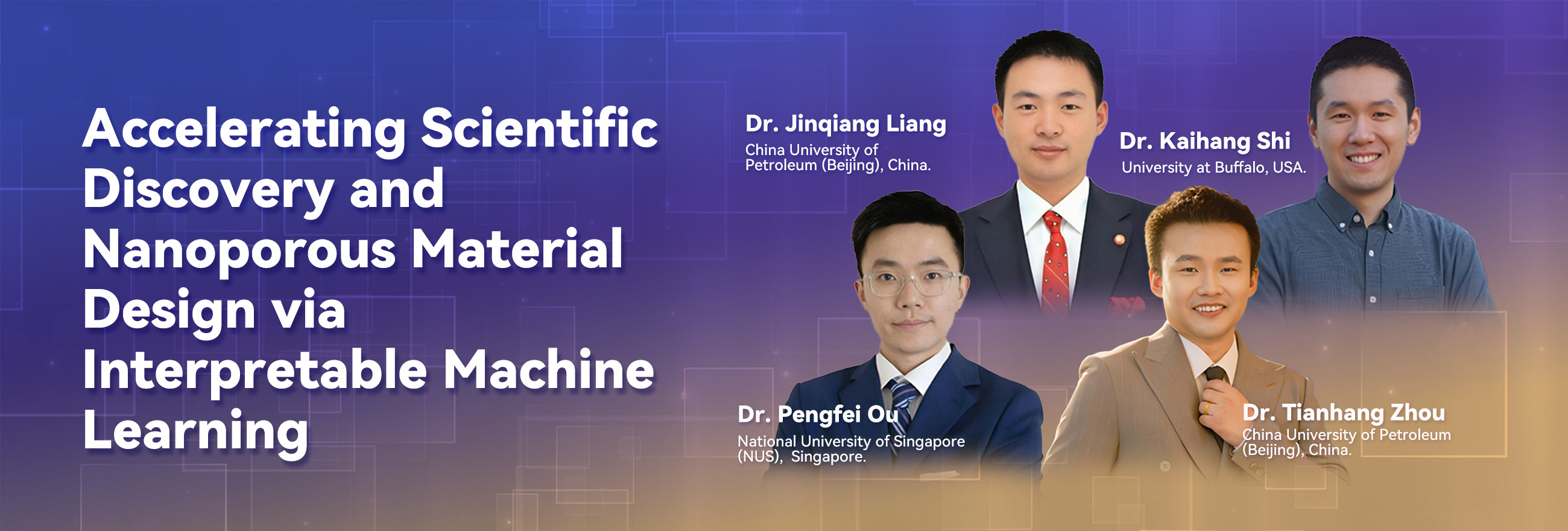
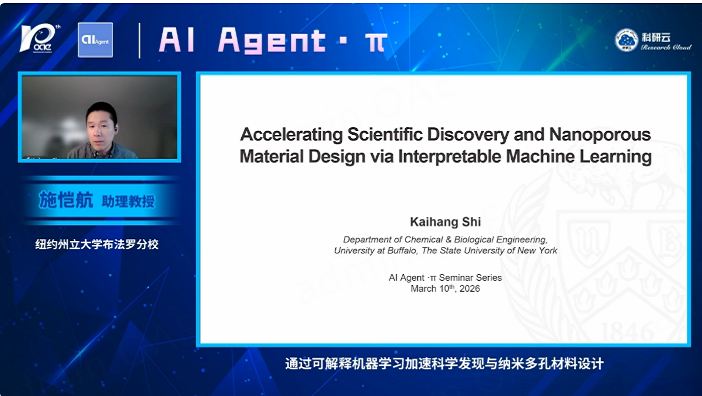
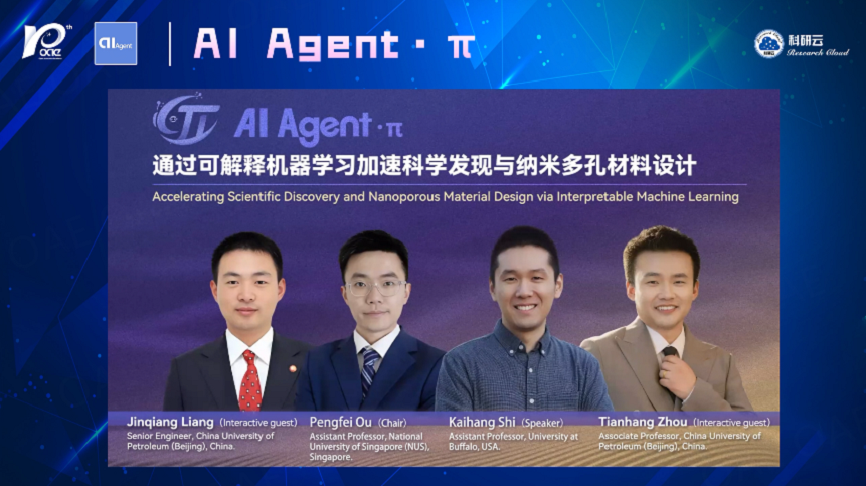
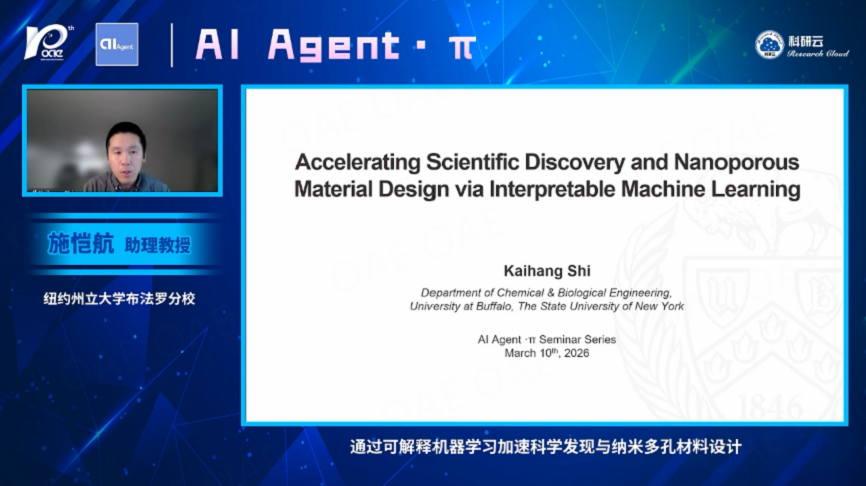
Accelerating Scientific Discovery and Nanoporous Material Design via Interpretable Machine Learning
Contents
Chair
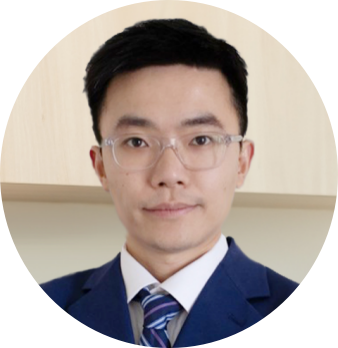
Pengfei Ou
Assistant Professor, National University of Singapore (NUS)
Pengfei Ou is an Assistant Professor in the Department of Chemistry at the National University of Singapore (NUS). He is also a member of the NUS Institute for Artificial Intelligence and the Centre for Hydrogen Innovations, and has been awarded the Presidential Young Professorship. He previously worked as a researcher at Northwestern University in the United States and conducted postdoctoral research at the University of Toronto in Canada. His research focuses on computational catalysis and artificial intelligence, aiming to accelerate catalyst discovery and mechanistic understanding. Since establishing his independent research group in 2024, he has published multiple high-impact papers as the corresponding author in journals such as Nature Synthesis, Nature Communications, and Advanced Energy Materials, among others. He also has extensive experience in industry collaboration, having worked closely on research projects with globally renowned companies and government agencies including TotalEnergies, Fujitsu, BP, and DSO Singapore. To date, he has published 110 peer-reviewed papers, with over 7,500 total citations and an h-index of 41. His honors include the NUS Presidential Young Professorship (2024), the Climate Positive Energy “Rising Stars in Sustainable Energy” Postdoctoral Fellowship (2022), and the Chinese Government Award for Outstanding Self-Financed Students Abroad (2021).
Guest(s)
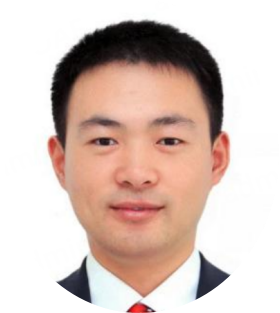
Jinqiang Liang
China University of Petroleum (Beijing), Senior Engineer
Jinqiang Liang is a full-time teacher in Chemical Engineering at Karamay Campus, China University of Petroleum (Beijing), Senior Engineer, and National Registered Safety Engineer. He received his education from the University of Science and Technology of China, supervised by Academician Zhongmin Liu and Researcher Mao Ye. His research interests mainly include AI in Chemical Engineering, Chemical Process Simulation and Optimization, Energy Safety, and Sustainable Olefin Production Technologies. In the past three years, he has published more than 40 papers in international and domestic journals. He has presided over 1 project from the National Natural Science Foundation of China, 2 enterprise-funded horizontal projects, and 1 municipal science and technology project. He has participated in 3 enterprise-funded horizontal projects, been granted 3 invention patents, and drafted 4 technical standards for China National Petroleum Corporation (CNPC). He participated in the 1000-ton pilot test of the 3rd-generation Methanol-to-Olefins (DMTO-Ⅲ) technology, which passed the scientific and technological achievement appraisal by the China Petroleum and Chemical Industry Federation (CPCIF).

Tianhang Zhou
Associate Professor, China University of Petroleum (Beijing)
Tianhang Zhou, Associate Professor at the College of Future Energy, China University of Petroleum (Beijing). He holds a German doctoral degree with summa cum laude distinction, and is a recipient of the Young Top Talent of China University of Petroleum (Beijing), Beijing "Gaochuang Program" Young Talent Support Program, and Dongying Yellow River Delta Scholar. Focusing on "AI for Science" coupled with multiscale simulation as research methodologies, he conducts advanced molecular design and process optimization for the decarbonization of traditional energy and the practical application of low-carbon energy. He has led/participated in multiple intelligentization-related projects including the National 2030 Major R&D Program, NSFC Key Program, NSFC Young Scientists Fund, China National Petroleum Corporation projects, and Sinopec projects. He has been granted 6 Chinese software copyrights (in intelligentization direction). As first author/corresponding author, he has published over 30 SCI papers in top-tier energy and computational method journals such as Nature Communications (3), Advanced Materials, and Journal of Chemical Theory and Computation, with a total of 50 papers. He serves as a Youth Editorial Board Member for journals including AI Agent, Chemical Industry and Engineering Progress, and Chemical Engineering Journal. He is also the AI Director of Zhonghai Energy Storage Technology (Beijing) Co., Ltd., and his developed FlowBD vertical large model was selected as one of the "Top 10 AI-Empowered Scientific Research Achievements" at the 2025 Pujiang Innovation Forum.
Speaker

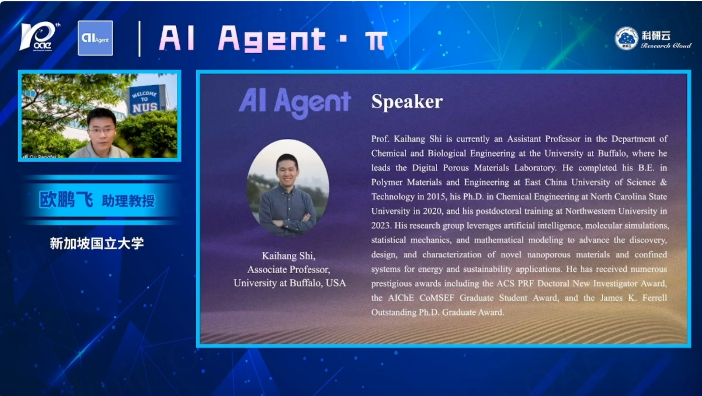
Kaihang Shi
Associate Professor, University at Buffalo
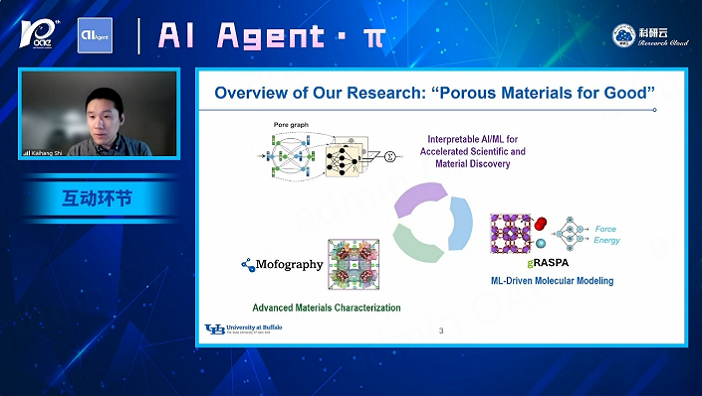
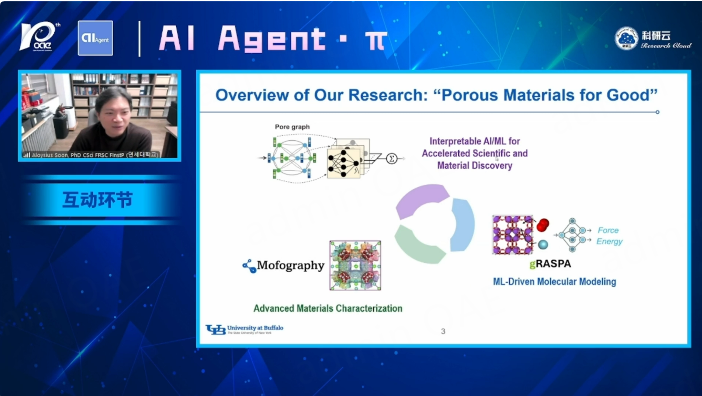
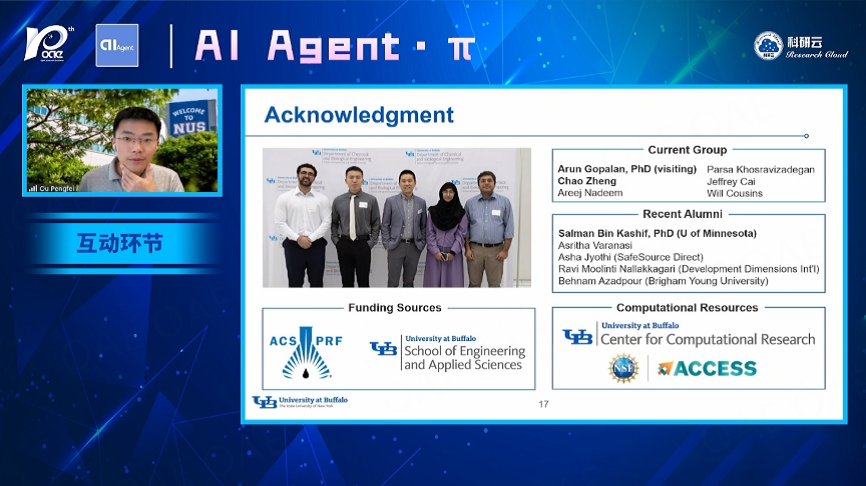
Prof. Kaihang Shi is currently an Assistant Professor in the Department of Chemical and Biological Engineering at the University at Buffalo, where he leads the Digital Porous Materials Laboratory. He completed his B.E. in Polymer Materials and Engineering at East China University of Science & Technology in 2015, his Ph.D. in Chemical Engineering at North Carolina State University in 2020, and his postdoctoral training at Northwestern University in 2023. His research group leverages artificial intelligence, molecular simulations, statistical mechanics, and mathematical modeling to advance the discovery, design, and characterization of novel nanoporous materials and confined systems for energy and sustainability applications. He has received numerous prestigious awards including the ACS PRF Doctoral New Investigator Award, the AIChE CoMSEF Graduate Student Award, and the James K. Ferrell Outstanding Ph.D. Graduate Award.
Moments
Presentation
NaN
NaN
NaN

