Large Discovery Models: Towards Autonomous Scientific Discovery
Contents
Host

Prof. Yi Liu
Materials Genome Institute, Shanghai University, Shanghai, China.
Prof. Yi Liu obtained a Ph. D. degree at Materials Science and Engineering at Institute of Metal Research in China in 1997. Then he had worked as a postdoctor or senior researcher in the field of computational materials science at Nagoya University, Japan (1997-2002); Juelich Research Center, Germany (2002-2003); University of Western Ontario, Canada (2003-2005); California Institute of Technology, US (2006-2012). He was appointed as a professor at the School of Materials Science and Engineering, the University of Shanghai for Science and Technology between 2012-2015. Then he moved to Department of Physics and Materials Genome Institute at Shanghai University (2015-present). His current research interests focus on the data-driven materials design by combining machine learning with multiscale computation and high-throughput experiment approaches, applied to high-performance alloys, combustion, nanomaterials, and catalyst.
Speaker
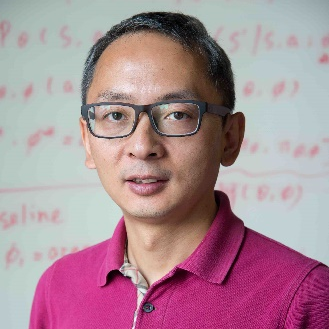
Prof. Jun Wang
The Computer Science department, University College London, UK.
Jun Wang is Professor at the Computer Science department, University College London. Prof. Jun Wang is a leading expert in AI, Machine Learning, and Multiagent Systems, with over 200 publications. His research has earned eight Best Paper awards, including SIGIR Test of Time and Honourable Mentions, and has led to widely adopted algorithms used by Ray and CERN for particle discovery. He won the first global real-time bidding contest (2013) and NeurIPS 2020 black-box optimisation challenge, with solutions now deployed in industry. His patents with BT enhance personalisation in recommender systems by dynamically adjusting training data. As co-founder and Chief Scientist of UCL spinout MediaGamma (2013-2020), he led the development of AI-driven audience decision tools, helping the company secure £5.8M in funding before its acquisition in 2020.
Abstract
AI is starting to change science from something that mainly uses computers to analyse data into something where AI can actively help make discoveries. In drug discovery, chemistry, biology, and materials science, AI can already help design molecules, search for promising drugs, improve antibodies, plan experiments, and even control automated laboratories. In this talk, I will introduce the idea of Large Discovery Models: AI systems that can read scientific knowledge, reason about it, remember past experience, learn from success and failure, and decide what to try next. I will explain our work on AI agents that use memory and reflection to improve over time without needing to retrain the whole model. These agents store useful past cases, experimental results, and reusable skills, then retrieve them when facing new problems. This allows them to learn continually during use, much like a scientist building experience over many projects. I will also discuss our Memento and Memento-Skills systems, which show how such memory-based agents can be connected to real industrial AI applications. The main message is that AI is becoming more than a tool for prediction: it is moving towards a new kind of scientific partner that can help generate ideas, plan actions, run experiments, learn from feedback, and accelerate discovery in areas such as chemistry, biology, and drug development.