
Time
November 5, 2026,7:30 AM (Italy Time, UTC+1)
November 5, 2026,2:30 PM (Beijing Time, UTC+8)
November 5, 2026,2:30 PM (Beijing Time, UTC+8)
Join the Webinar

Zoom Meeting ID: 827 3349 9019
Passcode: 179796
Join Zoom Meeting:
https://us06web.zoom.us/j/82733499019?pwd=p93IalQb5rzB9CBR0bmXzqmMEr2r4s.1
Share
Guest

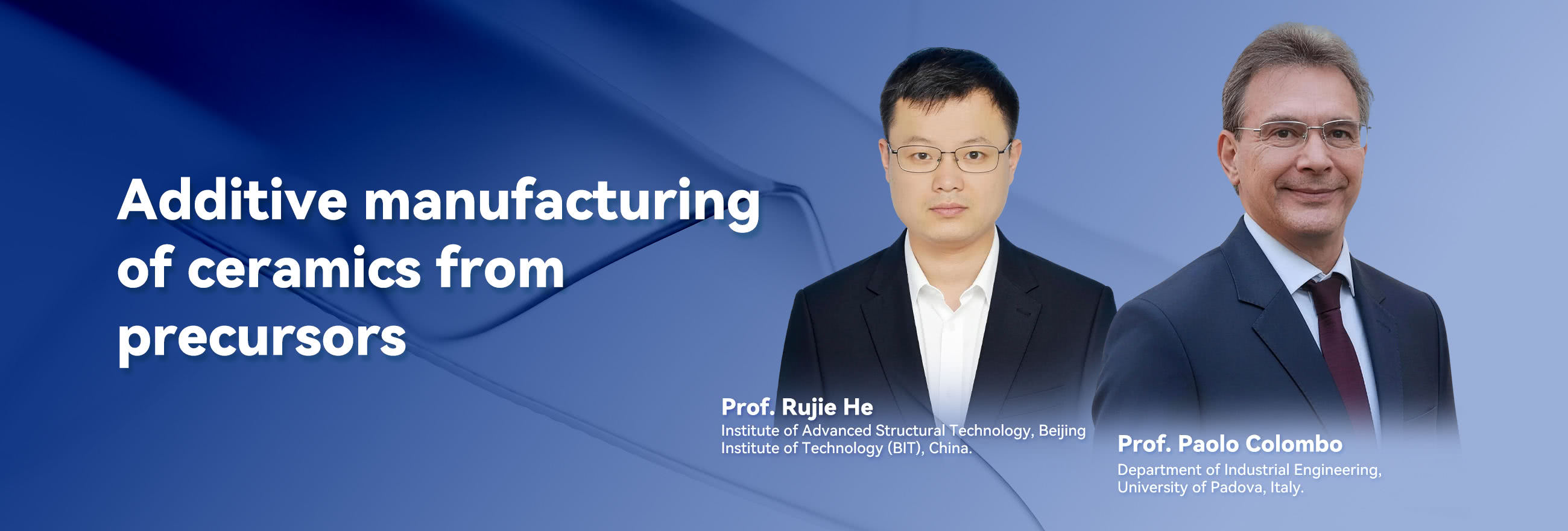
Paolo Colombo
Department of Industrial Engineering, University of Padova, Italy
Paolo Colombo is a professor of Materials Science and Technology at the Department of Industrial Engineering, University of Padova, Padova, Italy. He graduated from the University of Padova with a degree in chemical engineering in 1985 and a diploma in Glass Engineering in 1988. He was an assistant professor at the University of Padova from 1990 to 1998 and then an associate professor at the University of Bologna, until 2005.
He is also Honorary Professor, Department of Mechanical Engineering, University College London, UK, Honorary Researcher, Henan Academy of Sciences, Zhengzhou, Henan, CN, Honorary Professor, Xi'an Jiaotong University, Xi'an, Shaanxi, CN, and Guest Professor, School of Materials Science and Engineering, Northwestern Polytechnical University, Xi'an, Shaanxi, CN. He was Adjunct Professor of Materials Science and Engineering, Pennsylvania State University, Foreign Scientist at INSA, Lyon, France in 2015, DGF Mercator Professor at the Technical University Bergakademie Freiberg, Germany in 2016, an Academic Advisor at the Institute for Advanced Ceramics, School of Materials Science and Engineering, Harbin Institute of Technology, China in 2022, 2023, 2025 and 2026, and Visiting Professor at the University of São Paulo, Brazil in 2024.
He was elected Academician of the World Academy of Ceramics (2006), Academician of the European Academy of Sciences (2016), Academician of the Academia Europaea (2024), Academician of the Italian Academy of Engineering and Technology (2024), Fellow of the American Ceramic Society (2010), Fellow of the Institute of Materials, Minerals and Mining (2011), Fellow of the European Ceramic Society (2017), Fellow of the International Core Academy of Sciences and Humanities (2025), Fellow of the Ceramic Society of Japan (2026). He was awarded a Fulbright Scholarship for the Pennsylvania State University in 1991, the Pfeil Award (The Institute of Materials, Minerals and Mining, London, UK) in 2007, the Global Star Award (The Engineering Ceramics Division of the American Ceramic Society) in 2010, the Edward C. Henry Award (The Electronics Division of The American Ceramic Society) in 2011, the Verulam Medal & Prize (The Institute of Materials, Minerals and Mining, London, UK) in 2013, the Global Ambassador Award (The American Ceramic Society) in 2016, the Polish Ceramic Society Award in 2019, the CICC Special Contribution award (Chinese Ceramic Society) in 2022, the Bridge Building Award (The Engineering Ceramics Division of the American Ceramic Society) in 2023, the ECerS-ACerS Joint Award (European Ceramic Society-American Ceramic Society) in 2024 and the Lee Hsun (Li Xun) Lecture Award (Institute of Metal Research (IMR), Chinese Academy of Sciences) in 2026.
He is Past President of the International Ceramic Federation (ICF) (2022-2024) and Vice President of the Italian Ceramic Society (2024-2026). He is also a member of the JECS Trust, an officer of the Materials Science Division of the European Academy of Sciences, a member of the EPSRC Peer Review College, and is serving in several committees in International Societies.
He published more than 400 papers in peer-reviewed journals, 10 book chapters and holds 20 international patents. h index (accessed 8/01/2026): Google Scholar = 84; Citations = 27884. He is co-editor of a book on cellular ceramics, a book on polymer-derived-ceramics, a book on additive manufacturing of ceramics, 11 proceedings books and guest editor of 10 Special issues in international scientific journals. He is Editor-in-Chief of Open Ceramics (Elsevier), and is on the editorial board of 15 other international scientific journals. He has co-organized several international conferences, and has given numerous invited talks in the field of porous ceramics, polymer-derived-ceramics, geopolymers and additive manufacturing of ceramics. He was chair of the XVI conference of the European Ceramic Society (Turin, Italy, 16-20/6/2019), co-chair of CIMTEC 2026 (Perugia, 15-19/6/2026) and chair of the Shaping X conference (Padova, 20-23/9/2026).
Paolo Colombo’s research interests include novel processing routes to architected glasses and ceramics (currently focusing mainly on Additive Manufacturing, using different technologies), the development of ceramic components from preceramic polymers and geopolymers, and the upcycling of industrial and natural waste.
He is also Honorary Professor, Department of Mechanical Engineering, University College London, UK, Honorary Researcher, Henan Academy of Sciences, Zhengzhou, Henan, CN, Honorary Professor, Xi'an Jiaotong University, Xi'an, Shaanxi, CN, and Guest Professor, School of Materials Science and Engineering, Northwestern Polytechnical University, Xi'an, Shaanxi, CN. He was Adjunct Professor of Materials Science and Engineering, Pennsylvania State University, Foreign Scientist at INSA, Lyon, France in 2015, DGF Mercator Professor at the Technical University Bergakademie Freiberg, Germany in 2016, an Academic Advisor at the Institute for Advanced Ceramics, School of Materials Science and Engineering, Harbin Institute of Technology, China in 2022, 2023, 2025 and 2026, and Visiting Professor at the University of São Paulo, Brazil in 2024.
He was elected Academician of the World Academy of Ceramics (2006), Academician of the European Academy of Sciences (2016), Academician of the Academia Europaea (2024), Academician of the Italian Academy of Engineering and Technology (2024), Fellow of the American Ceramic Society (2010), Fellow of the Institute of Materials, Minerals and Mining (2011), Fellow of the European Ceramic Society (2017), Fellow of the International Core Academy of Sciences and Humanities (2025), Fellow of the Ceramic Society of Japan (2026). He was awarded a Fulbright Scholarship for the Pennsylvania State University in 1991, the Pfeil Award (The Institute of Materials, Minerals and Mining, London, UK) in 2007, the Global Star Award (The Engineering Ceramics Division of the American Ceramic Society) in 2010, the Edward C. Henry Award (The Electronics Division of The American Ceramic Society) in 2011, the Verulam Medal & Prize (The Institute of Materials, Minerals and Mining, London, UK) in 2013, the Global Ambassador Award (The American Ceramic Society) in 2016, the Polish Ceramic Society Award in 2019, the CICC Special Contribution award (Chinese Ceramic Society) in 2022, the Bridge Building Award (The Engineering Ceramics Division of the American Ceramic Society) in 2023, the ECerS-ACerS Joint Award (European Ceramic Society-American Ceramic Society) in 2024 and the Lee Hsun (Li Xun) Lecture Award (Institute of Metal Research (IMR), Chinese Academy of Sciences) in 2026.
He is Past President of the International Ceramic Federation (ICF) (2022-2024) and Vice President of the Italian Ceramic Society (2024-2026). He is also a member of the JECS Trust, an officer of the Materials Science Division of the European Academy of Sciences, a member of the EPSRC Peer Review College, and is serving in several committees in International Societies.
He published more than 400 papers in peer-reviewed journals, 10 book chapters and holds 20 international patents. h index (accessed 8/01/2026): Google Scholar = 84; Citations = 27884. He is co-editor of a book on cellular ceramics, a book on polymer-derived-ceramics, a book on additive manufacturing of ceramics, 11 proceedings books and guest editor of 10 Special issues in international scientific journals. He is Editor-in-Chief of Open Ceramics (Elsevier), and is on the editorial board of 15 other international scientific journals. He has co-organized several international conferences, and has given numerous invited talks in the field of porous ceramics, polymer-derived-ceramics, geopolymers and additive manufacturing of ceramics. He was chair of the XVI conference of the European Ceramic Society (Turin, Italy, 16-20/6/2019), co-chair of CIMTEC 2026 (Perugia, 15-19/6/2026) and chair of the Shaping X conference (Padova, 20-23/9/2026).
Paolo Colombo’s research interests include novel processing routes to architected glasses and ceramics (currently focusing mainly on Additive Manufacturing, using different technologies), the development of ceramic components from preceramic polymers and geopolymers, and the upcycling of industrial and natural waste.
Moderator
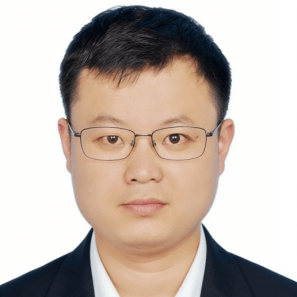
Rujie He
Institute of Advanced Structural Technology, Beijing Institute of Technology, China
Rujie He is a Tenured Professor at the Institute of Advanced Structural Technology, Beijing Institute of Technology, China. His research interests are primarily on 3D printing of ceramics and ceramic matrix composites, with particular focus on forming mechanisms and defect control, lightweighting and toughening structural design, multiscale mechanics, and integrated structural-functional construction.
He has presided over 4 projects funded by the National Natural Science Foundation of China (NSFC) and more than 20 projects. He has published over 160 SCI-indexed papers as the first or corresponding author, with more than 9,000 citations. He currently serves as Associate Editor of the Journal of Advanced Ceramics, npj Advanced Manufacturing, and International Journal of Applied Ceramic Technology, as well as editorial board member/young editorial board member of more than 10 journals.
He has presided over 4 projects funded by the National Natural Science Foundation of China (NSFC) and more than 20 projects. He has published over 160 SCI-indexed papers as the first or corresponding author, with more than 9,000 citations. He currently serves as Associate Editor of the Journal of Advanced Ceramics, npj Advanced Manufacturing, and International Journal of Applied Ceramic Technology, as well as editorial board member/young editorial board member of more than 10 journals.
Abstract
Additive manufacturing of ceramics is somewhat limited by their high melting temperatures and the processing issues related to handling of feedstocks containing a large volume of particles. Processing slurry-based feedstocks, in fact, poses several challenges: a high amount of powder is required to promote densification and results in high viscosity, scattering and sedimentation phenomena in vat photopolymerization processes, as well as clogging problems at the nozzle for extrusion-based processes.
Some of these issues can be solved or mitigated when using precursor-based feedstocks, when they are all liquid. Our research activities have therefore focused on the use of preceramic polymers as well as sol-gel solutions as feedstock for the production of ceramic components by additive manufacturing. Despite the many advantages related to their liquid nature, there are also some challenges related to the reactivity of sol-gel systems and to the high amount of solvent usually present, while preceramic polymers are limited in the range of compositions available.
We also investigated the additive manufacturing of both geopolymer solutions and geopolymer powders, as precursors for different components of interest for absorption, catalysis or high temperature applications.
In this talk, our strategies for producing ceramic and glass components with complex architectures using a variety of precursor feedstocks will be presented. Different additive manufacturing techniques were used to fabricate components ranging in size from the sub-micron to the tens of centimeters, including direct ink writing, binder jetting, digital light processing, two photon polymerization, robotic arm manufacturing and volumetric additive manufacturing.
Some of these issues can be solved or mitigated when using precursor-based feedstocks, when they are all liquid. Our research activities have therefore focused on the use of preceramic polymers as well as sol-gel solutions as feedstock for the production of ceramic components by additive manufacturing. Despite the many advantages related to their liquid nature, there are also some challenges related to the reactivity of sol-gel systems and to the high amount of solvent usually present, while preceramic polymers are limited in the range of compositions available.
We also investigated the additive manufacturing of both geopolymer solutions and geopolymer powders, as precursors for different components of interest for absorption, catalysis or high temperature applications.
In this talk, our strategies for producing ceramic and glass components with complex architectures using a variety of precursor feedstocks will be presented. Different additive manufacturing techniques were used to fabricate components ranging in size from the sub-micron to the tens of centimeters, including direct ink writing, binder jetting, digital light processing, two photon polymerization, robotic arm manufacturing and volumetric additive manufacturing.