

fig6
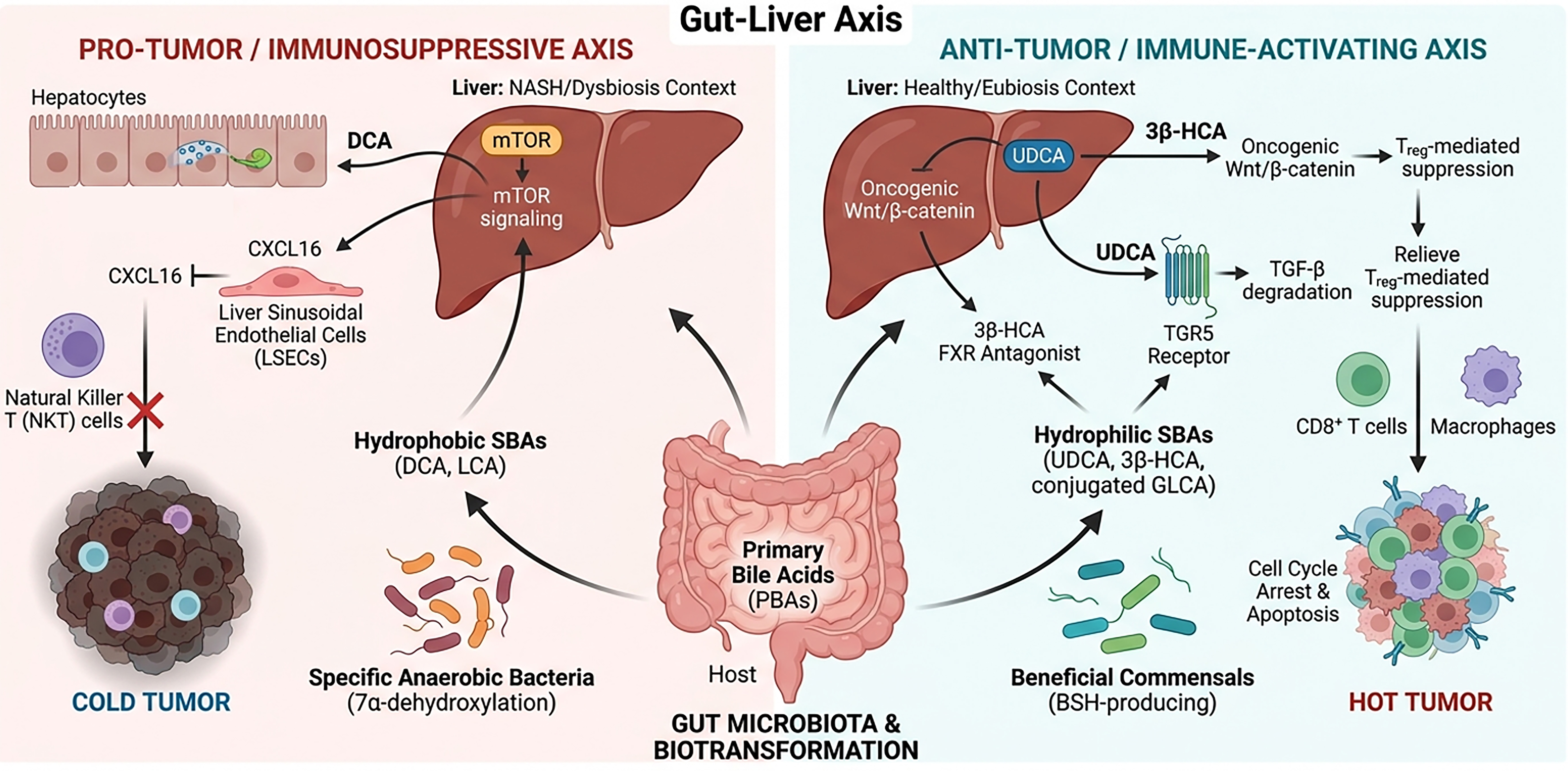
Figure 6. Biphasic regulation of SBAs in the HCC gut-liver axis. The schematic contrasts the immunosuppressive pathways driven by hydrophobic SBAs (left) with the immune-activating pathways driven by hydrophilic SBAs (right). Black arrows indicate pathway activation, metabolite conversion, or cellular recruitment; Red cross (X) indicates the blockade of immune cell infiltration. Detailed specific microbial conversions (e.g., 7α-dehydroxylation) and receptor-mediated signaling (mTOR, FXR, TGR5) are comprehensively discussed in the corresponding text. HCC: Hepatocellular carcinoma; SBAs: secondary bile acids; DCA: deoxycholic acid; FXR: farnesoid X receptor; NKT: natural killer T; LCA: lithocholic acid; UDCA: ursodeoxycholic acid; 3β-HCA: 3β-hydroxy-cholic acid; GLCA: glycolithocholic acid; BSH: bile salt hydrolase; CXCL15: C-X-C motif chemokine ligand 15; LSECs: liver sinusoidal endothelial cells; mTOR: mechanistic target of rapamycin; TGR5: Takeda G protein-coupled receptor 5; TGF-β: transforming growth factor beta; PBAs: primary bile acids; CD8+: cluster of differentiation 8 positive.