


fig1
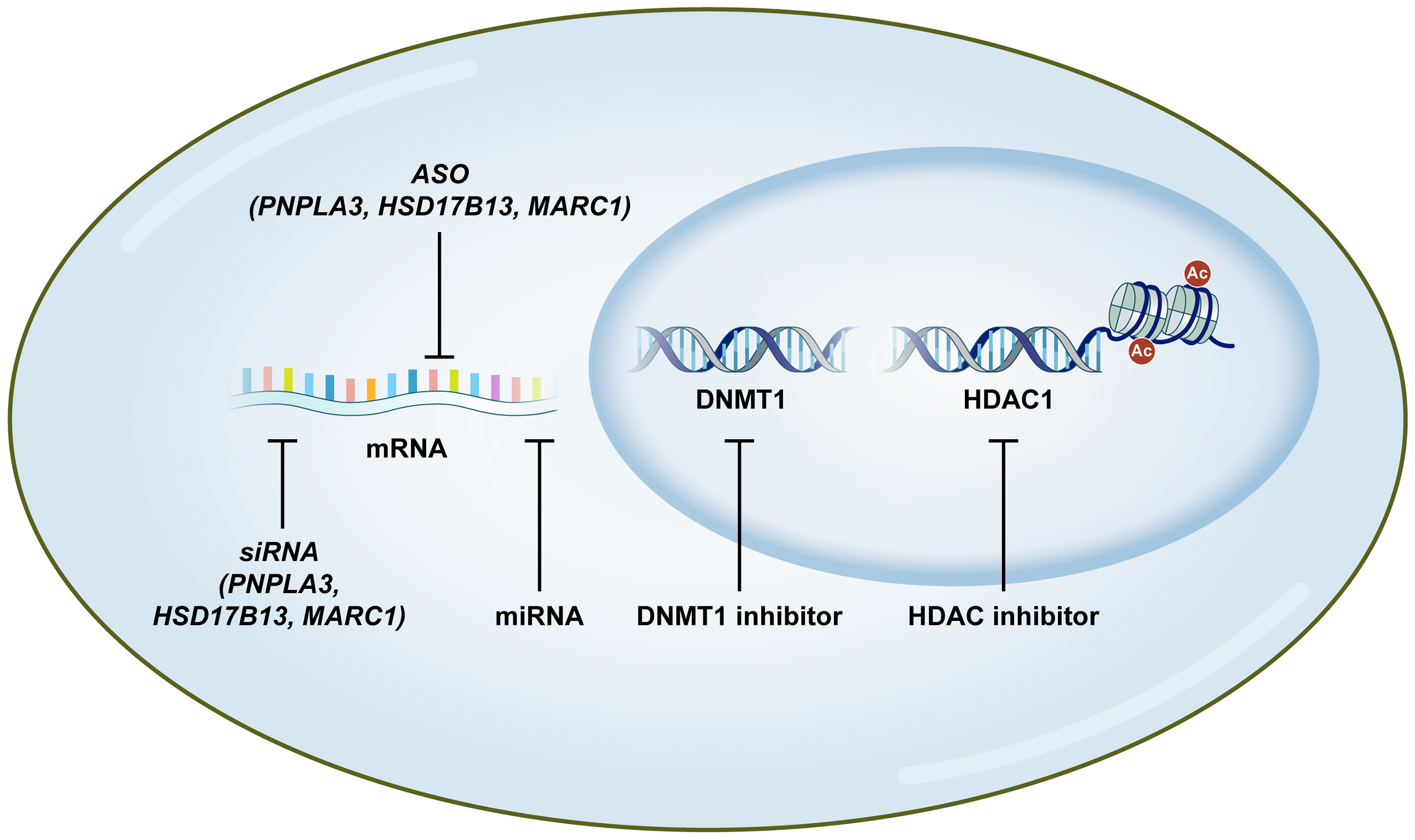
Figure 1. Emerging genetic and epigenetic therapeutic strategies for MASLD. The schematic illustrates the multi-layered precision medicine approaches targeting MASLD at various molecular levels. Nucleotide-based therapeutics, including siRNA and ASO, specifically target and silence mRNA of major genetic variants such as PNPLA3, HSD17B13, and MARC1 to reduce toxic gain-of-function or modulate disease progression. Additionally, miRNA-targeted agents can reset pathogenic transcriptional networks. Within the nucleus, epigenetic modulators such as DNMT1 inhibitors and HDAC inhibitors reprogram aberrant transcriptional states by reversing DNA hypermethylation and histone deacetylation, thereby restoring the expression of master metabolic regulators. Ac: acetylation; ASO: antisense oligonucleotide; DNMT1: DNA methyltransferase 1; HDAC1: histone deacetylase 1; HSD17B13: hydroxysteroid 17-beta dehydrogenase 13; MARC1: mitochondrial amidoxime reducing component 1; MASLD: metabolic dysfunction-associated steatotic liver disease; miRNA: microRNA; mRNA: messenger RNA; PNPLA3: patatin-like phospholipase domain-containing 3; siRNA: small interfering RNA.