

Fine regulation of diffusion behavior: advancing diffusion research
 0
0 
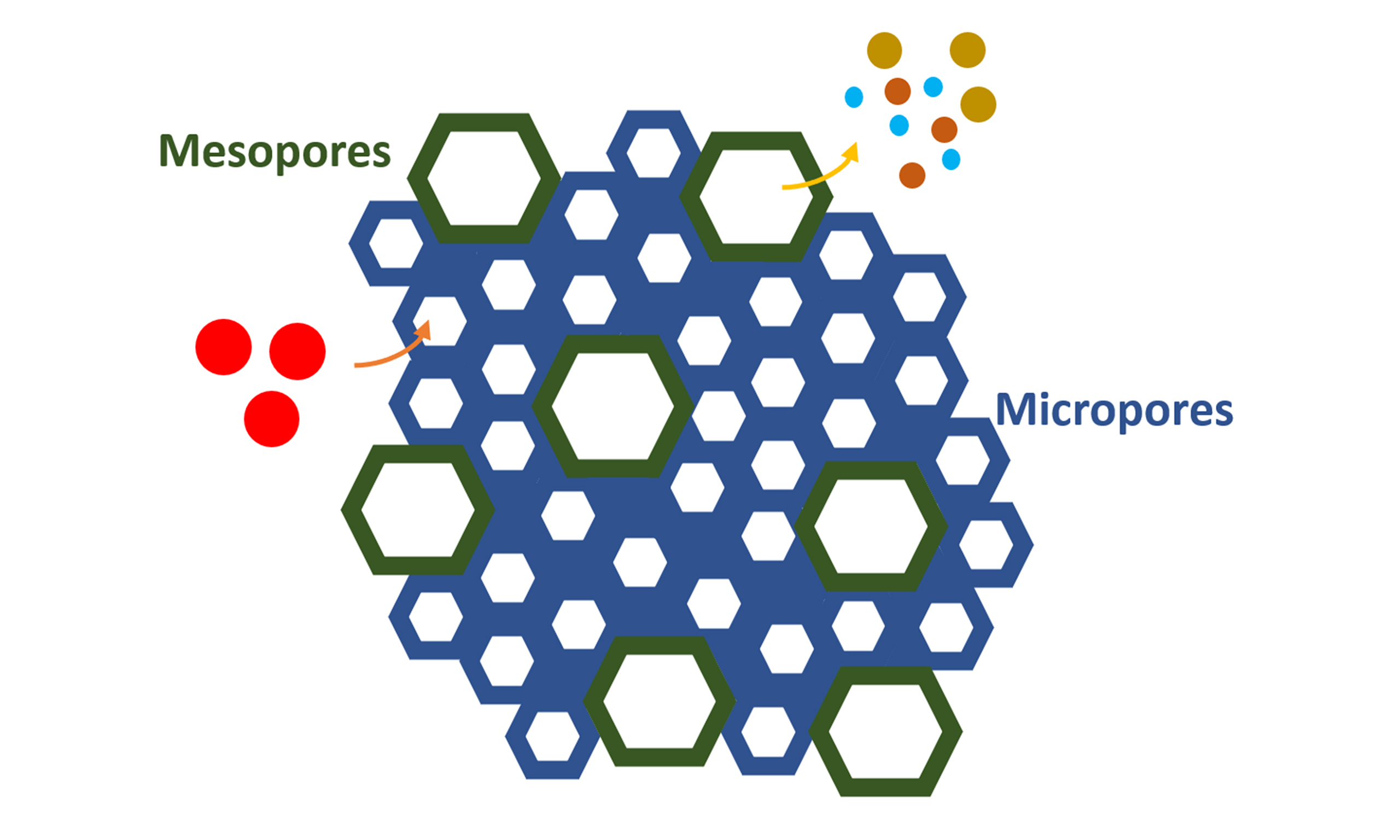
In 1855, Adolf Fick proposed the renowned Fick’s laws, which describe the relationship between diffusive flux and concentration gradient, thus laying the mathematical foundation for quantitative studies of mass diffusion in catalytic reactions[1]. Throughout the twentieth century, the diffusion behavior in heterogeneous catalysis was the focus of extensive study and application, leading to the systematic development of theories and disciplines centered mainly on internal and external diffusion, such as bulk diffusion, Knudsen diffusion, and surface diffusion in porous catalysts[2,3], alongside key evaluation parameters like effective diffusion coefficients and Thiele modulus[4,5]. In the domain of zeolite catalysis, rational design theories for efficient diffusion structures (e.g., Murray-Su’s laws) and the resultant diffusion-optimized materials (e.g., Murray-Su’s Materials) have been developed[6,7]. A suite of characterization tools, including in-situ electron microscopy, adsorption-desorption techniques, and nuclear magnetic resonance (NMR), have evolved to facilitate the resolution of diffusion behaviors across multiple scales[6,8]. It is evident that advancements in this field have led to a substantial enhancement in the comprehension of diffusion, thereby unveiling its progressively pivotal function in catalytic processes. Recent studies have demonstrated that diffusion behavior can directly influence product selectivity, sometimes even playing a decisive role[9,10]. This insight imposes stricter requirements on the process of diffusion: faster diffusion might not be universally better; instead, diffusion must be precisely matched to the demands of the reaction. It is imperative to transcend the boundaries of mere diffusion comprehension and step into a new era of diffusion design, with the overarching objective being the precise regulation of diffusion.
The hierarchical structures shorten the intracrystalline diffusion pathways which accelerate the intercrystalline diffusion by approximately two orders of magnitude leading to enhanced mass transport. According to Fick’s first law
Where the diffusive flux (J) is directly proportional to the effective diffusion coefficient (D), while it is inversely related to the diffusion length, therefore both the reduction of the path length and the increasing of the diffusion promote the efficient transport through the zeolite network. Simultaneously, the platinum on the external surface enhances the diffusion of the reaction intermediates by modifying their paths by decreasing the surface permeability through partially blocking pore entrances. This spatial architecture harmonizes the diffusion fluxes and thereby maximises the catalytic selectivity.
In a recent research article published in Angewandte Chemie International Edition, Dr. Yu, Prof. Chen and Prof. Su introduced a new chemical concept of diffusion-selective catalysis and showcased a precisely modulated diffusion system for the demonstration of diffusion selectivity effect based on reaction intermediates[11]. Prof Su’s work has played a major role in the development of hierarchical porous materials throughout the years. Since the late 1990, he has focused his research on the limitations of the conventional zeolites especially on the difficulty of the diffusion of the voluminous molecules[12,13]. He then, with the help of his team, developed different synthesis strategies to introduce hierarchical pores while maintaining the catalytic activity on the active sites. This led to the “Hierarchical or Su type materials” concept that ensures and optimises the accessibility, the transport and the catalytic efficiency simultaneously[14]. His contributions have major impact on the materials chemistry and the catalytic industry especially on the biomass conversion and the refining processes[15].
In this work, the authors designed a tandem diffusion system tailored to the distinct diffusion requirements of two reaction intermediates in an isomerization reaction. The employment of hierarchical porous zeolite nanorods resulted in a substantial reduction in intracrystalline diffusion pathways, thereby facilitating rapid diffusion of branched olefin intermediates and concomitant diminution of their residence time within the zeolite crystals [Figure 1A]. Subsequently, by employing a novel bulky Pt precursor, selective anchoring of Pt sites was achieved on the external surface of the zeolite, thereby creating a long diffusion pathway between Pt sites and zeolitic Brønsted acid sites, which enabled the homogeneous distribution of linear olefin intermediates in zeolite crystals [Figure 1B]. The elaborately designed structure [Figure 1C] can enable the intermediates diffusion behavior to align with the main reaction pathway, thereby dramatically enhancing isomerization selectivity.
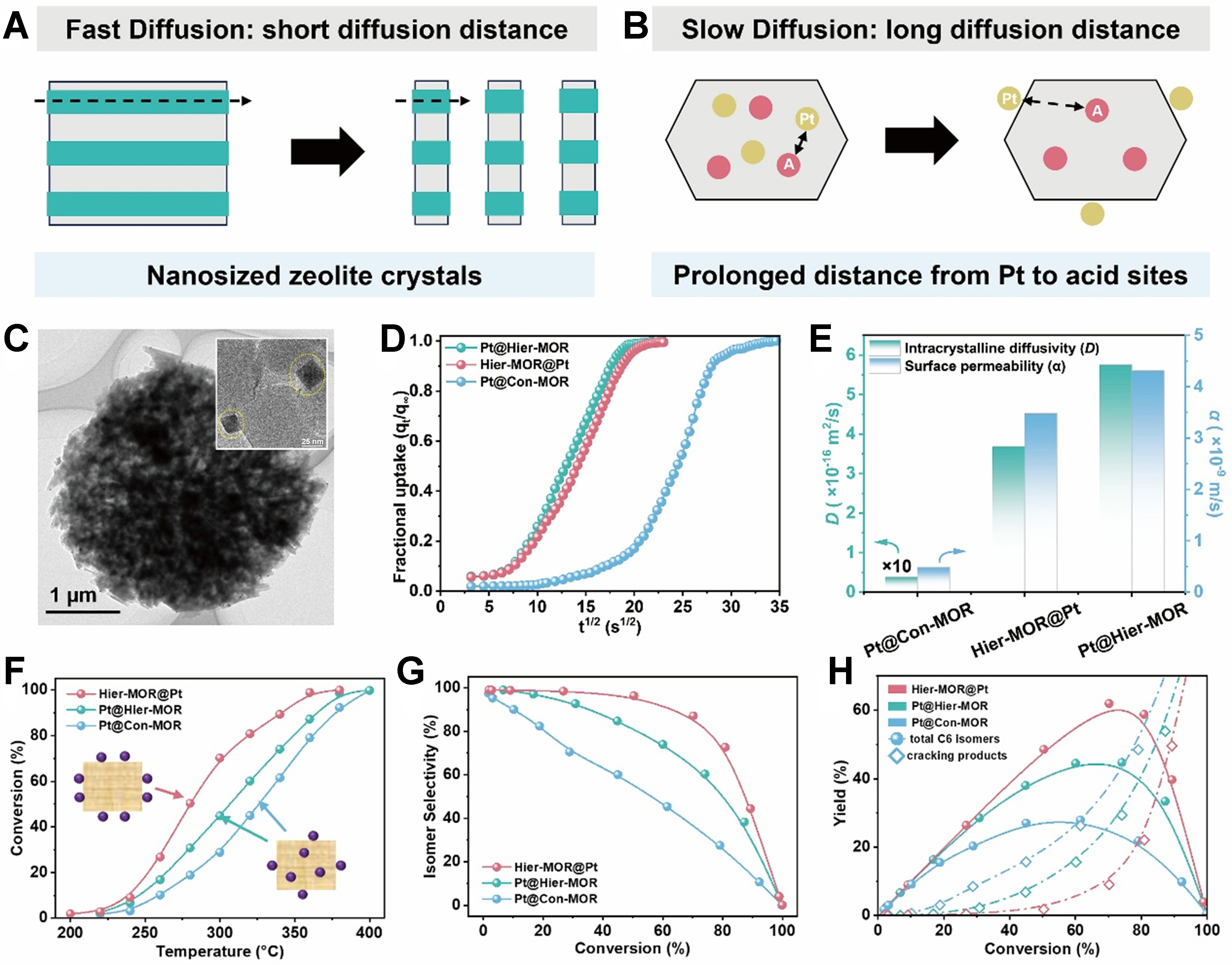
Figure 1. (A and B) Illustration of diffusion demands in hydroisomerization and corresponding strategies; (C) Transmission electron microscopy image of a MOR nanorod assembly (inset: external Pt nanoparticles); (D) Overall evolution of the normalized fluorescence intensity (qt/q∞) as a function of the square root of time; (E) Comparison of diffusion coefficients (D) and surface permeability (α) among samples; (F) n-Hexane conversion as a function of reaction temperature. The purple ball represents the platine (Pt) nanoparticules; (G) C6 isomer selectivity as a function of n-hexane conversion; (H) C6 isomer yield as a function of n-hexane conversion. The figure is reproduced from Ref.[11], Copyright 2026 Wiley-VCH GmbH. MOR: Mordenite Zeolite.
The authors innovatively employed confocal fluorescence microscopy to track and analyze diffusion dynamics. Surface permeability and intracrystalline diffusion coefficients were utilized to quantify the two distinct diffusion regimes [Figure 1D and E]. The sample with Pt sites located on the external surface exhibited a surface permeability of 3.48 × 10⁻⁹ m/s, which is 20% lower than those with Pt sites located inside. The sample based on hierarchically porous zeolite achieved an intracrystalline diffusion coefficient of 5.76 × 10⁻¹⁶ m2/s, which is nearly two orders of magnitude higher than that based on a conventional zeolite. It is noteworthy that the authors achieved two contrasting diffusion behaviors within a single catalyst particle: namely, slow surface diffusion and fast internal diffusion. This represents a significant advancement in the field of fine regulation of diffusion behaviors.
The as-prepared catalyst exhibited exceptional activity and selectivity in the catalytic isomerization process. On a condition of n-hexane conversion of 72%, the isomer selectivity can reach 87% over this optimized catalyst, giving an isomer yield of 62%, outperforming reference catalysts and those catalysts previously reported in the literature [Figure 1F-H]. Through the strategic alignment of diffusion behaviors with the reaction pathway by means of rational design, a substantial enhancement in catalytic efficiency was achieved.
This study presents a reaction intermediate diffusion-selective prototype guided by diffusion selectivity. This prototype represents a significant advancement in the field of diffusion study, moving from the stage of diffusion understanding to that of diffusion design. Diffusion selectivity is poised to provide precise guidance for the optimization of industrial catalysts, particularly in terms of the spatial distribution of active sites and the structural design of catalysts, which ultimately enables catalyst engineering on demand.
DECLARATIONS
Authors’ contributions
All made substantial contributions to conception and design of the study and interpretation: Bensafir, F.; Cousin, R.; Siffert, S.
Availability of data and materials
Not applicable.
AI and AI-assisted tools statement
Not applicable.
Financial support and sponsorship
Bensafir, F. acknowledges Interreg VI FWV CleanAirBouw project and ULCO for the financial support of her PhD grant.
Conflicts of interest
Siffert, S. is an Associate Editor of the journal Chemical Synthesis. Siffert, S. was not involved in any steps of editorial processing, notably including reviewers’ selection, manuscript handling or decision making. The other authors declare that there are no conflicts of interest.
Ethical approval and consent to participate
Not applicable.
Consent for publication
Not applicable.
Copyright
© The Author(s) 2026.
REFERENCES
2. Malek, K.; Coppens, M. Knudsen self- and Fickian diffusion in rough nanoporous media. J. Chem. Phys. 2003, 119, 2801-11.
3. Weber, D.; Sederman, A. J.; Mantle, M. D.; Mitchell, J.; Gladden, L. F. Surface diffusion in porous catalysts. Phys. Chem. Chem. Phys. 2010, 12, 2619-24.
4. Hartmann, M.; Machoke, A. G.; Schwieger, W. Catalytic test reactions for the evaluation of hierarchical zeolites. Chem. Soc. Rev. 2016, 45, 3313-30.
5. Sun, M.; Zhou, J.; Hu, Z.; et al. Hierarchical zeolite single-crystal reactor for excellent catalytic efficiency. Matter 2020, 3, 1226-45.
6. Sun, M. H.; Gao, S. S.; Hu, Z. Y.; et al. Boosting molecular diffusion following the generalized Murray’s Law by constructing hierarchical zeolites for maximized catalytic activity. Natl. Sci. Rev. 2022, 9, nwac236.
7. Zheng, X.; Shen, G.; Wang, C.; et al. Bio-inspired Murray materials for mass transfer and activity. Nat. Commun. 2017, 8, 14921.
8. Xiong, H.; Liu, Z.; Chen, X.; et al. In situ imaging of the sorption-induced subcell topological flexibility of a rigid zeolite framework. Science 2022, 376, 491-6.
9. Cheng, K.; Smulders, L. C. J.; van der Wal, L. I.; et al. Maximizing noble metal utilization in solid catalysts by control of nanoparticle location. Science 2022, 377, 204-8.
10. Hullfish, C. W.; Tan, J. Z.; Adawi, H. I.; Sarazen, M. L. Toward intrinsic catalytic rates and selectivities of zeolites in the presence of limiting diffusion and deactivation. ACS. Catal. 2023, 13, 13140-50.
11. Yi, F.; Yu, S.; Qiu, W.; et al. Diffusion-selective tandem catalysis for alkane hydroisomerization. Angew. Chem. Int. Ed. Engl. 2026, 138, e1016593.
12. Su, B. L.; Léonard, A.; Yuan, Z. Y. Highly ordered mesoporous CMI-n materials and hierarchically structured meso–macroporous compositions. C. R. Chim. 2005, 8, 713-26.
13. Su, B. L. Molecular recognition effect in benzene adsorption on the 12R window zeolites. J. Chem. Soc. Faraday. Trans. 1997, 93, 1449-57.
14. Yang, X. Y.; Léonard, A.; Lemaire, A.; Tian, G.; Su, B. L. Self-formation phenomenon to hierarchically structured porous materials: design, synthesis, formation mechanism and applications. Chem. Commun. 2011, 47, 2763-86.
Cite This Article
 Open Access
How to Cite
Download Citation
Export Citation File:
Type of Import
Tips on Downloading Citation
Citation Manager File Format
Type of Import
Direct Import: When the Direct Import option is selected (the default state), a dialogue box will give you the option to Save or Open the downloaded citation data. Choosing Open will either launch your citation manager or give you a choice of applications with which to use the metadata. The Save option saves the file locally for later use.
Indirect Import: When the Indirect Import option is selected, the metadata is displayed and may be copied and pasted as needed.
About This Article
Copyright

Data & Comments
Data
0










Comments
Comments must be written in English. Spam, offensive content, impersonation, and private information will not be permitted. If any comment is reported and identified as inappropriate content by OAE staff, the comment will be removed without notice. If you have any queries or need any help, please contact us at [email protected].