


fig8
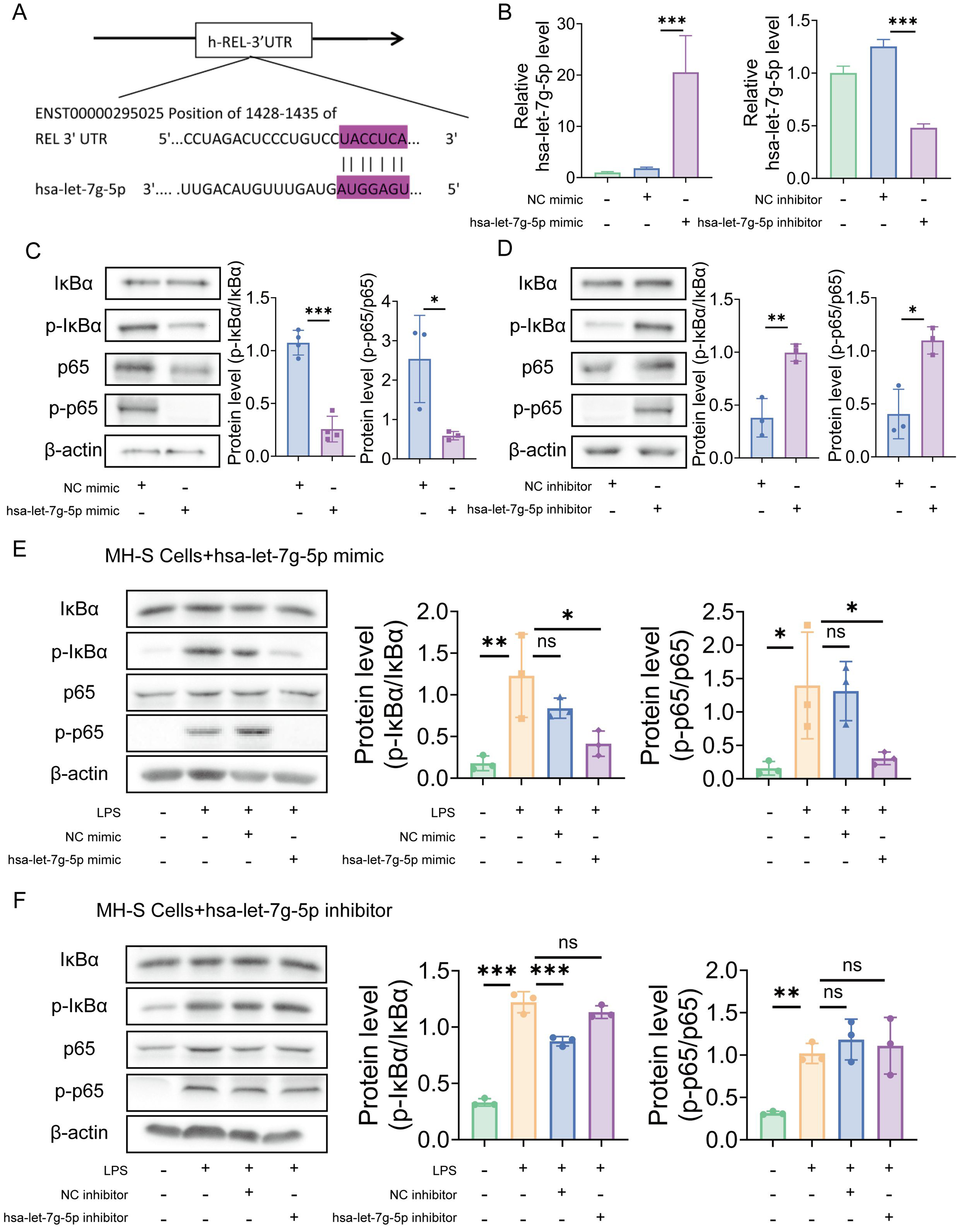
Figure 8. hsa-let-7g-5p in UCMSC-NVs mediates anti-inflammatory effects through the NF-κB/NLRP3 pathway. (A) Identification of two potential seed regions in the REL 3′ UTR; (B) Quantification of hsa-let-7g-5p expression levels via RT-qPCR. n = 3 per group; (C) Detection of NF-κB pathway protein levels via Western blotting following transfection with hsa-let-7g-5p mimic or NC mimic. n = 3 per group; (D) Detection of NF-κB pathway protein levels via Western blotting following transfection with hsa-let-7g-5p inhibitor or NC inhibitor. n = 3 per group; (E) Representative Western blot images of NF-κB pathway components in LPS-stimulated MH-S cells, 48 h post-transfection with hsa-let-7g-5p mimic or NC mimic. n = 3 per group; (F) Representative Western blot images of NF-κB pathway components in LPS-stimulated MH-S cells, 48 h post-treatment with hsa-let-7g-5p inhibitor or NC inhibitor. n = 3 per group. Data represent means ± SD. Statistical analysis was performed by one-way ANOVA. *P < 0.05, **P < 0.01, ***P < 0.001, ns: not significant. UCMSC-NVs: Nanovesicles originating from human umbilical cord mesenchymal stem cells; NF-κB: nuclear factor κB; NLRP3: NOD-like receptor protein 3; REL: REL oncogene, a NF-κB subunit gene; 3′ UTR: 3′ untranslated region; RT-qPCR: reverse transcription quantitative polymerase chain reaction; NC: negative controls; LPS: lipopolysaccharide; SD: standard deviation; ANOVA: analysis of variance; p-IκBα: phosphorylated IκBα; p-p65: phosphorylated p65.