

fig1
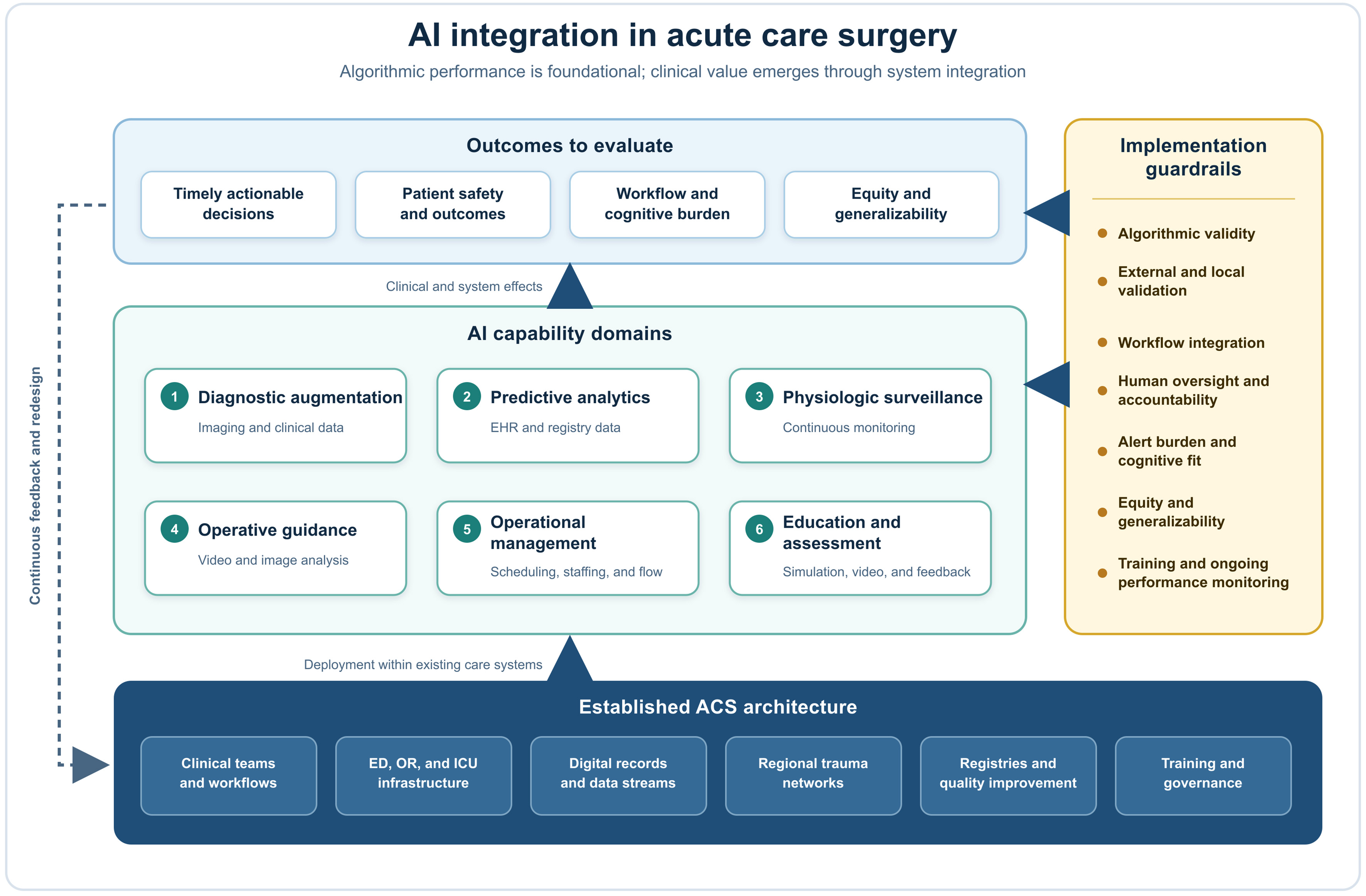
Figure 1. Systems architecture for AI integration in ACS. AI capabilities - diagnostic augmentation, predictive analytics, physiologic surveillance, operative guidance, operational management, and education and assessment - are introduced into the established ACS architecture of clinical teams and workflows, ED, OR, and ICU infrastructure, digital records and data streams, regional trauma networks, registries and quality-improvement systems, and training and governance. Adequate algorithmic performance is foundational, but translation into clinical benefit also depends on external and local validation, workflow integration, human oversight and accountability, management of alert burden and cognitive fit, equity and generalizability, training, and ongoing performance monitoring. Outcomes should be evaluated at the clinical and system levels, with monitoring results feeding back into tool and workflow redesign. ACS: Acute Care Surgery; AI: artificial intelligence; ED: emergency department; EHR: electronic health record; ICU: intensive care unit; OR: operating room.